

Embed Innovation in Industrial Policy
Why in News?
As India positions itself on the global economic map in the midst of rapid technological transformation, the debate around innovation-driven industrial policy has gained renewed attention. A recent article by Aditya Sinha titled “Embed Innovation in Industrial Policy” underscores the urgent need for India to transition from being a mere consumer of imported technology to a creator of indigenous solutions. This policy shift comes against the backdrop of declining global investments in R&D and growing economic competition, especially in strategic and emerging tech sectors. 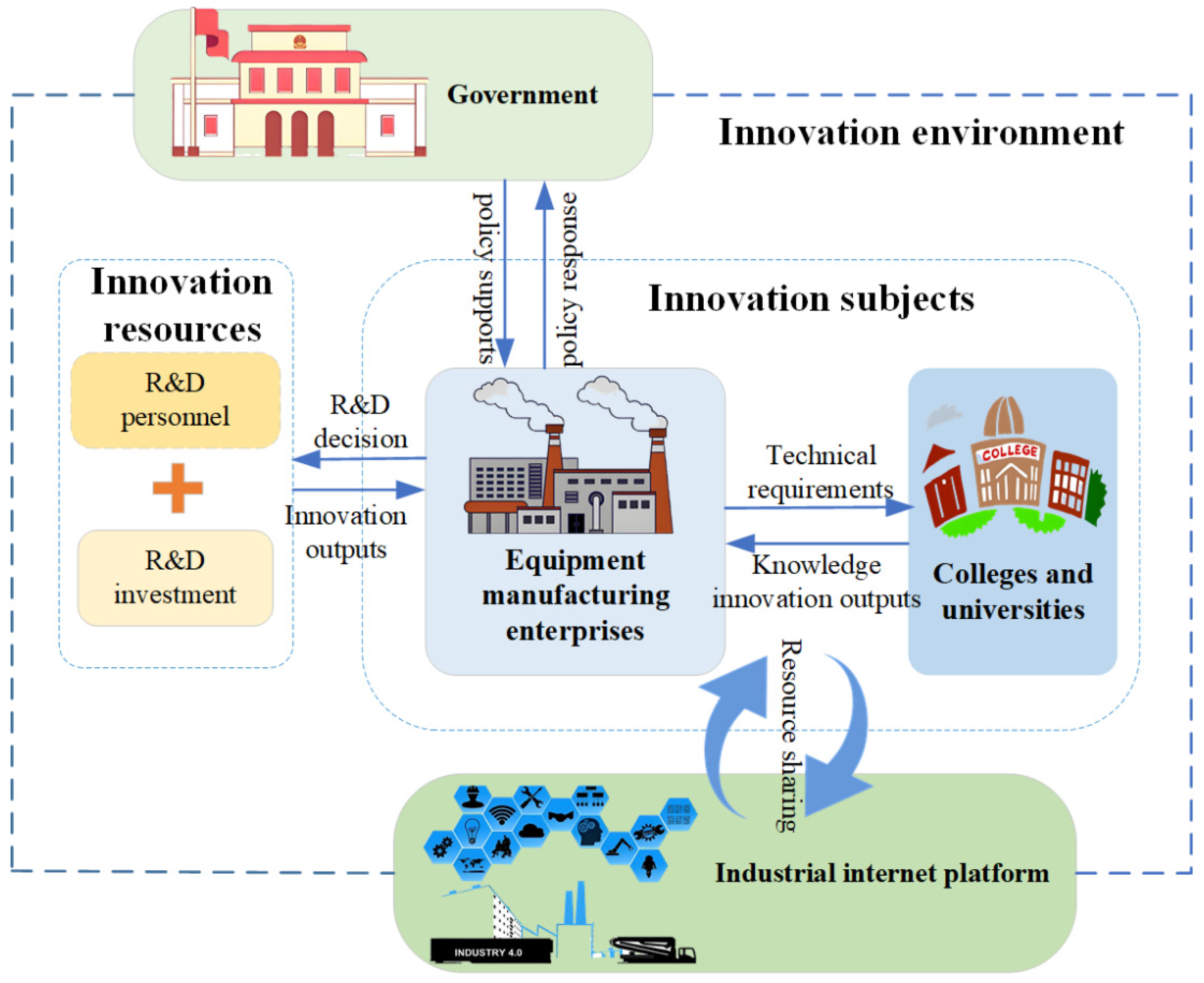
Introduction
Innovation is the cornerstone of economic growth in modern industrial societies. Countries that invest in technology, R&D, and capability-building eventually emerge as leaders in high-value production chains. However, nations like India face systemic challenges that hinder their potential to foster such innovation-led growth. The article by Aditya Sinha makes a compelling case for embedding innovation deeply into the DNA of India’s industrial policy. Drawing lessons from history, global best practices, and economic theory, the author highlights structural and institutional barriers that prevent India from leveraging its full industrial and technological potential.
Key Issues
1. Historical Context and Strategic Imperatives
The article begins by referencing the 1957 launch of the Soviet Union’s Sputnik satellite, which triggered a dramatic response from the United States. Within months, the US government had established NASA, revamped educational curricula, and massively increased federal R&D funding. That bold reaction ushered the US into an innovation-driven era of technological supremacy.
However, ironically, in 2025, the US is witnessing a contraction in federal R&D outlays. This reversal in global innovation expenditures opens a strategic opportunity for emerging economies like India to seize the mantle. If India can effectively prioritize innovation, it may convert this inflection point into a turning point for long-term national growth.
2. India’s Initial Steps
India has taken commendable steps in this direction, including:
-
Establishment of the Anusandhan National Research Foundation.
-
Introduction of the 1-lakh crore Research and Innovation Fund.
-
Circulars targeting public procurement for scientific equipment.
-
Continued commitment to R&D ecosystem reforms.
While these initiatives reflect intent, they remain nascent and insufficient. India’s private sector R&D spending has stagnated at 0.3% of GDP, while overall R&D expenditure has hovered around just 0.64% for more than a decade. These numbers are significantly lower than those of innovation powerhouses like the US, South Korea, and Israel.
3. Structural, Fiscal, and Institutional Barriers
The article highlights three key obstacles to India’s innovation ambitions:
-
Structural inertia: India’s industrial policy is often driven by protectionism and import substitution, not dynamic capability-building.
-
Fiscal fragmentation: Disconnected budgetary and funding mechanisms weaken cohesive policy delivery.
-
Institutional silos: A lack of coordination among government departments, research bodies, and industry stakeholders has created policy and implementation gaps.
These factors prevent India from reaping the full benefits of recent reformative steps, such as Production Linked Incentive (PLI) schemes and the Make in India initiative.
4. Outdated Economic Thinking
Sinha critiques the outdated neoliberal economic approach, which relegates innovation to the periphery. It often treats innovation as an external variable rather than a central component of economic development. According to economist Paul Romer, endogenous growth arises from consistent investments in knowledge-building and technological advancement. These investments lead to increasing returns, positive spillovers, and transformative economic gains.
However, when innovation is left to private actors alone—without government direction, long-term investment, and systemic coordination—returns tend to diminish due to high uncertainty, fragmentation, and non-linear growth dynamics.
Alternative Approaches and Global Lessons
1. From Systems Perspective
The article proposes a systems thinking approach, where innovation is embedded within a broader policy framework. This requires recognizing not just market failures (e.g., lack of private investment in early-stage innovation) but also:
-
Institutional failures: Poor knowledge absorption capacity and limited institutional collaboration.
-
Directional failures: Lack of strategic guidance in choosing sectors or technologies to prioritize.
This perspective aligns with the “embedded autonomy” framework proposed by Peter Evans and Charles Sabel. According to this model, states must simultaneously:
-
Enable industrial autonomy.
-
Avoid narrow interest capture.
-
Foster deep institutional linkages across academia, research labs, funding bodies, and manufacturers.
2. Collaborative Ecosystems
Drawing examples from other innovation-centric nations, the article cites the success of Fraunhofer Institutes in Germany and Taiwan’s Industrial Technology Research Institute. These institutions act as bridges between lab and market, translating research into real-world applications and commercial success.
Such organizations are structured around:
-
Collaborative R&D platforms.
-
Feedback loops between firms and researchers.
-
Shared risk mechanisms that de-risk innovation.
In India, the lack of such structures has created a “missing middle” between pure research and commercial production.
3. Aligning with Capability Theory
Ernest Liu’s economic research highlights that economies with complex production networks benefit the most from targeted innovation support. For India, this means moving beyond basic manufacturing to precision engineering, green technology, and advanced electronics.
Furthermore, upstream R&D investment in high-distortion sectors (like chip manufacturing or pharma APIs) can lead to economy-wide productivity gains, not just firm-level competitiveness.
Challenges and the Way Forward
1. Fixing the Institutional Gap
India must focus on capability development institutions that combine state capacity with private sector involvement. Current procurement and public investment models are too fragmented to support long-term innovation pipelines.
The solution lies in creating predictable, transparent, and competitive funding ecosystems. Public procurement should be rule-based and outcome-oriented, supporting the commercialization of indigenous R&D and not just rewarding lowest-cost bidders.
2. Long-term Vision
India’s innovation strategy should not be driven by election cycles or fiscal constraints. Innovation is a long-horizon investment, where returns are uncertain in the short term but transformational in the long run. This requires political commitment across party lines, stable funding mechanisms, and deep structural reform.
3. Building Talent Pipelines
High-end innovation cannot thrive without a robust human capital base. India needs to:
-
Invest in STEM education.
-
Incentivize research careers.
-
Facilitate collaboration between universities and industries.
-
Strengthen intellectual property enforcement.
While India has made strides through initiatives like Atal Innovation Mission and PLI schemes, these need to be synchronized under a unified national innovation roadmap.
4. Avoiding the “Consumer Trap”
As the article strongly concludes, unless India builds capability, it will remain a consumer of foreign technology, never a producer. This dependence weakens strategic autonomy, undermines economic competitiveness, and hampers national security in critical sectors like semiconductors, AI, and defense technology.
Innovation—like capital—cannot be imported. It must be grown, nurtured, and embedded at every layer of policy design.
Conclusion
The shift from being a passive importer of technology to an active generator of innovation is neither easy nor fast. But as history shows—from the US post-Sputnik to South Korea post-Asian crisis—nations that systematically embed innovation in industrial policy can leapfrog their development trajectory.
India has the foundational elements: a youthful population, growing private sector ambition, and supportive government schemes. However, without structural reforms, institutional collaboration, and deep capability-building, these efforts may remain fragmented.
To harness the full potential of the 21st-century innovation economy, India must integrate innovation into its industrial, fiscal, procurement, education, and research policies. Only then can India secure its place not just as a global factory—but as a global innovator.
Five Questions and Answers
Q1. Why is embedding innovation in industrial policy crucial for India now?
A1. With global R&D investments contracting and technological advancements accelerating, India has a strategic opportunity to lead in innovation. Embedding innovation ensures that India transitions from being a consumer of imported technology to a creator of indigenous solutions, thereby strengthening economic and strategic autonomy.
Q2. What are the main challenges India faces in building an innovation ecosystem?
A2. India faces challenges such as low R&D spending (especially by the private sector), fiscal fragmentation, structural inertia, and institutional silos. These issues dilute the effectiveness of government initiatives and prevent the formation of a cohesive innovation ecosystem.
Q3. What is the concept of “embedded autonomy” mentioned in the article?
A3. Embedded autonomy refers to a governance model where the state supports innovation while maintaining independence from narrow interest groups. It encourages institutional linkages and coordinated investments across sectors to foster sustainable technological advancement.
Q4. How can India learn from global models like Germany and Taiwan?
A4. India can replicate models like Germany’s Fraunhofer Institutes or Taiwan’s ITRI, which act as translational research platforms. These institutions connect academia with industry, de-risk innovation, and enable the commercialization of research.
Q5. What long-term reforms are needed to support innovation in India?
A5. India needs predictable R&D funding, institutional collaboration, capability-focused procurement policies, better STEM education, and a national innovation roadmap that aligns state, industry, and academia under a shared vision.

