
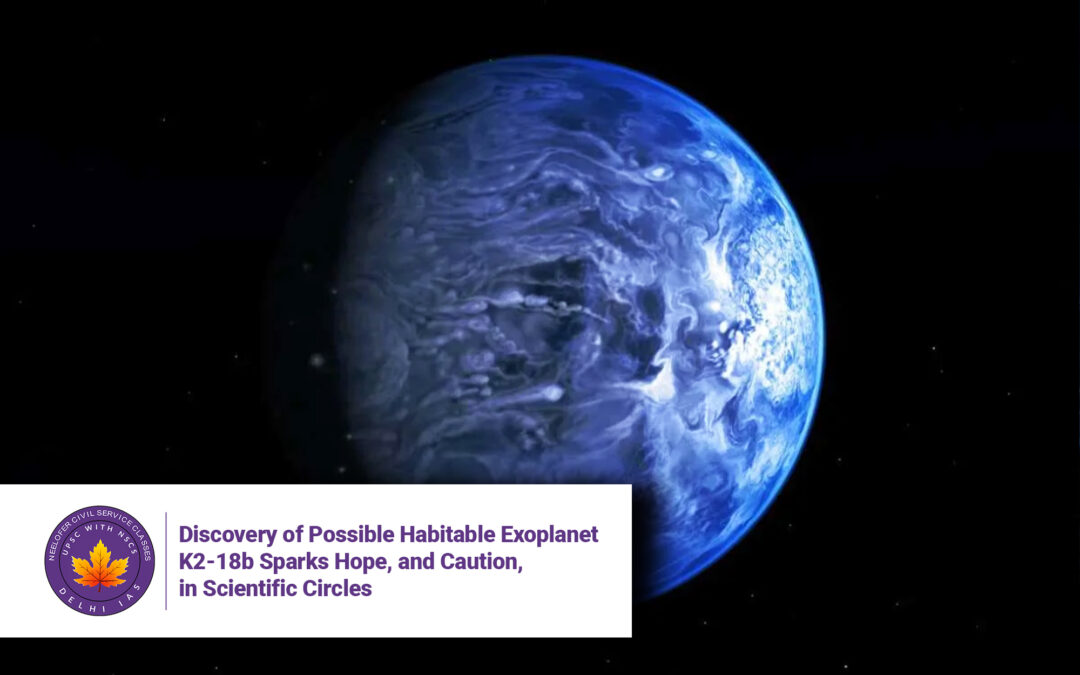
Discovery of Possible Habitable Exoplanet K2-18b Sparks Hope, and Caution, in Scientific Circles
Why in News?
The University of Cambridge released a statement on April 17 announcing a study that suggests exoplanet K2-18b could be habitable. This sparked global interest due to the potential signs of biological activity beyond our solar system. However, experts caution against premature conclusions, citing the need for data refinement and further verification. 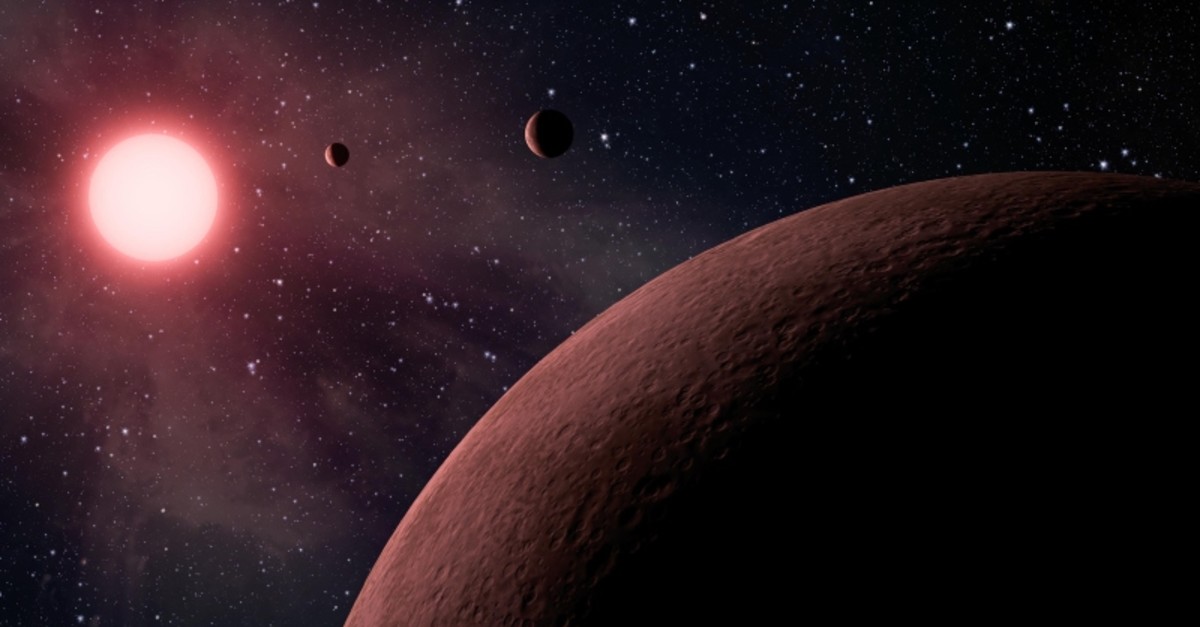
Introduction
The recent discovery related to exoplanet K2-18b has ignited both excitement and skepticism in the scientific community. While headlines boasted “strongest hints yet of biological activity outside the solar system,” the researchers themselves have been more cautious. The detection of dimethyl sulphide—a compound associated with life on Earth—in K2-18b’s atmosphere is being explored as a potential biosignature.
Key Issues and Background
1. The Detection and Its Implications
-
Scientists detected dimethyl sulphide (DMS) or dimethyl disulphide in the atmosphere of K2-18b.
-
DMS is known on Earth as a byproduct of biological activity, especially from marine organisms.
-
If confirmed, this could be a groundbreaking indication of habitability or life beyond Earth.
2. Scientific Caution and Call for Verification
-
Despite media hype, the paper remains measured in its claims.
-
Authors stress the importance of cross-verification, refinement of data, and reducing uncertainties.
-
History shows that many exoplanet biomarker claims have been overturned upon further analysis.
The Core of the Concern
1. Need for Dispassionate Scientific Rigor
-
The cosmos still holds vast, unknown phenomena, making false positives a real risk.
-
Curiosity is key, but uncritical hype can derail serious research.
2. Threat to Curiosity-Driven Research
-
A significant concern is the shrinking financial support for space and curiosity-based science.
-
Funding cuts under the Trump administration (especially to NIH, NASA, and NOAA) are seen as targeting scientific inquiry that doesn’t align with political ideologies.
Key Observations
-
The White House’s 2026 budget proposal includes:
-
27% cut to NOAA.
-
Major reductions in NASA’s Goddard Space Flight Center and earth-science budget.
-
-
Such actions are viewed as an attempt to control the narrative of scientific research.
-
Universities, including top global institutions, have faced threats of grant withdrawal based on non-compliance with political norms.
Conclusion
While the hint of life on K2-18b opens exciting scientific possibilities, it also highlights the delicate balance between scientific freedom and political control. The suppression of curiosity-driven research poses a major threat to progress. Humankind must preserve its ability to explore the unknown, or risk becoming more ideologically rigid and less informed in a universe full of mysteries.
Q&A Section
Q1. What is the exoplanet K2-18b known for?
Ans: K2-18b is suspected to be habitable and may contain dimethyl sulphide in its atmosphere, a possible sign of life.
Q2. Why is the detection of dimethyl sulphide significant?
Ans: It is a gas typically produced by biological processes on Earth, making its presence a potential biosignature.
Q3. What do scientists say about the discovery?
Ans: They urge caution, emphasizing the need to refine data, reduce uncertainties, and avoid jumping to conclusions.
Q4. What concern has been raised about scientific research in the U.S.?
Ans: The Trump administration’s budget cuts to scientific bodies like NASA and NIH threaten independent, curiosity-driven research.
Q5. What is the article’s main message?
Ans: While the universe holds exciting possibilities, over-politicization and defunding of scientific research could hinder future discoveries and limit human understanding.
