
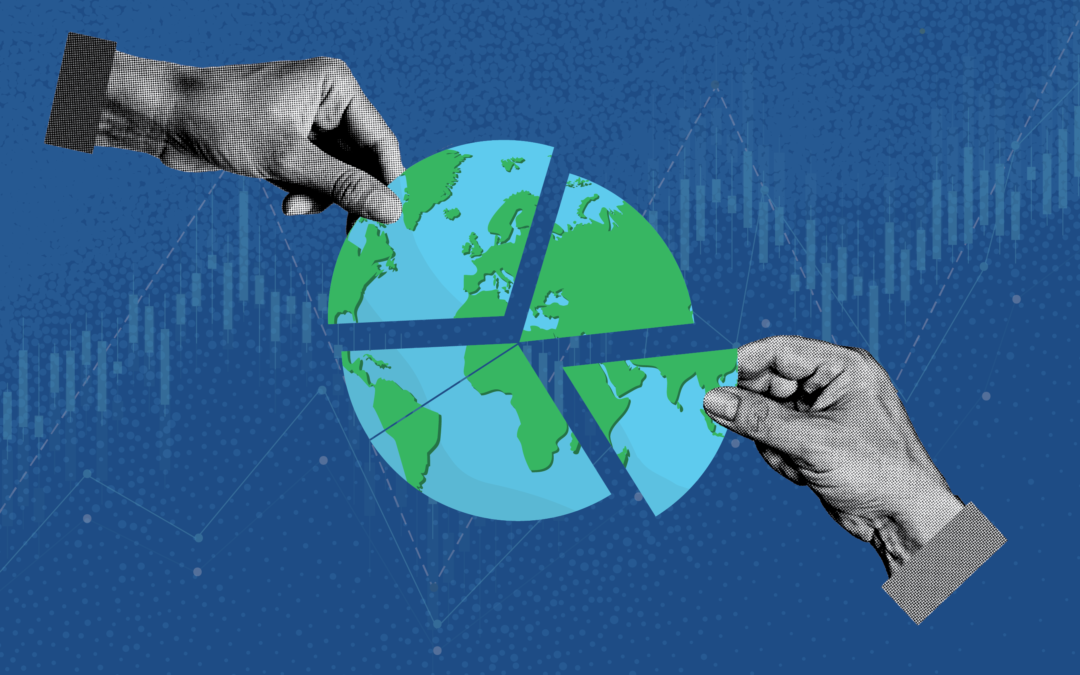
Diplomacy and Table Manners, Rethinking Civilized Leadership in Global Politics
Why in News?
The recent rhetoric and behavior of Donald Trump and JD Vance towards Ukrainian President Volodymyr Zelenskyy have reignited debates about diplomatic decorum, the nature of global leadership, and the underlying realities of international power politics.

Introduction
Conventional wisdom often associates diplomacy with politeness, civility, and moral superiority. Yet, history paints a different picture—one where “civilized” nations, while maintaining table manners, have engaged in ruthless foreign interventions. The current discourse surrounding Trump and Vance’s alleged “rudeness” towards Zelenskyy risks distracting us from deeper, systemic issues inherent in global politics.
Key Features
A History of Intervention
- Since World War II, the United States has led operations to destabilize or overthrow governments in over 70 countries.
- Examples include:
- US involvement in Greece (1940s) to counter communist forces.
- The 1953 overthrow of Iranian Prime Minister Mohammad Mosaddegh.
- CIA-supported assassination of Congo’s Patrice Lumumba in 1960.
- Military interventions in Vietnam and Chile, notably under Nixon.
The Myth of Polite Diplomacy
- Barack Obama, viewed as a “polite” leader, oversaw extensive drone strikes and military operations.
- Obama’s presidency was lauded for civility, yet his foreign policy often aligned with traditional American imperialism.
Politeness as a Distraction
- Criticizing Trump’s and Vance’s rudeness ignores the broader continuity of aggressive foreign policies pursued by both “polite” and “impolite” leaders.
- Leaders like King Leopold II of Belgium, despite their royal diplomacy, were responsible for brutal colonial exploitation.
Specific Impacts or Effects
The Ukrainian Context
- Ukraine’s NATO membership bid has been characterized by Russia as a direct threat, intensifying geopolitical tensions.
- Western narratives often simplify Russia as “mad” and irrational while portraying NATO and its allies as civilized and rational actors.
Excusing Western Imperialism
- The focus on Putin as “mad” deflects attention from Western actions that contributed to the current crisis.
- American and European policies, including delayed security guarantees for Ukraine, reveal strategic calculations rather than moral clarity.
Challenges and the Way Forward
Challenges
- Recognizing the underlying realpolitik that drives international relations, regardless of diplomatic civility.
- Overcoming media portrayals that frame conflicts as battles between civilized and barbaric states.
Steps Forward
- Encouraging a more honest appraisal of international politics, moving beyond surface-level assessments of politeness and manners.
- Understanding that national self-interest, rather than moral superiority, often dictates foreign policy.
Conclusion
The debate over diplomacy and table manners risks simplifying complex geopolitical realities. The impoliteness of Trump and Vance should not be seen as aberrations but as reminders of the often brutal nature of international politics. Recognizing this truth is essential for developing a more realistic understanding of global affairs.
Questions and Answers
1. Why is there renewed focus on diplomacy and politeness?
Recent comments by Donald Trump and JD Vance towards Ukraine’s Zelenskyy have sparked debate about diplomatic decorum.
2. What historical actions challenge the idea of “civilized” diplomacy?
US interventions in Iran (1953), Congo (1960), Vietnam (1960s-70s), and Chile (1973) demonstrate aggressive policies behind polite diplomacy.
3. How did Barack Obama exemplify this contradiction?
Though praised for civility, Obama oversaw drone strikes and expanded US military actions.
4. What is the main criticism of Western leaders in this debate?
That they often mask imperialist policies behind polite diplomatic behavior.
5. How is Russia’s behavior often framed in Western media?
As irrational and “mad,” contrasting with portrayals of Western leaders as rational and civilized.
6. What role does NATO play in the Ukraine crisis?
NATO expansion and the rejection of security guarantees for Ukraine heightened tensions with Russia.
7. What is the critique of the “Putin is mad” narrative?
It simplifies geopolitical realities and excuses Western provocations.
8. How do Western and Russian actions compare?
Both are driven by national self-interest and realpolitik, rather than fundamental differences in rationality or civility.
9. What lesson should be learned from this debate?
That global politics are shaped by power dynamics and interests, not table manners.
10. What is the article’s central message?
Politeness in diplomacy should not distract from the often harsh realities of international power struggles.

