
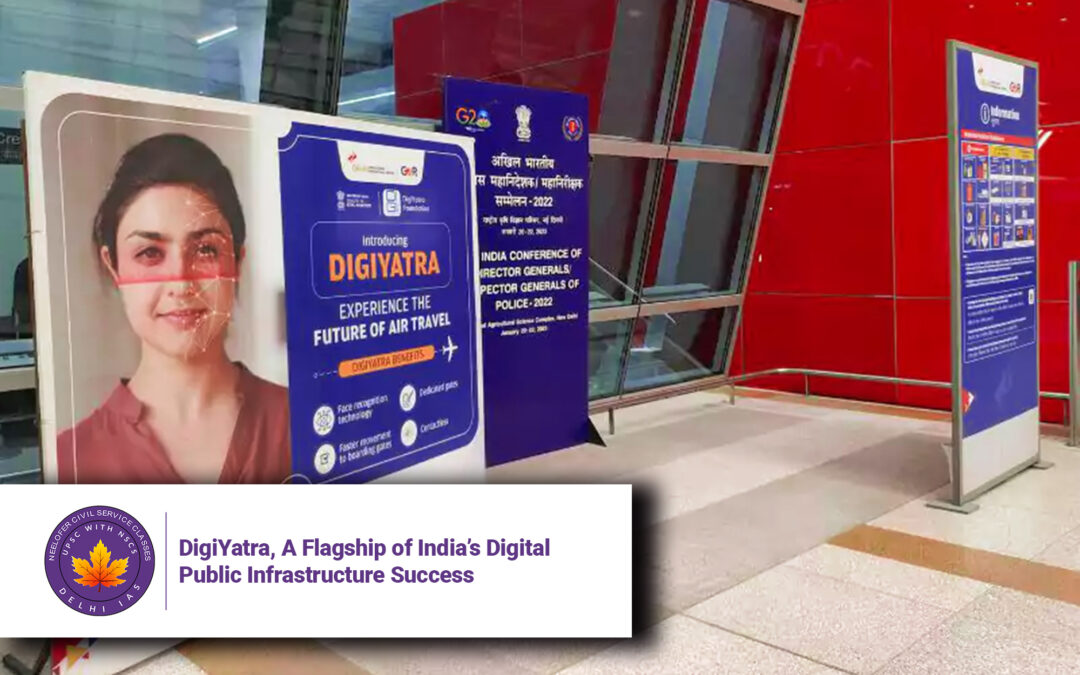
DigiYatra, A Flagship of India’s Digital Public Infrastructure Success
Why in News?
DigiYatra, India’s contactless digital travel initiative, is emerging as a leading model of Digital Public Infrastructure (DPI). With rapid expansion across major airports and increasing user adoption, DigiYatra represents India’s tech-driven, citizen-centric approach to public service transformation. 
Introduction
DigiYatra is designed to offer a seamless, paperless, and contactless air travel experience using facial recognition technology. It reflects India’s broader DPI goals, emphasizing digital identity, real-time data sharing, institutional design, and secure data governance. The service ensures faster check-ins and shorter queues while improving security and convenience for passengers.
Key Features of DigiYatra
-
Facial Recognition Technology (FRT): Used for paperless entry at various checkpoints.
-
Voluntary and Consent-based: Passengers can opt in, register using DigiLocker or Aadhaar, and upload their boarding passes via the DigiYatra app.
-
Interoperability: The app works across multiple platforms and ensures integration with other systems like DigiLocker, e-ticketing, and ID verification.
-
Secure Data Model: All data remains on the passenger’s device and is deleted 24 hours after travel, enhancing privacy and security.
Expansion and Usage
-
Launched in December 2022, the DigiYatra platform has expanded quickly. As of May 2024:
-
Over 2.5 million users are registered.
-
It is operational at 13 airports, including Delhi, Varanasi, Hyderabad, Bengaluru, Mumbai, Ahmedabad, and Kochi.
-
-
International Reach: The system complies with European GDPR norms, allowing scalability to international airports.
-
DigiYatra aligns with the Indian government’s vision of DPI by improving efficiency, transparency, and citizen experience.
Impact and Future Prospects
-
Time and Cost Efficiency: DigiYatra reduces boarding times, improves throughput, and cuts operating costs at airports.
-
Public-Private Partnership Model: Built and operated by a not-for-profit consortium, DigiYatra is an example of co-governance, where government and private sectors collaborate.
-
Potential for Global Leadership: Just like UPI in digital payments, DigiYatra showcases India’s ability to build scalable tech solutions for real-world problems.
Conclusion
DigiYatra is more than a digital boarding tool—it is a bold statement of how India’s DPI architecture can deliver high-impact, low-cost solutions at scale. With its citizen-first approach, transparency, and interoperability, DigiYatra is now being hailed globally as a replicable and sustainable model in public sector innovation.
5 Questions and Answers
Q1. What is DigiYatra and what purpose does it serve?
A: DigiYatra is a digital travel initiative using facial recognition to enable seamless, paperless, and contactless air travel in India.
Q2. How does DigiYatra ensure data security and privacy?
A: Passenger data is stored on the user’s device and deleted within 24 hours of travel. It complies with European GDPR standards.
Q3. Where is DigiYatra currently operational?
A: It is operational in 13 Indian airports including Delhi, Varanasi, Bengaluru, Mumbai, and Hyderabad.
Q4. Is DigiYatra mandatory for travelers?
A: No, DigiYatra is a voluntary, consent-based platform. Passengers can opt in via the DigiYatra app.
Q5. How does DigiYatra support India’s Digital Public Infrastructure (DPI) vision?
A: It integrates secure digital identity, interoperability, and citizen-centric service delivery, aligning with the DPI goals of scalability, transparency, and efficiency.

