
Source: The Hindu
Topic: Deportation vs. Pushback – The Complexities of Handling Illegal Immigration in India
Why in News?
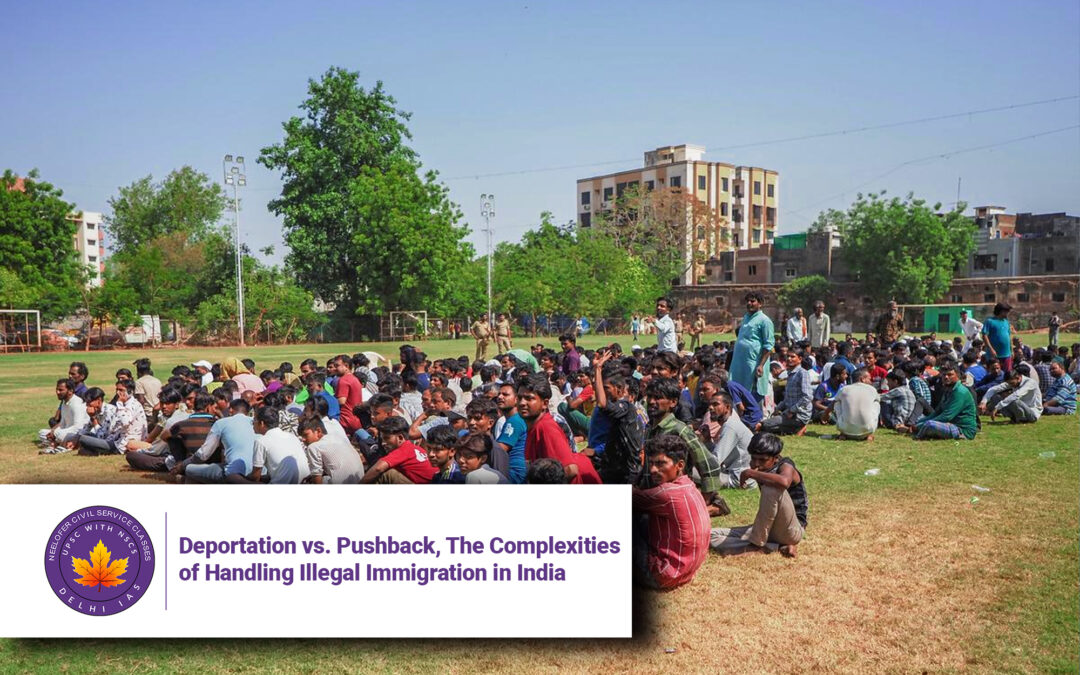
Recent incidents in West Bengal and Assam involving the return and repatriation of Bangladeshi nationals have sparked legal, political, and humanitarian debates on India’s deportation policies. A major question has emerged around the legal difference between deportation and pushback, and how the Indian legal framework treats illegal immigrants, especially in border states. 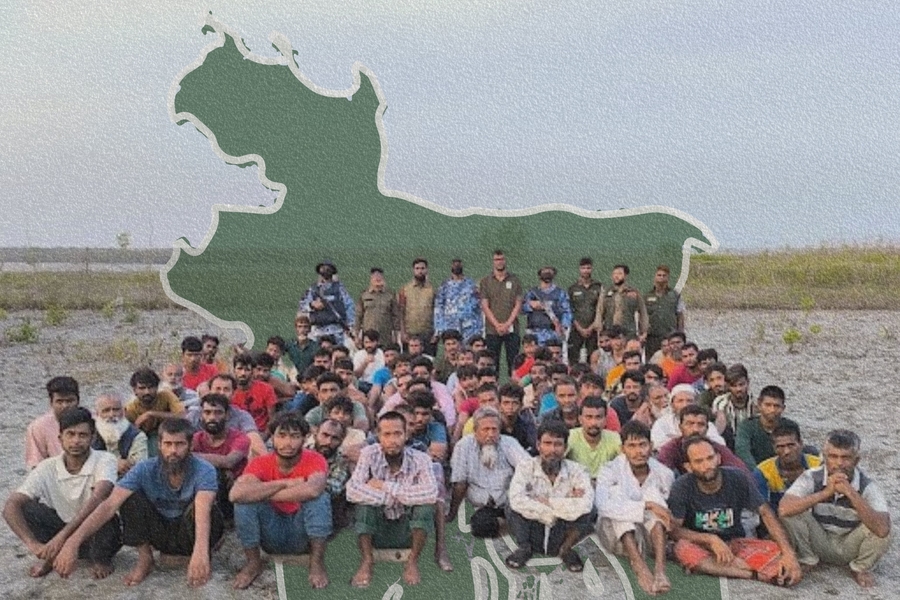
Introduction
India’s eastern borders, particularly those with Bangladesh, have witnessed a surge in operations to identify and remove illegal immigrants. The Ministry of Home Affairs has intensified deportation efforts under ‘Operation Shishtachar’ and other campaigns. The distinction between deportation and pushback, however, has created confusion and concern.
Key Issues and Developments
-
Deportation vs. Pushback:
-
Deportation is a legal process initiated after identifying a foreigner staying illegally, following court proceedings or executive orders.
-
Pushback refers to the immediate physical expulsion of individuals found crossing the border illegally, often without completing formal legal procedures.
-
-
Assam and the 1950 Law:
Assam CM Himanta Biswa Sarma has declared intentions to revive the 1950 law, allowing the state to identify and expel illegal immigrants independently. This effort includes invoking the Immigrants (Expulsion from Assam) Act, 1950. -
State-Federal Conflict:
The Jharkhand HC ruled in 2024 that the central government cannot maintain a separate force solely for deportation, placing responsibility on state police. -
Recent Controversy in West Bengal:
Several residents pushed back into Bangladesh by the BSF were later brought back to India after political and humanitarian outcry. These individuals claimed to be Indian citizens. -
Fencing and Surveillance:
India shares a 4,096-km border with Bangladesh and has fenced much of it. Assam and West Bengal are under pressure to track illegal entrants, especially Rohingya Muslims and Bangladeshi migrants.
Legal Framework for Foreigners in India
-
Foreigners Act, 1946
-
Immigration (Carriers’ Liability) Act, 2000
-
Passport (Entry into India) Rules, 1950
-
Illegal Migrants (Determination by Tribunals) Act, 1983 (repealed in 2005 for Assam)
These laws allow the government to arrest, detain, and deport individuals suspected to be in India illegally.
What’s Fueling the Debate?
-
Increasing illegal migration post-2021.
-
Security concerns, particularly after the Pulwama and Uri attacks.
-
Political pressure in border states like Assam, West Bengal, Mizoram, and Tripura.
-
Concerns about human rights violations in cases of pushback without due process.
Conclusion
The challenge lies in balancing national security and legal due process. With Assam likely to enforce a separate deportation law and other states demanding a central mechanism, India must now address the legal, humanitarian, and constitutional implications of handling illegal immigration.
5 Q&A Based on the Article
Q1. What is the legal difference between deportation and pushback?
A1. Deportation is a formal legal process carried out after confirming identity and due process, while pushback is an immediate action taken to force individuals back across the border without formal proceedings.
Q2. What is the Immigrants (Expulsion from Assam) Act, 1950?
A2. This Act empowers the Assam government to expel persons whose stay is deemed harmful to state interests. CM Himanta Biswa Sarma plans to enforce this act to identify and deport illegal immigrants.
Q3. Why is the issue controversial in West Bengal?
A3. Several people pushed back to Bangladesh were later brought back after it was claimed they were Indian citizens, raising legal and political questions.
Q4. What did the Jharkhand HC rule in 2024 regarding deportation?
A4. The court ruled that deportation must be done by the state police and not by a separate federal agency dedicated only to identifying foreigners.
Q5. How long is India’s border with Bangladesh and how is it managed?
A5. India shares a 4,096 km border with Bangladesh. Much of it is fenced, and the Border Security Force (BSF) patrols it to prevent illegal migration.

