
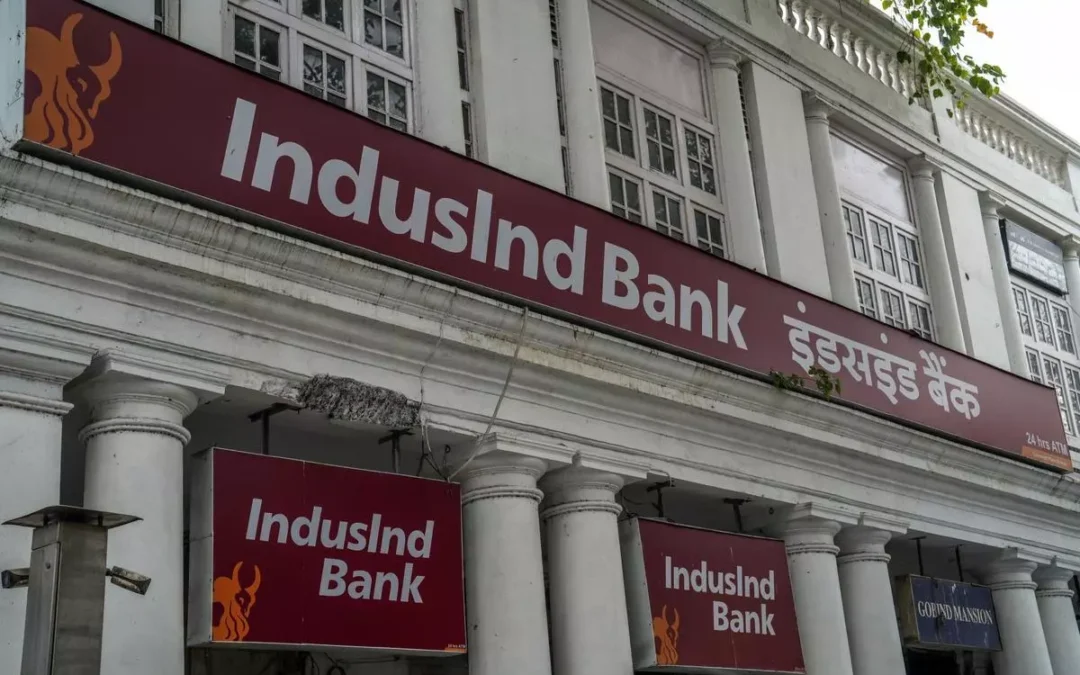
Decoding IndusInd Derivative Discrepancies
Why in News?
IndusInd Bank recently disclosed discrepancies in its derivative accounting, leading to a significant drop in its stock price. The issue has raised concerns among investors and regulators, prompting an internal review and external audit. 
Introduction
On Monday, IndusInd Bank revealed to the stock exchanges that an internal review had found discrepancies in the accounting for certain derivatives. This will have a one-time impact of approximately ₹1,500 crore, which is 2.35% of its Q3 FY25 book value. These discrepancies date back five to seven years before FY25. To ensure transparency, the bank has engaged an external agency for validation, with the audit expected to be completed by the end of the financial year.
Key Issues
- Nature of Discrepancies: The issue revolves around derivative trades used for hedging foreign currency risks associated with borrowings and deposits. A specific type of trade, a swap between the treasury department and an internal derivative desk, led to an accounting mismatch.
- Regulatory Directive: The RBI Master Direction (2023) mandates the discontinuation of internal derivative desks. Before April 1, 2024, IndusInd squared off all open positions, uncovering the discrepancies.
- Accounting Treatment: The first leg of these transactions was recorded on a swap-costing basis, while the second leg was marked-to-market. This differential treatment caused financial inconsistencies, particularly when deposit withdrawals were premature.
Challenges and the Way Forward
- Market Confidence: The disclosure has affected investor sentiment, leading to a sharp decline in the bank’s stock price. Addressing the issue swiftly is crucial to restoring trust.
- Audit Findings: The external audit is expected to validate the bank’s assessment. Delays or additional disclosures may further impact credibility.
- Regulatory Scrutiny: The RBI may take a stricter stance, possibly introducing further guidelines to ensure banks adhere to proper accounting standards for derivative trades.
- Possibility of Mismanagement: Though the bank claims the discrepancies were revealed proactively, concerns remain over why these issues were not disclosed earlier when the external agency was engaged in October 2024.
Conclusion
While it is premature to conclude if there was intentional fraud, the discrepancies highlight the importance of robust internal controls and regulatory compliance. The financial sector will be closely watching the findings of the external audit, and IndusInd’s response will be crucial in mitigating long-term reputational risks.

