
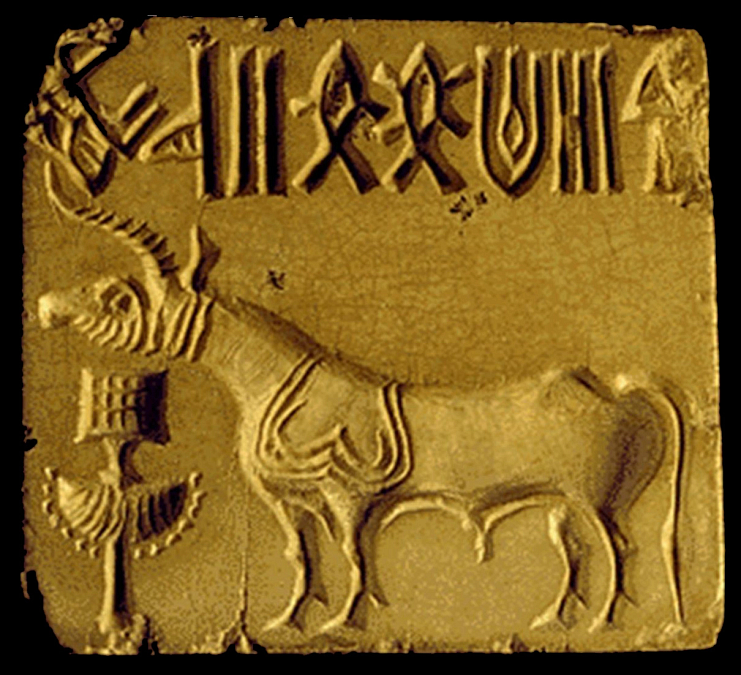
Deciphering the Indus Script: New Findings Suggest Sanskrit Origins, Challenging Aryan Invasion Theory
Why in News?
An Indian cryptographer’s breakthrough in decoding the ancient Indus Valley script points to Sanskrit as the root language. This discovery has the potential to challenge long-standing theories about the Aryan invasion and the cultural divide between northern and southern India. 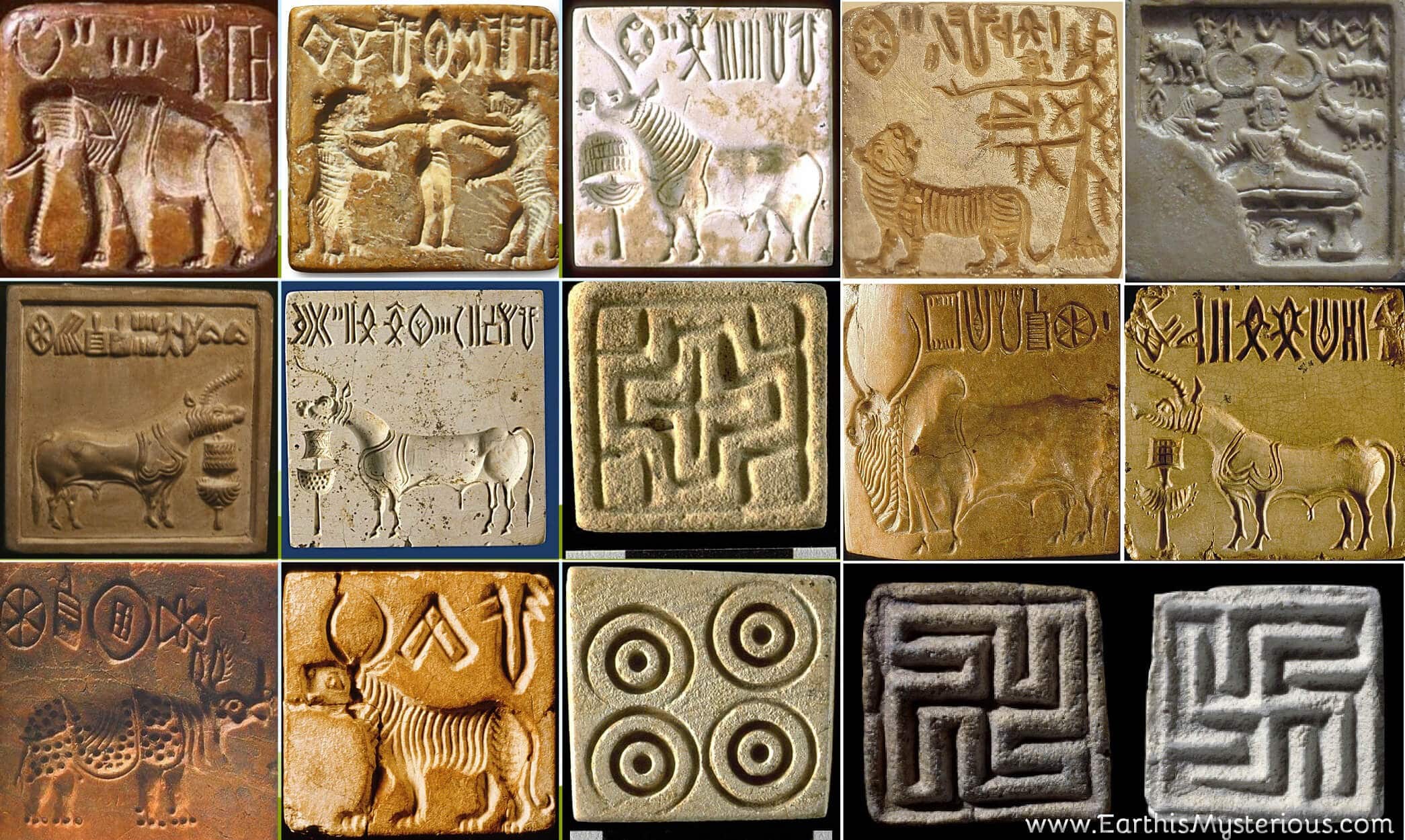
Introduction
Yajnadevan, also known as Bharath Rao, is an Indian cryptographer who may have cracked the code of the ancient Indus Valley script, a language that has defied decipherment for millennia. His research suggests Sanskrit could be the underlying language of these inscriptions, challenging established theories of Indian history.
Key Features
- Ancient Script Context: The Indus script dates back to 4,000 BCE and has resisted previous attempts at decipherment due to the absence of bilingual inscriptions, which helped decipher other ancient languages like Egyptian hieroglyphics and Sumerian cuneiform.
- Use of Cryptography: Rao applied modern cryptographic methods, particularly Shannon’s information theory, to solve the mystery of the Indus script. He used frequency analysis and pattern recognition to identify recurring symbols and their likely meanings.
- Hypothesis on Language: Rao ruled out “agglutinative languages” such as Dravidian, Sumerian, and Elamite due to their linguistic structure not matching the Indus script. He noted features in the script consistent with Vedic Sanskrit.
- Key Observations:
- Some symbols in the Indus script repeat three times consecutively, a pattern found in Vedic Sanskrit but not in agglutinative languages.
- The script includes compound words and root-based variations typical of Sanskrit.
- Prefixes and suffixes appeared as standalone words in different contexts, inconsistent with agglutinative language structures.
- Sanskrit Connection: Rao’s decoding linked Indus symbols to Brahmi symbols, which produce similar sounds in Sanskrit and Brahmi, suggesting Brahmi evolved from the Indus script.
Specific Impacts or Effects
- Reading Sanskrit Inscriptions: Rao’s work makes it possible to read Indus inscriptions in Sanskrit, revealing messages related to deities, rituals, food, and trade, confirming the Indus Valley Civilization’s complex social and economic life.
- Evidence of Ancient Trade: Mentions of the sea and home in inscriptions support archaeological evidence of maritime trade and connections with Mesopotamian civilizations.
- Cultural Continuity: The findings suggest Sanskrit was in use as early as 4,000 BCE, well before the traditionally accepted period of 1,500 BCE.
Challenges and the Way Forward
Challenges
- Acceptance of Rao’s findings may be hindered by the entrenched belief in the Aryan invasion theory.
- Further peer-reviewed research and verification are necessary to validate the proposed decipherment.
Steps Forward
- Scholarly Review: Encouraging international scholarly review of Rao’s findings to establish credibility.
- Interdisciplinary Studies: Promoting linguistic, archaeological, and genetic studies to cross-verify historical narratives.
- Public Awareness: Educating the public about new evidence that challenges outdated theories of Indian history.
Conclusion
Yajnadevan’s work on the Indus Valley script offers groundbreaking insights that may rewrite Indian history. His decipherment suggests Sanskrit was spoken and written in India far earlier than previously thought. If verified, this discovery could dismantle the Aryan invasion theory and demonstrate the cultural and linguistic unity of ancient India.
Questions and Answers
-
Who is Yajnadevan, also known as Bharath Rao?
An Indian cryptographer who applied modern techniques to decode the Indus Valley script. -
What is the significance of the Indus Valley script?
It dates back to 4,000 BCE and has remained undeciphered until recent breakthroughs. -
Which linguistic structure did Rao rule out in his research?
Agglutinative languages like Dravidian, Sumerian, and Elamite. -
What language did Rao identify as potentially underlying the Indus script?
Vedic Sanskrit. -
How did Rao approach the decipherment of the script?
By applying Claude Shannon’s information theory, analyzing symbol frequencies and patterns. -
What is the significance of Rao’s findings on the Aryan invasion theory?
It challenges the theory by suggesting Sanskrit was already spoken and written in India by 4,000 BCE. -
What evidence supports the claim of maritime trade in the Indus Valley Civilization?
Inscriptions mentioning the sea and home, consistent with archaeological findings. -
What script did Brahmi evolve from, according to Rao’s research?
The Indus script. -
What are the broader implications of Rao’s decipherment for Indian history?
It suggests cultural and linguistic continuity in India, undermining theories of external invasion. -
What steps are recommended to validate Rao’s findings?
Peer-reviewed studies, interdisciplinary research, and scholarly consensus-building.

