
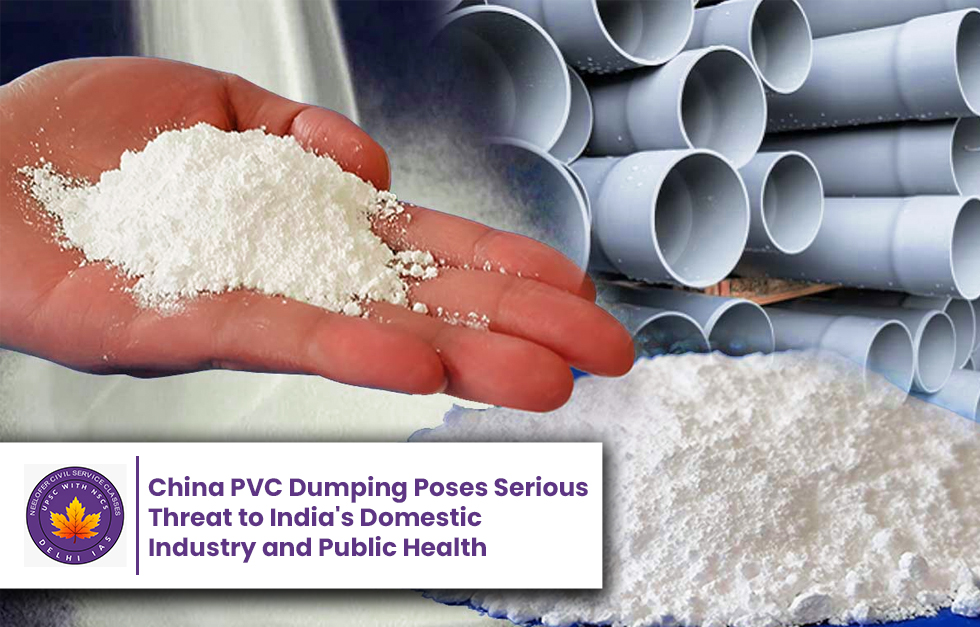
China PVC Dumping Poses Serious Threat to India’s Domestic Industry and Public Health
Why in News?
Amidst ongoing global trade tensions, India’s PVC (polyvinyl chloride) industry is facing mounting pressure due to large-scale dumping of cheap, substandard PVC resin from China. Recent studies highlight the urgent need for policy intervention to protect domestic manufacturers and ensure public health safety, as Chinese imports flood the market with non-compliant and low-quality materials. 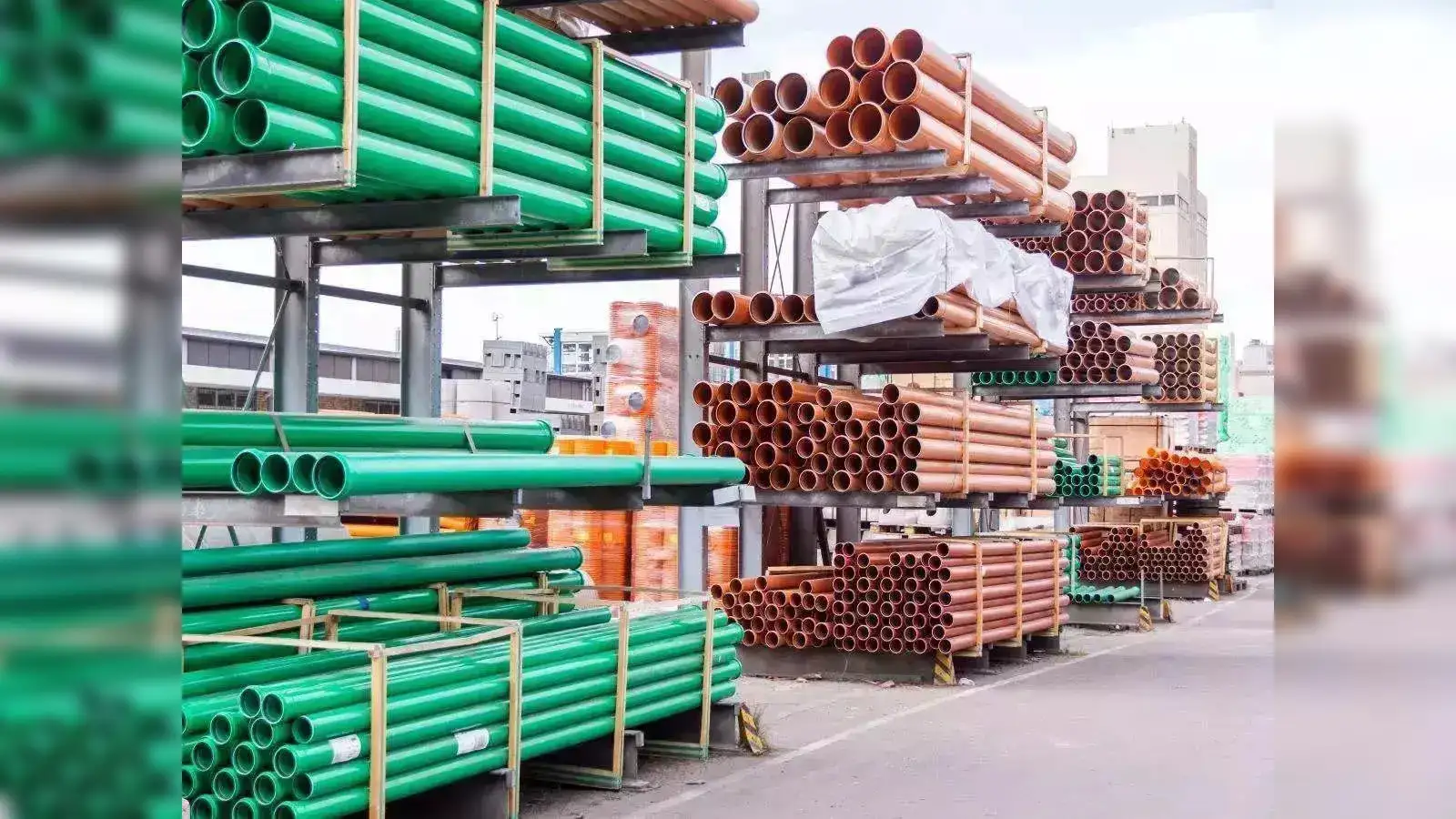
Introduction
India produces nearly 1.4 million tonnes of PVC annually, primarily used in pipes, cables, and packaging. However, domestic manufacturers are under threat from heavily subsidised Chinese imports, which offer lower prices but often fail to meet Indian quality and safety standards. This trend not only jeopardises the local industry but also raises major health and environmental concerns.
Key Issues and Background
1. Quality Concerns and Regulatory Gaps
Chinese PVC resins, governed by Guobiao (GB) standards, often do not meet India’s regulatory benchmarks. For instance:
-
Indian standards require less than 2 ppm (parts per million) of residual vinyl chloride monomer (RVCM), a carcinogenic substance.
-
GB standards allow up to 10 ppm, posing significant health risks if used in food-grade packaging or water pipes.
Despite this, Chinese PVC continues to be widely used, bypassing compliance and endangering public safety.
2. Domestic Industry Under Strain
According to the Centre for Domestic Economy Policy Research (C-DEP), Chinese imports now make up to 1.4 million tonnes of PVC annually. Domestic manufacturers face:
-
Price undercutting due to Chinese subsidies.
-
Loss of market share.
-
Stagnation in technology upgrades due to unfair competition.
-
Increased reliance on imports, which threatens long-term self-sufficiency.
India currently imports around 95% of its PVC, despite having significant production capacity.
3. Policy Loopholes and Enforcement Issues
Although BIS (Bureau of Indian Standards) certification is mandatory for all plastic resins sold in India under the BIS Act, enforcement remains weak.
The Foreign Manufacturers Certification Scheme under BIS allows international producers to sell in India, but compliance checks are often bypassed or inconsistently applied.
Moreover, the Quality Control Order (QCO) requires that all manufacturers, foreign or domestic, meet BIS certification standards. However, many Chinese exporters continue to flout this rule, exploiting weak oversight and loopholes in import screening.
4. WTO Compatibility and Trade Fairness
Critics argue that stricter quality control enforcement and import regulations do not violate WTO norms, as long as they apply equally to domestic and foreign players. Therefore, India has the legal room to enforce higher health and safety standards without facing trade retaliation.
Specific Impacts or Effects
-
Health Hazards: Use of uncertified PVC in water pipes, food containers, and medical applications may lead to serious health risks due to high RVCM levels.
-
Industrial Disruption: Small and medium-sized enterprises (SMEs) in India’s plastic manufacturing sector are particularly vulnerable and face closure or reduced capacity.
-
Job Losses: Industry stagnation leads to lower employment potential and lost opportunities in downstream sectors.
-
Investment Risks: With no incentive to improve product quality or expand capacity, domestic firms are reluctant to invest further, weakening India’s industrial base.
Challenges and the Way Forward
Challenges
-
Weak BIS enforcement at ports and customs
-
Lack of monitoring and testing infrastructure
-
Price sensitivity in Indian markets encouraging import over quality
-
Political hesitation due to trade ties with China
Steps Forward
-
Immediate enforcement of BIS and QCO standards for PVC imports
-
Declare PVC as a regulated commodity under the strict quality compliance regime
-
Set up a permanent monitoring system at entry points
-
Encourage domestic investment through subsidies or protectionist policies
-
Increase public awareness on health risks of substandard plastic use
Conclusion
China’s aggressive dumping of PVC into India is not just an economic concern but a major public health issue. Without swift regulatory enforcement and strategic trade policies, India risks losing its manufacturing edge and exposing millions to harmful materials. A robust framework, similar to that used in kitchen appliances and chemicals, is urgently needed to protect both consumers and the domestic industry.
5 Questions and Answers
Q1: What is the main issue with Chinese PVC imports in India?
A: They are cheaper but often do not meet Indian BIS safety and quality standards, posing risks to public health and hurting local manufacturers.
Q2: What health risks are associated with substandard PVC?
A: High levels of residual vinyl chloride monomer (RVCM), a known carcinogen, used in pipes and packaging can contaminate drinking water and food.
Q3: How much of India’s PVC demand is currently met by imports?
A: Nearly 95%, with China being the largest contributor due to subsidised production.
Q4: What is the role of the Quality Control Order (QCO)?
A: It mandates that all imported and domestic plastic resins must comply with BIS certification, though enforcement is currently weak.
Q5: What can India do to protect its PVC industry?
A: Enforce BIS standards strictly, improve customs screening, incentivize domestic production, and raise public awareness about quality and safety.

