
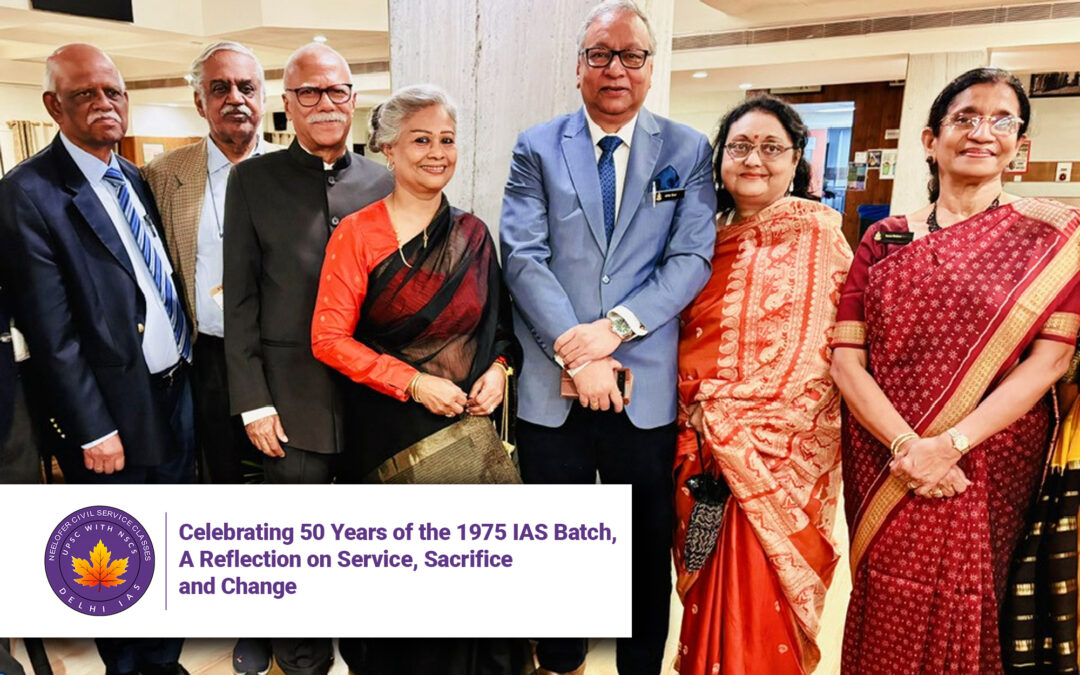
Celebrating 50 Years of the 1975 IAS Batch, A Reflection on Service, Sacrifice and Change
Why in News
July 2025 marks the 50th anniversary of the Indian Administrative Service (IAS) batch of 1975. As a tribute, former and current civil servants are looking back on their journey that began during one of India’s most politically volatile periods — the Emergency. This reflection sheds light on the evolution of public administration, governance, and the civil services in the last five decades.
Introduction
The 1975 IAS batch was recruited during a turbulent period in India’s political history. Emergency had just been declared, leading to widespread fear and uncertainty. Yet, despite the chaos, a young group of aspirants boarded trains like the Doon Express with dreams of serving the country. The journey from Mussourie’s academy corridors to the corridors of power in Delhi and beyond was marked by extraordinary experiences, service, and resilience.
From a diversity of educational backgrounds — ranging from liberal arts to engineering and STEM — the batch became a symbol of how civil services could absorb a range of perspectives and talents. The Emergency and the subsequent decades saw India go through vast political, social and economic changes. The officers from this batch bore witness to, and helped shape, many of those transformations.
Key Issues and Background
-
The Emergency (1975–77): The batch entered public service just three weeks after the Emergency was declared. This politically charged environment shaped their early experiences in administration, law enforcement, and public service.
-
Diversity in Recruitment: Unlike previous years, the 1975 batch saw a major influx of officers from humanities and social science backgrounds, breaking the earlier dominance of STEM graduates. This helped broaden the scope of governance to include more inclusive policymaking.
-
Changing Governance Structures: From centralized planning to liberalization in the 1990s, from agrarian reforms to digital governance, officers from this batch worked through dramatic shifts in India’s governance and economic model.
-
Educational Institutions: The article recalls the formative influence of prestigious institutions like Presidency, St. Stephen’s, and engineering colleges in the creation of a strong intellectual base for civil services.
Significance and Reflections from the Batch
-
Personal Journeys and National Commitments: Officers recall how they sang “Academy Song” in unison, bonded over discipline and service, and developed a spirit of unity amid diversity.
-
Experience with People’s Movements: Some civil servants were influenced by the JP movement of the 1970s and the subsequent waves of political activism that followed.
-
Reforms and Realities: Officers reflected on administrative and policy reforms, decentralization, and participatory governance. While transparency and technology have made today’s officers more empowered, the moral compass and human touch remain critical, as emphasized by senior officers.
-
Challenges in Current Times: The current batch of officers, they believe, faces high expectations but limited autonomy due to political overreach and fear of decision-making. This was not the case in their time.
Challenges and the Way Forward
-
Loss of Moral Authority in Governance: Officers noted that bureaucrats today are often hesitant to take bold decisions due to fear of media trials, political backlash, or anti-corruption scrutiny.
-
Shrinking Autonomy: There’s growing concern that bureaucratic autonomy has been curtailed, making it difficult to lead transformational reforms.
-
Need for Value-Based Leadership: Future officers must be trained in ethical decision-making, inclusivity, and the courage to act in the public interest despite political or social pressure.
-
Bridging the Gap: Officers emphasized the need for stronger coordination between policymakers, political executives, and grassroots-level bureaucrats to ensure that governance reaches the most vulnerable sections.
Conclusion
Fifty years since they joined service during one of the darkest political chapters in Indian democracy, the 1975 IAS batch reflects a story of courage, service, adaptation, and hope. Their legacy serves as a reminder that the strength of India’s civil services lies not only in law books and files but also in lived experiences, moral integrity, and public connection.
Looking forward, the message is clear: as India modernizes and as citizens demand better governance, it is imperative that civil servants not only be skilled and efficient but also deeply humane and ethically grounded.
5 Questions and Answers
1. Why is the 1975 IAS batch significant?
Because they joined service during the Emergency, a highly volatile political period, and went on to witness and shape several phases of India’s democratic, economic and administrative evolution.
2. What changes were observed in the recruitment pattern in 1975?
The 1975 batch had a higher intake from humanities and social sciences, unlike the usual STEM-heavy batches. This introduced new perspectives in public service.
3. How did the Emergency affect the batch’s outlook?
It deepened their understanding of governance under stress, heightened awareness of democratic values, and tested their administrative resolve in extraordinary circumstances.
4. What are the key concerns highlighted by the officers today?
Rising political interference, reduced autonomy, and a reluctance to take bold decisions due to fear of consequences were cited as major issues in today’s administrative environment.
5. What is the way forward for India’s civil services?
To focus on ethical governance, decentralization, innovation, and training that prepares officers to act with courage, compassion, and integrity in the face of modern challenges.

