
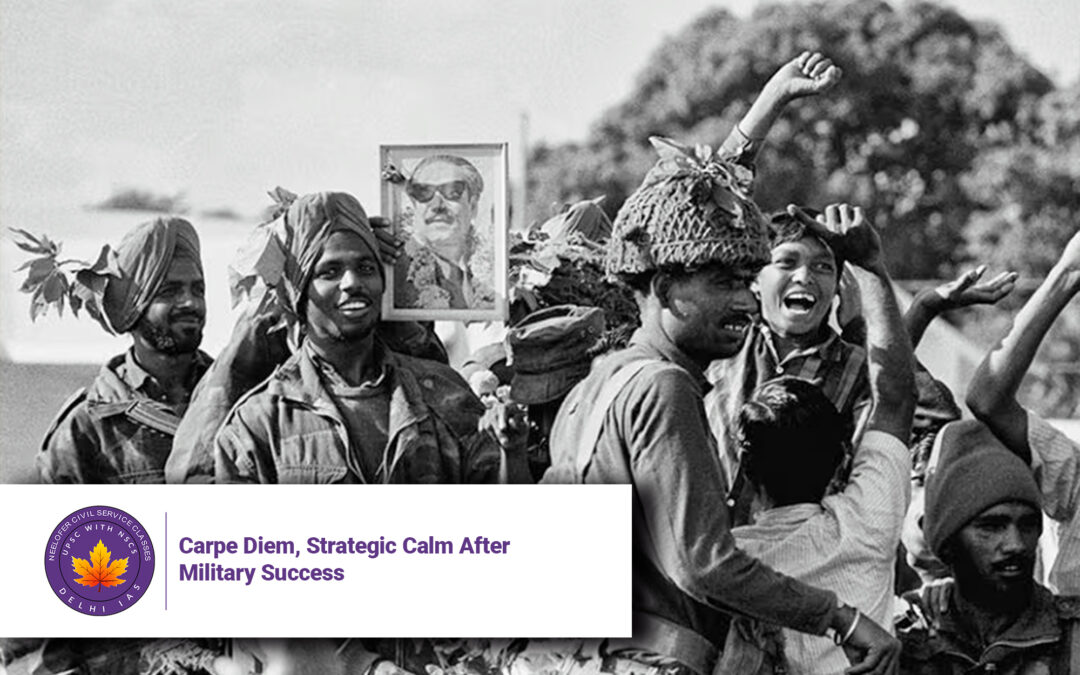
Carpe Diem, Strategic Calm After Military Success
Why in News?
Following India’s successful Operation Sindhuraad—a preemptive strike in response to terrorism—questions are now being raised about what India’s next strategic move should be. Should India use this momentum for further action, or is it time for sober reflection and diplomatic calm? 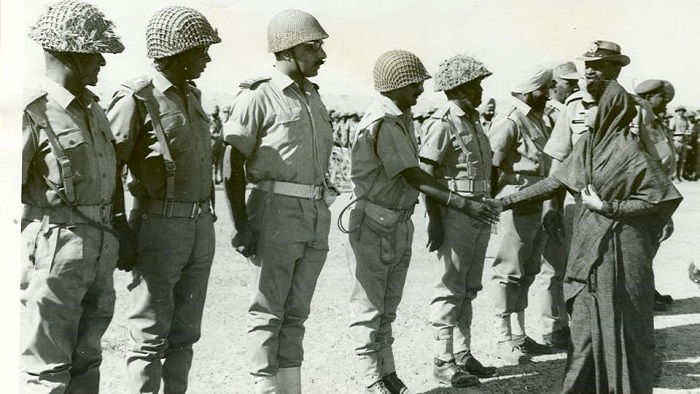
Introduction
There’s a famous line from Shakespeare’s Julius Caesar: “There is a tide in the affairs of men…” Makarand R. Paranjape invokes this sentiment to argue that India has seized a strategic opportunity through Operation Sindhuraad. But now, in the aftermath, India must decide its next steps—not with emotion, but with cold, rational calculations.
Key Background and Issues
-
Operation Sindhuraad: More Than Military Victory
-
The operation inflicted heavy damage on terrorist infrastructure in Pakistan.
-
The victory is not just in terms of casualties or territory, but in terms of psychological, strategic, and regional shifts in balance.
-
-
A Shift in Regional Power Dynamics
-
The successful strike may have shifted the regional balance in India’s favor.
-
This could signal the beginning of a new phase where India’s deterrence posture is respected more than before.
-
-
Pakistan’s Dilemma: Internal Faultlines
-
The article points to internal unrest in Pakistan, especially in Balochistan, where demands for autonomy or independence are rising.
-
India is advised not to get emotionally carried away or publicly provoke instability but observe and respond strategically.
-
-
Historical Reference: Learning from 1971
-
The comparison with India’s role in liberating Bangladesh in 1971 is made.
-
Back then, India’s strategic patience, international diplomacy, and military timing were crucial.
-
The lesson: emotional posturing should not override long-term national interests.
-
-
Cold Calculations over War Cries
-
The author emphasizes restraint—arguing that pushing too far, too soon may not serve India’s long-term goals.
-
Instead of public euphoria or aggressive declarations, India must now focus on diplomatic and economic consolidation.
-
Five Key Takeaways
-
India must resist public or political pressure to escalate and instead think long-term and rationally.
-
The situation in Balochistan could be monitored strategically but not exploited recklessly.
-
Victory in Operation Sindhuraad opens new diplomatic doors, not just military ones.
-
Historical comparisons to 1971 Bangladesh Liberation highlight the value of timing and calculation.
-
National strategy must rise above social media noise and political theater.
Challenges and the Way Forward
Challenges:
-
Managing public expectations post-victory.
-
Avoiding overreach that could trigger international backlash.
-
Maintaining strategic focus in a volatile region.
Way Forward:
-
Use current momentum for stronger global diplomacy.
-
Support peace, but remain prepared for defense.
-
Focus on internal stability and economic strength to match external wins.
Conclusion
Operation Sindhuraad may have dealt a blow to terrorism and altered South Asia’s power equations, but the bigger battle is in strategy and diplomacy. India must now tread carefully—balancing strength with wisdom, and victory with vision.
Q&A Section
1. What is the main message of the article?
The author urges India to act wisely after its recent military success—not emotionally, but with calculated strategy, keeping long-term national interest in mind.
2. Why is Balochistan mentioned in the context?
Because internal unrest in Balochistan offers a parallel to East Pakistan in 1971, but the author advises India to observe and not act prematurely or provocatively.
3. How is the 1971 war relevant today?
It shows the importance of timing, diplomacy, and strategic depth, which helped India then—and should guide its approach now.
4. What are the risks of escalation?
Aggressive moves without planning could trigger international backlash or even destabilize the region further.
5. What should India do next according to the author?
Consolidate its victory with quiet strength—strengthen international ties, monitor regional developments, and keep military options open without fanfare.

