
Capitalism and the Trumpian Disruption, A Global Turning Point
Why in News?
Former U.S. President Donald Trump’s approach to global trade and capitalism marked a significant departure from traditional norms. His retributive economic policies, focused on bringing capital back to America through tariffs and nationalism, created a moment of global financial disruption. As protectionism rises, especially in the U.S., the world—and countries like India—must rethink their economic strategies. 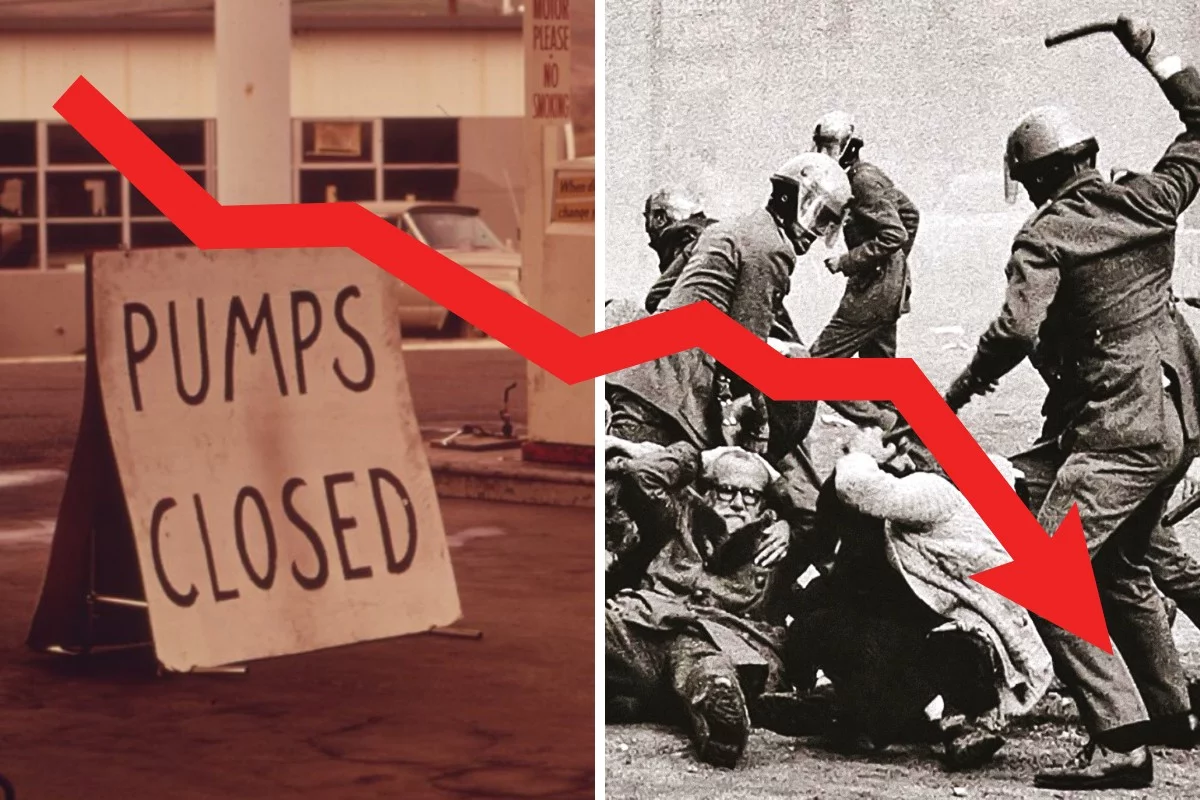
Introduction
Capital, for all its strength and influence, has rarely faced such a moment of both great opportunity and extreme vulnerability. Historically courted by nations, capital now finds itself at a crossroads. Donald Trump’s unique economic vision disrupted global markets by turning inward—trying to pull capital back into the U.S. and punishing the mechanisms that previously allowed it to flow freely across borders.
Trump’s Vision of Capitalism
Trump’s philosophy is based on using America’s greatest leverage—the vast domestic market and purchasing power—to force companies back to U.S. soil. Through high import duties and threats of restricted access to the American market, he aimed to incentivize manufacturing within the country and punish offshoring.
This approach, which we can term retributive capitalism, focused less on global interdependence and more on self-interest and domestic dominance. It was built on the idea that American capital should never have left—and if it did, it must now return.
Implications and Challenges
Trump’s strategy has multiple short-term and long-term consequences:
-
Inflation & Uncertainty: Higher tariffs increase costs for consumers, reduce the Federal Reserve’s ability to manage interest rates, and raise inflationary pressures.
-
Investment Decisions: Global investors now face unpredictability, making them cautious about putting capital in politically charged or protectionist economies.
-
Ripple Effects Globally: Countries like India, dependent on global openness to fulfill economic aspirations, must now reassess their strategies.
Meanwhile, the Chinese economic model—state-led investment, regulatory support, and assertive capital deployment—is already challenging the older frameworks of capitalism. With the U.S. turning inward, China’s alternative model gains influence.
India’s Dilemma and Missed Opportunity
India, amid these tectonic shifts, had a narrow window to position itself as a credible, stable alternative for global capital. Unfortunately, while Trump closed America’s doors, New Delhi didn’t open wide enough. Indian economic policymakers failed to fully utilize the moment when global capital was searching for new, reliable homes.
Instead of emerging as a secure hub, India’s cumbersome policies, slow reforms, and lack of targeted incentives may have held it back. As the global economic architecture reshuffles, India’s best path forward is clear: open up, not close in.
Conclusion
The Trumpian rupture forced the world to confront a new kind of economic nationalism. While it promised protection and revival for American industries, its global costs have been significant. As countries grow more protective, India’s best bet lies in doing the opposite—being open, stable, and reliable. In this era of uncertainty, the Indian Way might be the smartest way forward.
5 Q&A: Understanding the Trumpian Capital Shift
Q1. What is meant by Trump’s “retributive approach” to capitalism?
It refers to policies that punish companies for offshoring by imposing tariffs and barriers, with the aim of forcing them to return manufacturing to the U.S.
Q2. How does this approach affect global markets?
It creates inflation, policy unpredictability, and discourages cross-border capital movement. It also increases the risk of trade wars and global recessions.
Q3. Why is capital considered vulnerable now despite its power?
Because governments are using capital politically—to assert sovereignty, reorient supply chains, and protect domestic jobs—undermining global market stability.
Q4. What did India miss during this global shift?
India had a chance to attract fleeing global capital by offering stable policies and reforms. However, it didn’t move fast or boldly enough to seize the moment.
Q5. What can India do going forward?
India must focus on opening up, simplifying regulations, and becoming a dependable destination for global investments. A rules-based, transparent economy is the key.
