
Building India 2047, The Infrastructure Challenge Ahead
Why in News?
India aims to become a global economic superpower by 2047, with projections suggesting the economy must grow consistently over 7.5% for the next two decades. While key infrastructure initiatives are already underway under Prime Minister Narendra Modi’s leadership, the challenges of delayed projects, policy bottlenecks, and governance inefficiencies threaten to derail this ambitious vision. 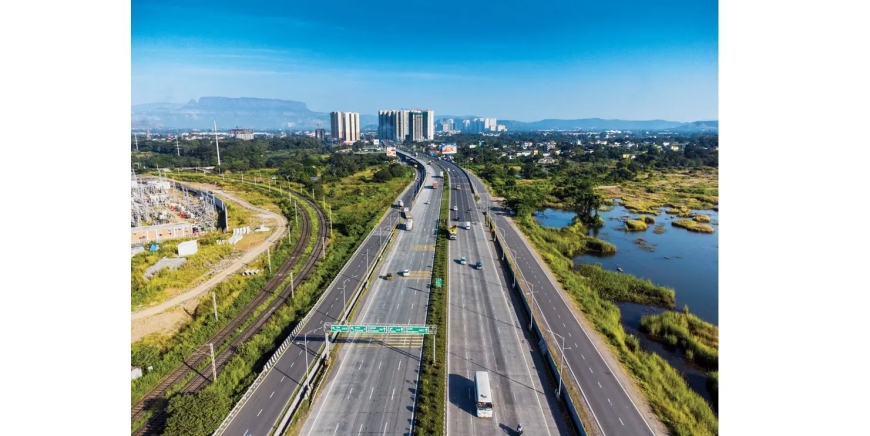
Introduction
To meet the India@2047 goal, significant improvements in infrastructure quality, project implementation, and bureaucratic accountability are vital. Economist and editor Prof. Sunil Datta argues that while infrastructure spending has surged, on-ground execution continues to be riddled with inefficiencies. Unlocking India’s economic potential requires resolving chronic public project delays, improving the ease of doing business, and promoting productive entrepreneurship.
Key Issues and Institutional Concerns
1. Infrastructure Quality Lags Behind Investment
Despite massive budget allocations and high-profile announcements, newly built infrastructure often suffers from poor quality and delay. For instance, highways, railways, and urban renewal projects commonly face overruns in time and cost.
2. Execution Delays and Cost Escalation
Projects across sectors—transport, urban infrastructure, aviation—face significant execution bottlenecks. Highways remain unfinished months after deadlines, and modernisation of civil aviation suffers from bureaucratic red tape.
3. Entrepreneurial Frustration
Even seasoned entrepreneurs struggle due to poor logistics, inconsistent rules, and lack of institutional support. This leads to disinterest in infrastructure-driven ventures and undermines innovation.
4. Public Sector Bottlenecks
Public sector efficiency remains a major barrier. Government departments like DGCA (aviation), DGH (hydrocarbons), and railway boards often act slowly, blocking rapid reforms. These agencies must become enablers rather than obstacles.
5. International Best Practices Missing
India lags behind nations like Japan, South Korea, and China in efficient infrastructure governance. These countries succeeded through clear regulatory frameworks, agile execution, and strong public-private collaboration—something India still grapples with.
Conclusion
For India to truly emerge as an economic powerhouse by 2047, a transformation in infrastructure governance is essential. Merely increasing expenditure is not enough. Execution must be timely, quality must be uncompromising, and entrepreneurial energy must be harnessed. Without this, even the best-laid plans will falter. Only when infrastructure policy becomes outcome-oriented, will India realise its demographic dividend and economic destiny.
Q&A Section
1. Q: What is the India@2047 vision?
A: It is the goal of transforming India into a global economic power by the year 2047, marking 100 years of independence, with consistent high GDP growth and robust development.
2. Q: What are the main issues plaguing infrastructure projects in India?
A: Poor quality of construction, chronic delays, bureaucratic red tape, cost overruns, and weak accountability mechanisms.
3. Q: How has the Modi government responded to infrastructure needs?
A: By increasing investment through schemes like PM Gati Shakti and allocating massive funds for roads, airports, and logistics hubs.
4. Q: Why are delays in public projects problematic for entrepreneurs?
A: Delays increase costs, reduce profitability, disrupt timelines, and discourage private investment in infrastructure-related ventures.
5. Q: What lessons can India learn from other countries?
A: Countries like Japan and South Korea have succeeded by building efficient regulatory systems, ensuring fast project clearances, and fostering strong coordination between government and industry.

