
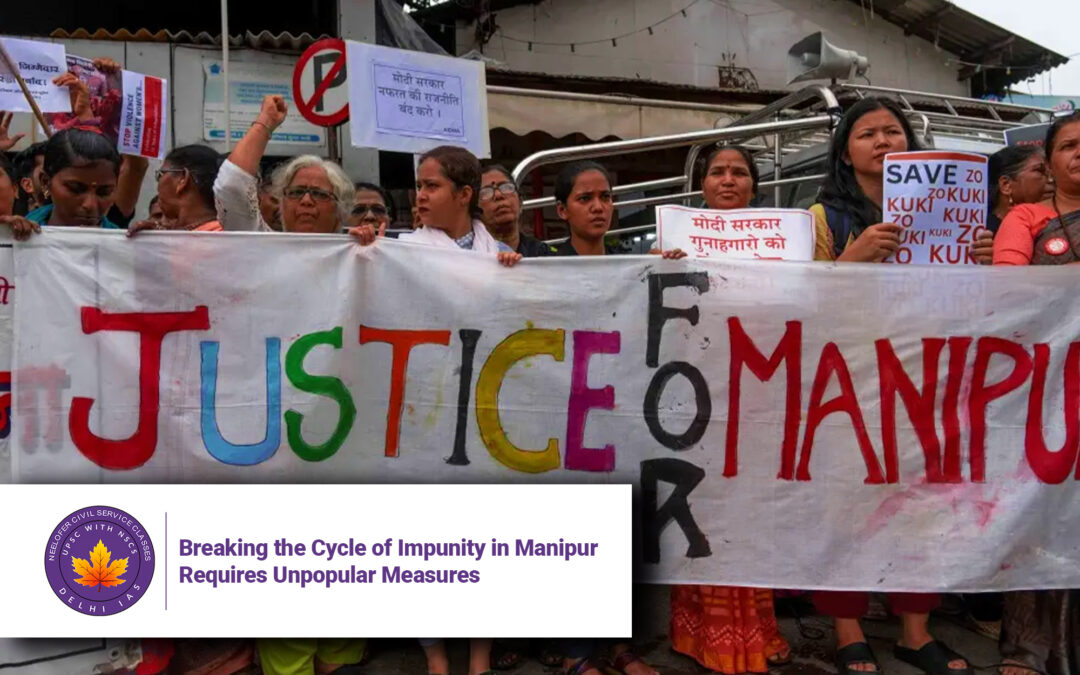
Breaking the Cycle of Impunity in Manipur Requires Unpopular Measures
Why in News?
Ethnic conflict in Manipur continues to escalate due to deep-rooted grievances between communities. The recent announcement by the Biren Singh government to implement strict measures to end the cycle of violence and impunity has drawn national attention. The Imphal Valley has also witnessed action against leaders of extremist groups who incite and engage in unlawful violence. 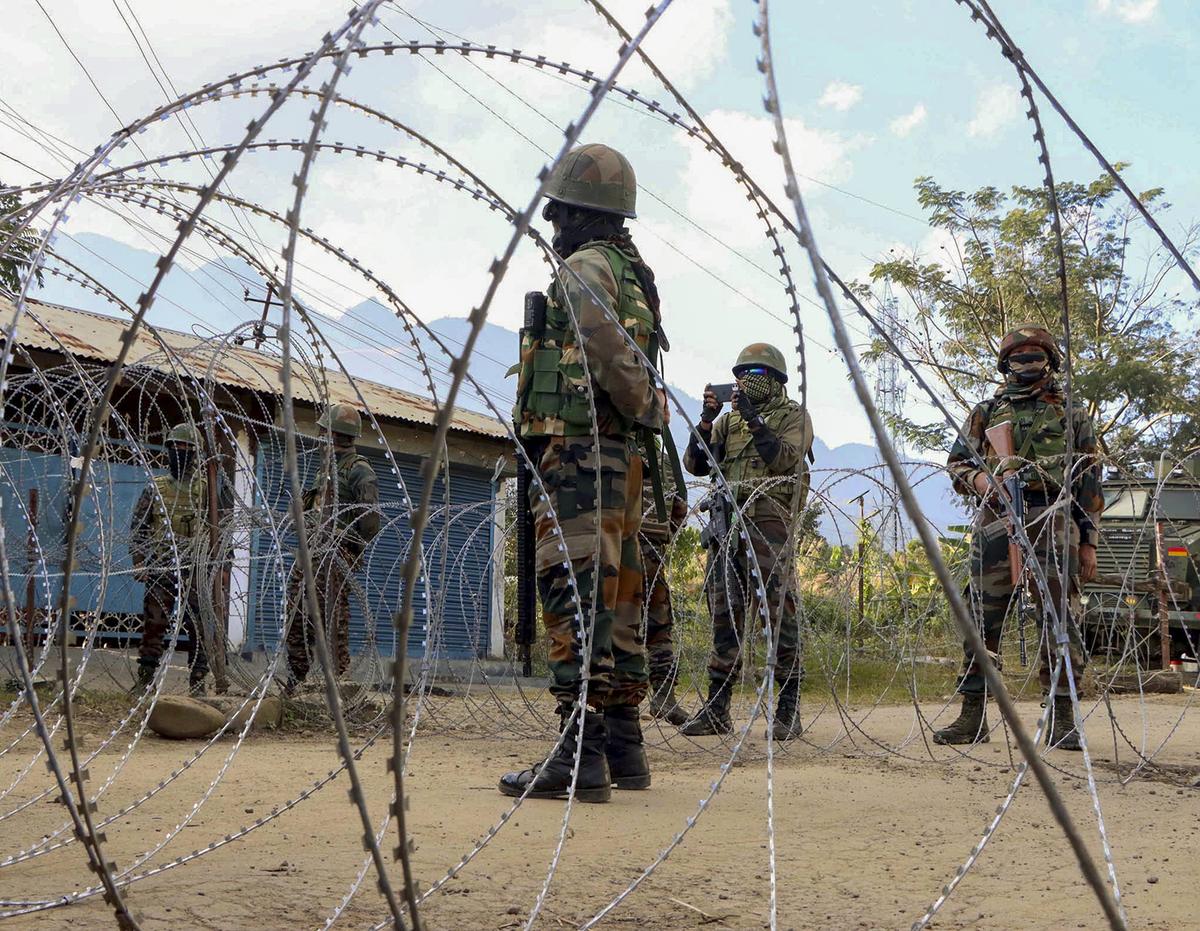
Introduction
Ethnic conflicts, unlike other forms of strife, are difficult to resolve because of historical grievances and community-level distrust. In Manipur, such tensions have spiralled, with chauvinist leaders stoking passions and armed groups enjoying impunity. Reconciliation through compromise becomes difficult when these elements exploit violence to sustain their hold. The government has now taken steps to break this cycle of impunity, but doing so involves unpopular and hard decisions.
Key Issues and Background
1. Role of Chauvinist Groups
-
Chauvinist forces drown out voices of reconciliation by promoting fear and revenge.
-
Groups like Arambai Tenggol actively target law violators with violence and threats.
-
Their presence weakens the state’s authority and erodes trust in law enforcement.
2. Challenges of Enforcement
-
The Biren Singh government faces difficulties in acting against groups that have political backing or community support.
-
The recent pledge-signing campaign by MLAs against violence is a positive but insufficient step.
-
Police and state forces face resistance and lack full cooperation in certain areas.
3. Escalating Violence and Impunity
-
Armed groups have expanded their influence, using violence to silence dissent and control communities.
-
The looting of police weapons and their use in ongoing conflicts is a serious concern.
-
Militant groups also influence public discourse and spread a narrative of fear.
Specific Impacts or Effects
1. Threat to Peace-Building Efforts
-
Armed groups create an environment where dialogue is nearly impossible.
-
Community reconciliation is undermined by constant threats and violent acts.
2. Law and Order Breakdown
-
Police and security forces are under pressure but must act to restore order.
-
The state’s inability to act decisively can further embolden extremist actors.
3. Measures Undertaken by the Government
-
The government is now pushing for:
-
Surrender of looted weapons.
-
Arrest of those involved in crimes.
-
Holding leaders legally accountable for incitement and violence.
-
Challenges and the Way Forward
Challenges
-
Taking action against popular or politically connected leaders.
-
Managing community backlash against enforcement measures.
-
Maintaining public confidence in a deeply polarised society.
Steps Forward
-
The government must:
-
Use legal mechanisms to act against those engaged in violence.
-
Avoid giving in to political pressures that shield wrongdoers.
-
Strengthen community policing and build public trust.
-
Enforce strict accountability for those using violence to pursue ethnic agendas.
-
-
Cross-party cooperation is needed to support these measures and avoid partisan divisions undermining the effort.
Conclusion
Breaking the cycle of impunity in Manipur is essential to restoring peace. The Biren Singh government must continue with unpopular but necessary measures, even in the face of political risks. Unless the rule of law is re-established, peace-building and reconciliation will remain impossible. A united political and administrative approach is needed to ensure lasting peace and justice in the state.
5 Questions and Answers
Q1: What is making the conflict in Manipur more difficult to resolve?
A: Deep-rooted ethnic grievances, chauvinist forces promoting violence, and the presence of armed groups enjoying impunity.
Q2: What steps has the Biren Singh government taken recently?
A: Implementing measures such as seeking the return of looted weapons, arresting those involved in crimes, and pushing for accountability against extremist leaders.
Q3: What is the role of groups like Arambai Tenggol?
A: They have been involved in targeting law violators with violence and threats, undermining law and order and discouraging reconciliation.
Q4: What challenges do the police and state face in enforcing the law?
A: Resistance from politically connected groups, potential community backlash, and the complex dynamics of ethnic polarisation.
Q5: What is recommended for breaking the cycle of impunity?
A: Consistent legal action, avoiding political compromise, engaging in community policing, and building broad political support for enforcement measures.

