
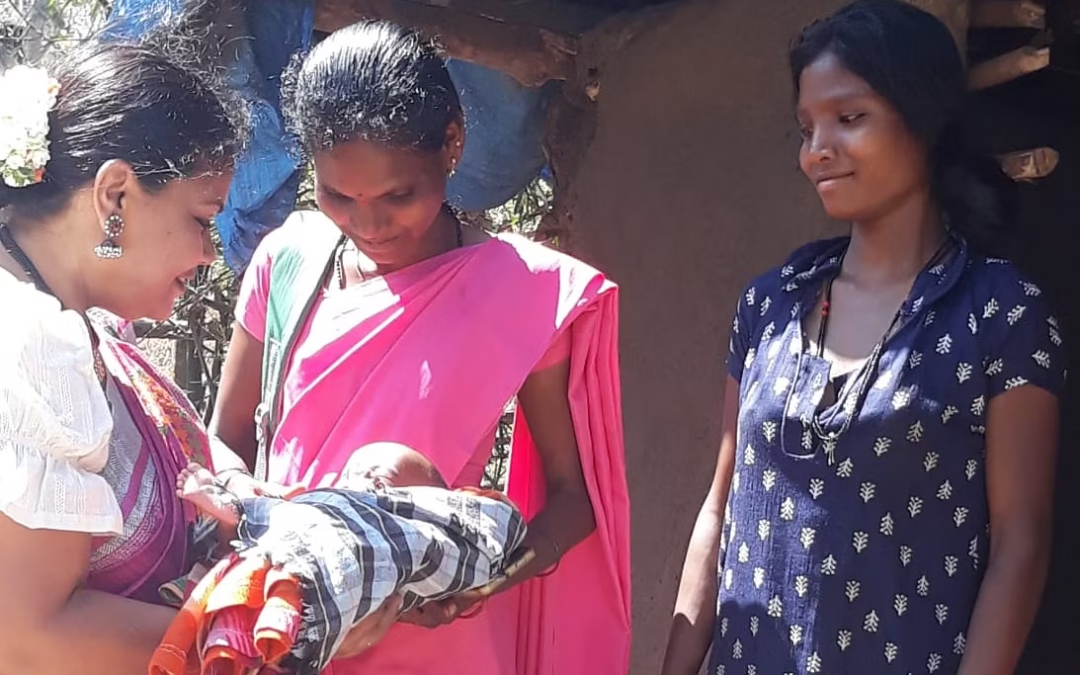
ASHA Workers: The Backbone of Rural Healthcare in India Need Fair Compensation
Why in News? Accredited Social Health Activists (ASHAs) have been at the forefront of India’s rural healthcare system for nearly two decades. Despite their crucial role, they continue to face issues related to inadequate remuneration and lack of formal employment status. Protests demanding fair wages and equitable treatment have once again brought their plight into focus.
Introduction In 2005, the Government of India launched the National Rural Health Mission and introduced ASHAs as a vital link between the community and the public healthcare system. The acronym ASHA, meaning “hope” in Hindi, embodies their role in improving rural health indicators. With over one million ASHAs across the country, they have become the backbone of India’s rural healthcare network. 
Key Features of ASHA Workers’ Role
- Public Health Functions: ASHAs perform a full range of responsibilities, including recording birth and death data and implementing interventions in non-communicable and neglected tropical diseases.
- Maternal and Child Health: They play a crucial role in reproductive, maternal, newborn, child, and adolescent health, ensuring institutional deliveries and promoting immunization.
- Hygiene and Sanitation: They monitor health and sanitation practices in the community, raising awareness and preventing outbreaks of diseases.
- COVID-19 Response: Their contribution during the pandemic highlighted their significance in public health, earning them global recognition.
- Recognition and Awards: In 2022, ASHAs were honored with the WHO Director-General’s Global Health Leaders Award for their outstanding work in promoting health.
Challenges Faced by ASHA Workers Despite their indispensable contribution, ASHAs remain underpaid and unrecognized as permanent employees. They were initially designated as volunteers, which means they receive only a small fixed honorarium from the government, supplemented by performance-based incentives. Estimates suggest that an ASHA worker earns between ₹5,000 to ₹15,000 per month, significantly lower than formal healthcare workers.
A study by PLOS Global Public Health found that the presence of ASHAs increases women’s access to maternal services and institutional deliveries by 1.6 times. However, their heavy workload includes long hours, extensive travel, and frequent meal skipping, impacting their own health and well-being.
Government Efforts and the Need for Change In 2018, the government approved an ASHA benefit package covering accidents, deaths, and disability. While a step in the right direction, it remains inadequate given their strenuous working conditions. Experts argue that ASHAs should be recognized as permanent employees, not just volunteers, and receive salaries and benefits comparable to other government health workers.
Conclusion ASHAs have been instrumental in transforming rural healthcare in India, yet their contribution is not met with fair compensation. As India aims to strengthen its healthcare system, ensuring financial security and professional recognition for ASHAs is imperative. Addressing these issues will not only improve the lives of ASHA workers but also enhance the overall efficiency of India’s public health initiatives.

