
Android Phones Now Key Earthquake Sentinels, Google and UC Berkeley’s Data Reveal Huge Leap in Early Warning Technology
Why in News?
Google and the University of California Berkeley’s Seismology Laboratory have jointly released comprehensive data in the journal Science, evaluating the performance and methodology of the Android Earthquake Alert System (AEA). The data, collected between 2021 and 2024, provides critical insights into how smartphones are now functioning as global earthquake early warning devices.
Introduction 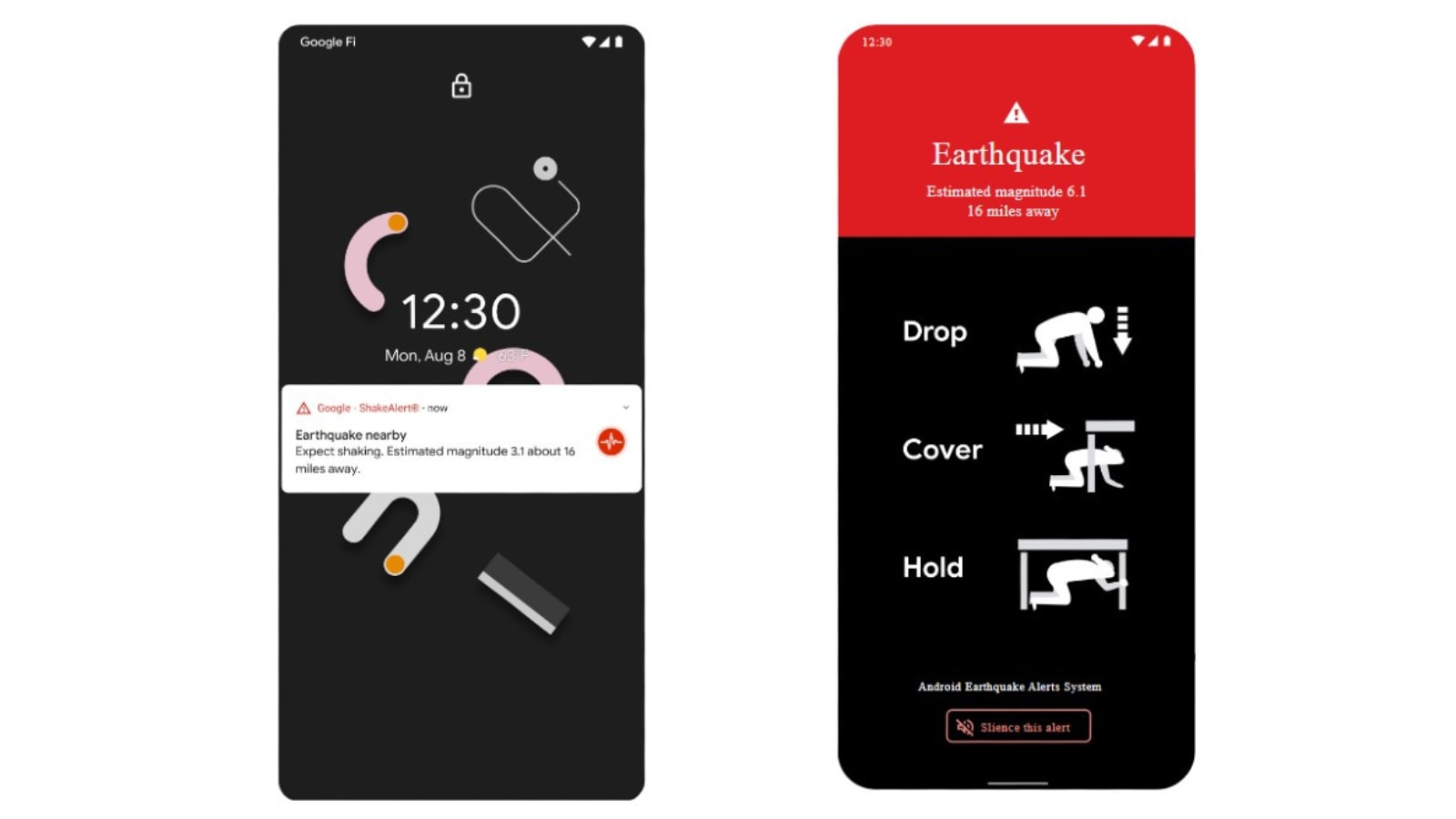
In an era increasingly shaped by innovation, even the smartphone in your pocket is evolving into a life-saving device. With the rising frequency and intensity of natural disasters, particularly earthquakes, technology companies and academic institutions are collaborating to deliver timely alerts. The Android Earthquake Alert System (AEA), launched by Google in 2020 and developed in partnership with the University of California Berkeley, has now matured into one of the most expansive mobile-based seismic alert platforms. The system uses the accelerometers already present in most Android smartphones to detect seismic activity and warn users before shaking begins.
Key Developments and Data Highlights
-
Global Rollout and Reach:
The AEA system first launched in the United States in 2020. It was later expanded to New Zealand, Greece, and gradually to other quake-prone regions. By April 2024, the system had issued alerts for more than 11,231 earthquakes, including major ones in Turkey, Syria, Nepal, and the Philippines. -
User Engagement:
The AEA system sent over 18,000 alerts to users in 98 countries. The research team also surveyed users—especially those in regions hit by earthquakes between February 2023 and April 2024. Around 1.5 lakh users responded, and 79% found the alerts useful or very helpful. -
Real-Time Sensing Using Phones:
When phones detect vibrations caused by a quake, they send this data to Google’s servers. The system then uses algorithms to distinguish between regular motion and genuine seismic activity. If verified, it sends alerts to users in the surrounding region before more dangerous S-waves arrive. -
Types of Waves and Alerts:
The system is designed to detect P-waves (primary waves), which travel faster and arrive first. The more destructive S-waves (secondary waves) follow. The delay between the two can provide a critical window for issuing alerts. -
Alert Features:
-
For stronger shaking: The alert includes an audible warning, even if the device is in silent or “Do Not Disturb” mode.
-
For lighter shaking: Users receive a “Be Aware” alert that doesn’t include audio.
-
These alerts can also be disabled manually by users.
-
The Science Behind It
-
Accelerometers at the Core:
Smartphones come with built-in accelerometers—tiny sensors that detect movement. While primarily designed for tasks like screen orientation, these sensors can also detect shaking from an earthquake. -
Crowdsourced Sensing:
When an earthquake begins, thousands of smartphones in the area may detect vibrations simultaneously. These signals are analyzed in real time by Google’s servers to confirm whether an earthquake is happening. -
Data Processing Speed:
The system processes vibration data in milliseconds and issues alerts swiftly—sometimes 10 to 60 seconds before strong shaking begins. These precious seconds can save lives. -
Surface vs. Deep Quakes:
The system performs best when the earthquake occurs close to the Earth’s surface. Surface waves are more easily detected and are generally responsible for the most damage.
Challenges in Implementation
Despite its impressive performance, the system has certain limitations, which were acknowledged by the researchers in their paper:
-
Magnitude Estimation Issues:
The system sometimes struggles to accurately estimate the magnitude of a quake. In some events, initial magnitudes ranged from 0.5 to 0.25 units lower than actual values. -
Late Alerts in Certain Regions:
In some instances, alerts were issued after shaking had already begun. This occurred due to slow detection or insufficient phone density in specific areas. -
Overcoming Data Noise:
Not all vibrations detected are from earthquakes. Distinguishing between normal motion (e.g., walking, driving) and seismic activity remains an ongoing challenge. -
Connectivity and Speed Barriers:
Alert effectiveness is partly dependent on internet connectivity and phone settings, which vary by user and region. -
Inability to Detect Certain Quakes:
Quakes that occur in sparsely populated or under-connected regions might go undetected due to insufficient phone data.
Major Improvements and Updates
To address these challenges, the AEA team has introduced several algorithmic upgrades:
-
Wave Speed Adjustment:
Algorithms were modified to consider the time delay between P-wave and S-wave arrivals more accurately. For example, in lower-cost areas, the team included an 8 km/s model to better match wave behavior. -
Geological Factors:
Adjustments now account for materials like solids or fluids in the Earth’s crust that can either speed up or slow down wave propagation. -
Expanded Data Sources:
Researchers compared earthquake signals to other vibration events like hurricanes and unrelated noise to fine-tune the system.
Impact on Early Warning Systems Globally
The most significant outcome of this research is the dramatic increase in access to early warning. Between 2019 and 2024, the number of people who could receive alerts grew from just 25 million to 250 million—a tenfold increase. In major disasters such as the 2023 earthquakes in Turkey and Syria, the system provided users with warnings 10–60 seconds ahead of the shaking, giving them time to take cover or evacuate.
Scientific Contribution and Collaboration
This project is a collaborative effort involving:
-
Google
-
University of California Berkeley’s Seismology Lab
-
Scientists affiliated with Harvard University
-
Experts from Germany
Their collective effort highlights the intersection of academia, private tech, and public safety.
The Road Ahead
With improvements still being tested and more real-time data being collected, the Android Earthquake Alert System represents a significant shift in how we think about disaster preparedness. By using existing devices and infrastructure, it removes the need for expensive seismic hardware and puts lifesaving tools directly into the hands of the public.
As data science, artificial intelligence, and smartphone adoption continue to evolve, the hope is that such systems will become even faster, more accurate, and accessible in underrepresented regions. The long-term vision includes not just early warnings but full-scale disaster response integration, alert-based evacuation protocols, and better public awareness.
Conclusion
The Android Earthquake Alert System has already proven its value, but it is only just beginning to tap into its potential. With over 250 million people now within reach of early alerts, and a system that learns and evolves with every earthquake, this is a step toward democratizing safety. It reflects a future where everyone—regardless of geography or wealth—can be protected by the technology in their pocket.
5 Q&A for Better Understanding
Q1. What is the Android Earthquake Alert System (AEA) and when was it launched?
A: The Android Earthquake Alert System (AEA) is a smartphone-based early warning system developed by Google in partnership with the University of California Berkeley. It was launched in 2020 in the U.S. and gradually rolled out worldwide.
Q2. How does the AEA detect earthquakes?
A: The AEA uses the accelerometers in Android smartphones to detect ground shaking. When multiple phones detect similar vibrations, the data is sent to Google servers, which then verify if an earthquake is occurring and issue alerts if necessary.
Q3. What kind of alerts does the system send out?
A: The system sends two types of alerts:
-
“Be Aware” alerts for light shaking
-
“Take Action” alerts for stronger shaking (these include loud audio warnings even if the phone is in silent mode)
Q4. What were the major findings of the research paper released in Science?
A: The paper detailed that the AEA had issued over 18,000 alerts, successfully warned users 10–60 seconds in advance in major quakes, and expanded its reach from 25 million to 250 million users. It also identified challenges like inaccurate magnitude estimates and late alerts in some areas.
Q5. What is the potential of systems like AEA in global disaster management?
A: Systems like AEA democratize access to earthquake early warnings by using widely available smartphones. They offer scalable, low-cost solutions to potentially save lives, especially in regions lacking expensive seismic infrastructure.
