
Anatomy of a Panic, India’s Operation SINDOOR and the Exaggerated Nuclear Threat
Why in News?
India’s recent Operation SINDOOR, launched on May 7 in response to terror threats emanating from Pakistan, has reopened debate about the nuclear deterrent, cross-border military operations, and the role of exaggerated narratives around potential escalation. 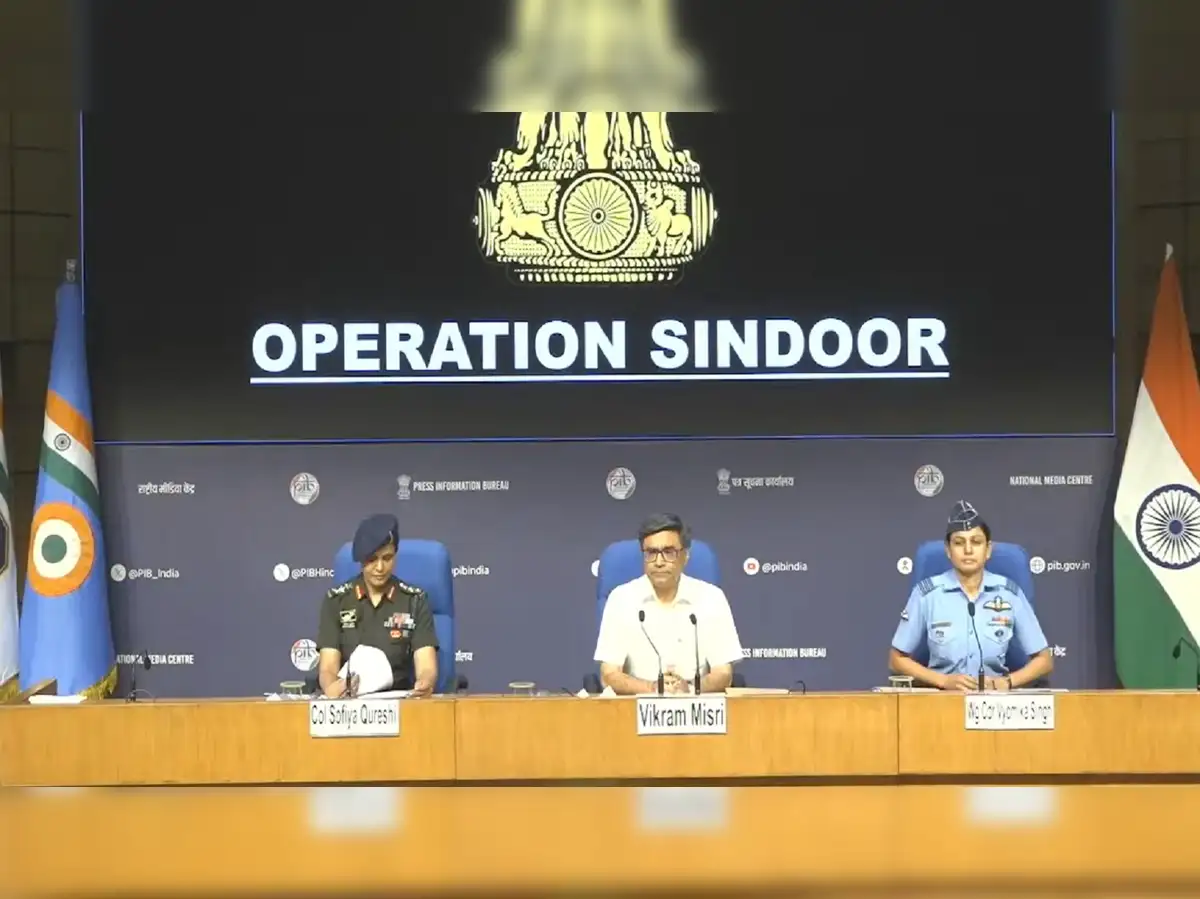
Introduction
Operation SINDOOR marked a precise Indian air strike on Pakistani targets, targeting terror camps near the POK region. This move reignited fears similar to the early 1990s when the possibility of a nuclear conflict between India and Pakistan was sensationalised internationally. Yet, history and recent events show that such fears may often be strategically inflated and disconnected from ground realities.
Key Issues and Background
1. Operation SINDOOR’s Execution
-
Launched on May 7, in response to terror inputs from across the border.
-
Targeted Pakistan’s infrastructure supporting anti-India terror groups.
-
Conducted with precision and tactical secrecy.
2. Nuclear Panic and the 1990 Parallel
-
American journalist Seymour Hersh’s 1993 article claimed India and Pakistan came close to a nuclear exchange in 1990.
-
US satellites allegedly detected nuclear movement during a Kashmir crisis.
-
Declassified US reports and Indian accounts later disproved such threats.
3. Exaggerated Nuclear Scenarios
-
Historical tendency of US analysts and some media to exaggerate the Indo-Pak nuclear threat.
-
Former US official Robert Gates later confirmed that claims of an “impending nuclear war” in 1990 were not based on factual ground reports.
-
India’s responses have been calibrated and measured, even under provocation.
Specific Impacts or Effects
-
Operation SINDOOR shows that India is capable of precision strikes without necessarily triggering major escalation.
-
The nuclear threat narrative continues to be used for strategic manipulation, especially in global media.
-
Exaggerated nuclear fears create international anxiety, complicate diplomacy, and distort the reality on the ground.
Challenges and the Way Forward
Challenges
-
Persistent narrative from Western analysts that nuclear war is always imminent in South Asia.
-
Pakistan’s use of nuclear rhetoric to deter Indian conventional responses.
-
Difficulty in gaining global support due to fearmongering around escalation.
Way Forward
-
India must communicate its strategic restraint and maturity in handling conflicts.
-
Develop a counter-narrative to challenge exaggerated nuclear claims.
-
Continue international engagement to ensure accurate understanding of subcontinental dynamics.
-
Rely on intelligence-backed, precise operations when national security demands action.
Conclusion
Operation SINDOOR demonstrates India’s ability to act decisively and with strategic clarity. The recycled nuclear scare tactics, reminiscent of 1990, lack credibility in today’s context. India’s challenge is to assert its right to defend its interests while countering the myths that cloud global understanding of South Asian security dynamics.
5 Questions and Answers
Q1: What is Operation SINDOOR?
A: It is an Indian military operation launched on May 7, targeting terror camps in Pakistan in response to recent cross-border threats.
Q2: Why is the 1990 nuclear panic relevant today?
A: Similar to current reactions, the 1990 Kashmir crisis was wrongly portrayed as nearly triggering a nuclear war, which later evidence proved exaggerated.
Q3: What was Seymour Hersh’s claim in 1993?
A: He claimed that India and Pakistan were close to nuclear war in May 1990, based on American intelligence sources—a claim later discredited.
Q4: How did Indian and US officials respond to nuclear war allegations?
A: Both Indian PM V.P. Singh and US official Robert Gates denied the existence of any imminent nuclear threat at the time.
Q5: What does the operation and past analysis teach us?
A: India can act with precision and strategic restraint, and must actively counter false nuclear narratives to maintain its diplomatic credibility.

