
A Strategic Triangle, U.S., India, and Pakistan in South Asian Geopolitics
Why in News?
The triangular relationship between the United States, India, and Pakistan has resurfaced as a critical axis in South Asian power politics, particularly after renewed U.S. engagement with Pakistan amidst evolving regional and global security dynamics. 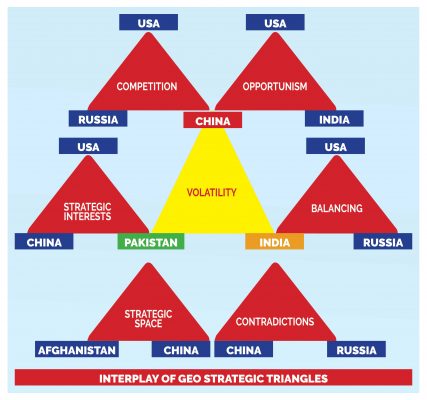
Introduction
South Asia is witnessing a recalibration of power equations as the U.S. attempts to balance ties with both India and Pakistan. The revival of Cold War-era diplomatic signals—like the U.S. President’s lunch with Pakistan’s Army Chief—has stirred concern in New Delhi. This moment reflects a broader debate in American foreign policy between transactionalism and strategic realism, while India responds with doctrinal restraint and Pakistan maneuvers diplomatically to remain relevant in the eyes of Washington.
Key Developments
-
U.S.-Pakistan Relations: The Trump administration and later, current signals from Washington, show periodic attempts to revive closer ties with Pakistan, despite its ambiguous commitment to counterterrorism and regional stability.
-
India’s Strategic Caution: India’s foreign policy, especially under Prime Minister Narendra Modi, has prioritized doctrinal restraint. India has avoided overreaction even after attacks like Pulwama and instead pursued sustained diplomacy.
-
Balancing China and the Quad: India is simultaneously managing border tensions with China, strengthening ties within the Quad, and enhancing its global role while avoiding overdependence on any one power.
-
Pakistan’s Leverage Strategy: Pakistan continues to utilize its geopolitical location and military engagement with the U.S. as bargaining chips while deepening relations with China and engaging with Russia and Central Asian states.
Challenges in the Triangular Setup
-
India’s Concerns: A closer U.S.-Pakistan security engagement, without clear policy conditions, could undermine India’s regional strategic space.
-
Pakistan’s Dilemma: Islamabad finds itself oscillating between Washington and Beijing, trying to extract maximum advantage from both without committing fully to either.
-
U.S. Ambiguity: American foreign policy continues to swing between ideals of liberal internationalism and strategic transactionalism, which creates confusion among its South Asian partners.
Conclusion
The triangular dynamic between India, the U.S., and Pakistan remains unstable. India must continue asserting its strategic autonomy while leveraging partnerships like the Quad. The U.S., in turn, must clarify its long-term vision in South Asia, while Pakistan must choose whether to continue playing a dual game or commit to a consistent diplomatic path.
5 Questions and Answers
Q1. Why is the triangular relationship between the U.S., India, and Pakistan being discussed now?
A: Recent overtures by the U.S. toward Pakistan, including a high-profile lunch with the Pakistani Army Chief, have revived strategic concerns in India.
Q2. What is India’s current approach to regional tensions?
A: India is practicing doctrinal restraint, focusing on strategic patience, multilateral partnerships (e.g., Quad), and defense readiness without escalatory moves.
Q3. What does Pakistan gain from its relations with the U.S. and China?
A: Pakistan uses its strategic geography, military leverage, and shifting alliances with China and the U.S. to gain diplomatic relevance and economic aid.
Q4. What is the U.S.’s dilemma in South Asia?
A: The U.S. struggles to balance its strategic interests in counterterrorism and China-containment with values of liberal internationalism, often creating ambiguous signals.
Q5. What is the future outlook for this triangular relationship?
A: The triangle remains volatile. India seeks to strengthen autonomy and multilateral influence; Pakistan remains diplomatically fluid; and the U.S. must reconcile realism with its global ideals.

