
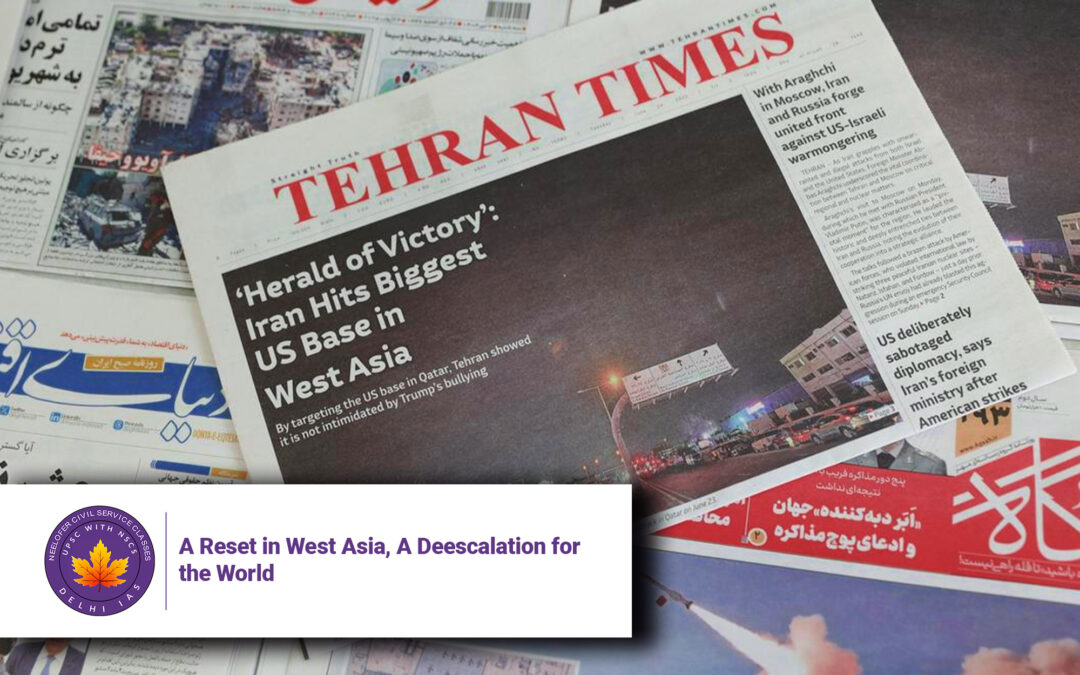
A Reset in West Asia, A ‘De-escalation’ for the World
Why in News?
Recent U.S. diplomatic engagement has led to a ceasefire announcement between Israel and Iran, raising global hopes of reduced tensions in West Asia. For the first time in years, significant players like the U.S., Iran, Israel, and the Gulf countries are stepping back from confrontation, signaling a potential strategic reset for the region and beyond. 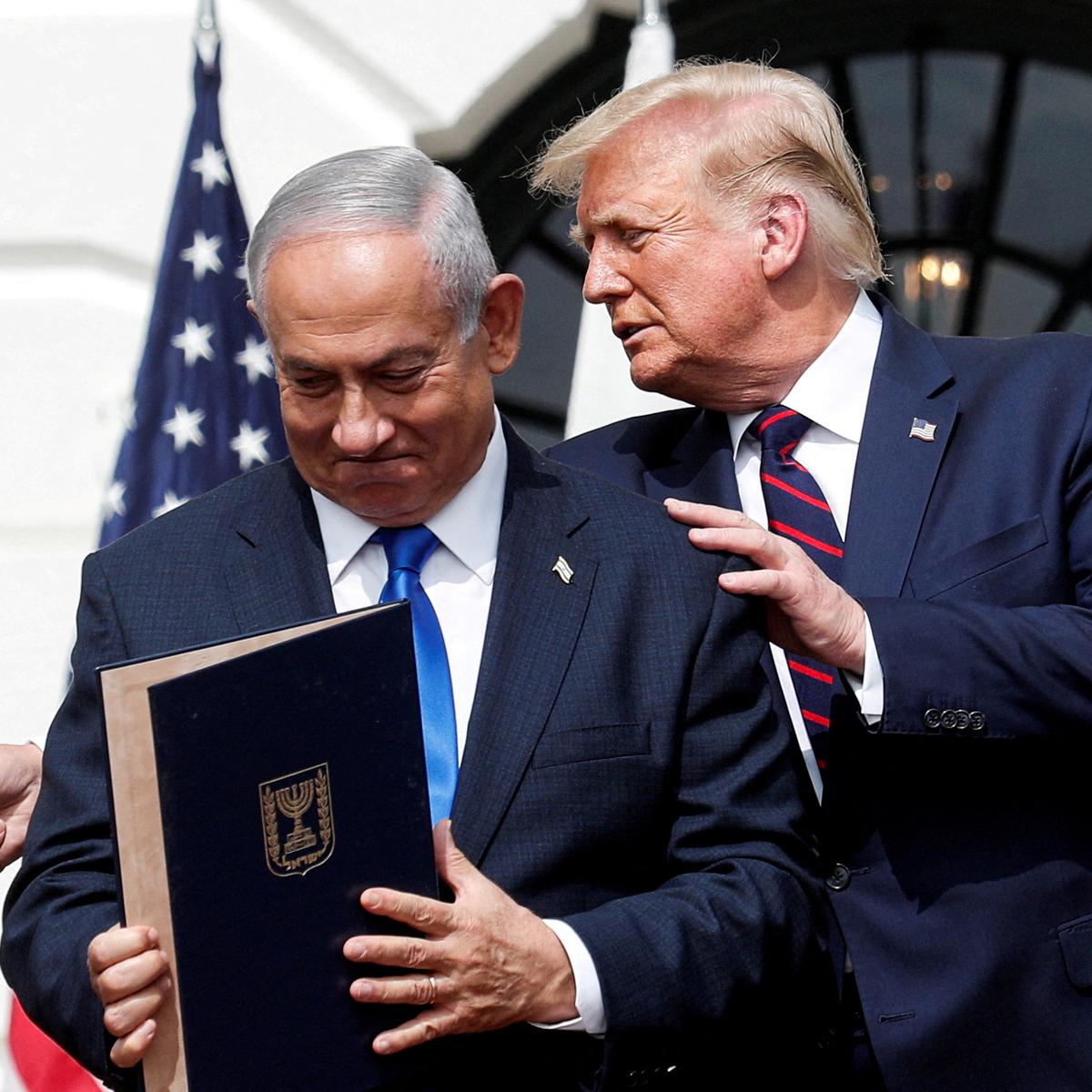
Introduction
West Asia, long regarded as a geopolitical hotspot, has witnessed escalating tensions due to the Israel-Iran rivalry, regional proxy wars, and deep ideological divides. However, new developments—including a U.S.-brokered ceasefire—signal a potential turning point. This move reflects a growing global push for de-escalation, regional stability, and a break from endless cycles of war.
The Reality Now
-
Iran-Israel Conflict: Despite nuclear threats being defused, the shadow war between Iran and Israel has not disappeared. But both sides now appear more restrained, partly due to U.S. diplomacy and shifting Gulf alignments.
-
U.S. Troops & Strategy: With 40,000 U.S. troops still stationed across the region, Washington’s renewed approach aims to ensure Iran poses no military threat to Israel.
-
Arab States & Peace: Several Gulf nations like UAE, Bahrain, and Saudi Arabia have normalized ties with Israel, moving toward economic cooperation and dialogue over confrontation.
Major Developments
-
Ceasefire Announcement: The U.S. recently announced a ceasefire agreement between Iran and Israel. Though fragile, it marks the beginning of regional de-escalation efforts.
-
Rejection of Ideological Extremism: Gulf countries are distancing themselves from extremist ideologies and regional proxy conflicts. Their priority is development, not war.
-
Geopolitical Realignment: Iran’s allies like Hezbollah in Lebanon and the Houthis in Yemen are facing pressure to scale back military operations. Iran’s support is now more measured and strategic.
Key International Dynamics
-
U.S. & Israeli Politics: The ceasefire also plays into U.S. presidential election dynamics, as President Biden aims to avoid a major war in the region. Israeli domestic politics under leaders like Netanyahu also influence these decisions.
-
Palestinian Statehood Question: Despite progress elsewhere, the issue of Palestinian statehood remains unresolved, and any annexation by Israel continues to provoke tension.
-
India’s Stand: India has maintained a neutral and balanced foreign policy, encouraging peace, upholding international law, and advocating for a two-state solution.
Conclusion
The situation in West Asia has evolved from chaos to cautious cooperation. The U.S.-led ceasefire between Iran and Israel, combined with Gulf countries’ economic priorities and Iran’s own recalibrations, offers a rare opportunity for peace. However, long-standing issues like Palestinian rights, Iran’s regional influence, and ideological divides must be addressed for sustainable calm.
If handled wisely, this reset could bring long-term peace dividends not only for the region but for global security as well.
Q&A Section
Q1. What triggered the recent de-escalation in West Asia?
The U.S. announcement of a ceasefire between Iran and Israel marked a key diplomatic move toward reducing regional tensions.
Q2. How have Gulf countries responded to the crisis?
Countries like UAE, Saudi Arabia, and Bahrain have shifted their focus toward economic cooperation and away from regional conflict, even normalizing ties with Israel.
Q3. Why is the ceasefire significant globally?
It reduces the risk of a wider war in a geopolitically sensitive region and enables greater regional cooperation and economic stability.
Q4. What are the challenges ahead for West Asia?
The unresolved Palestinian issue, Israel’s internal politics, and Iran’s influence over militant groups like Hezbollah and the Houthis remain complex challenges.
Q5. What is India’s role in the West Asia peace process?
India maintains a non-interventionist stance, promotes dialogue and development, and calls for respect for international law and peaceful coexistence.

