
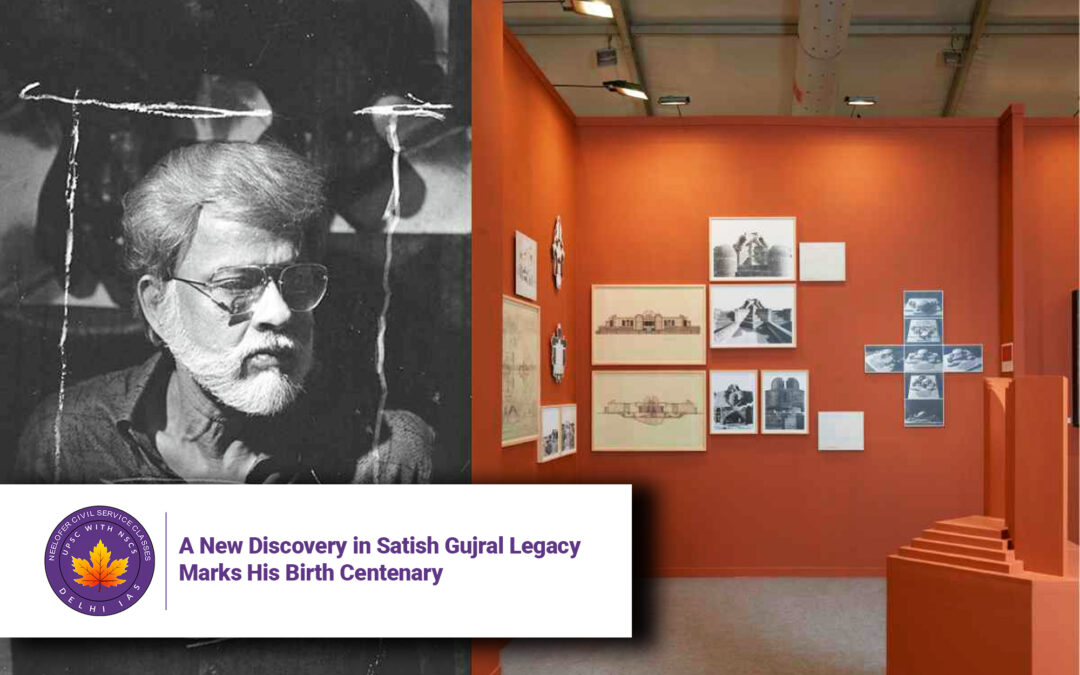
A New Discovery in Satish Gujral Legacy Marks His Birth Centenary
Why in News?
As part of the birth centenary celebration of renowned Indian artist Satish Gujral (1925–2020), an important and previously undocumented work titled The Confrontation (1957) has been discovered and exhibited. This graphite drawing, part of the Cyrus and Ruth Jhabvala family collection, offers a powerful lens into Gujral’s response to Partition and adds fresh insights into his legacy. 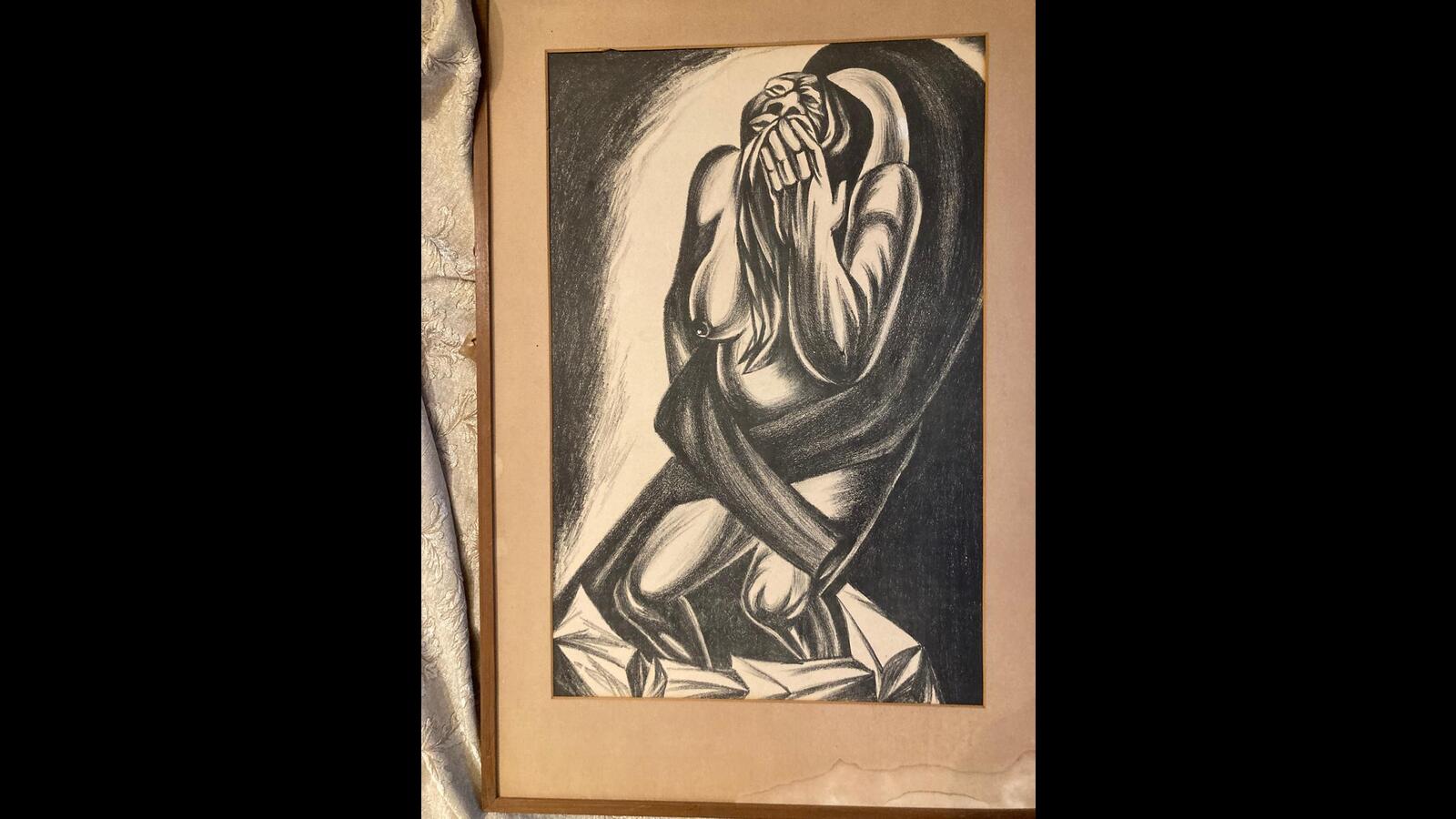
Introduction
Satish Gujral, one of India’s most celebrated modern artists, had a diverse career spanning painting, sculpture, murals, architecture, and writing. Deeply influenced by the trauma of Partition and personal hearing impairment, Gujral’s art captures a spectrum of emotions ranging from anguish to resilience. The discovery of The Confrontation enriches the existing narrative about his early post-Partition works and their intense humanism.
Key Issues
-
The Newly Discovered Work
-
The Confrontation (1957), housed in the Jhabvala family collection, is a graphite drawing that had never been exhibited before.
-
The work features two figures engaged in a symbolic struggle, deeply rooted in the trauma and emotional aftermath of Partition.
-
-
Context and Significance
-
Created in the period between 1947–57, the drawing reflects Gujral’s exploration of pain, displacement, and identity.
-
This period is considered foundational in shaping Gujral’s worldview and visual language.
-
-
International Influences
-
Gujral studied in Mexico under legendary muralists Diego Rivera and David Siqueiros.
-
He combined Indian sensibilities with Mexican mural techniques to express themes of violence, struggle, and resilience.
-
-
Exhibition and Recognition
-
The work was shown recently in London at the Nehru Centre’s centenary exhibition.
-
Critics recognize this as a missing link in Gujral’s oeuvre that enhances understanding of his stylistic evolution.
-
-
The Role of the Jhabvala Family
-
The Jhabvala family’s private support during Gujral’s early years was instrumental. They commissioned and preserved several of his early works, including The Confrontation and My Sister (1955).
-
Challenges and the Way Forward
Challenges:
-
Lack of institutional archiving for modern Indian art.
-
Fragmented documentation of artists’ early works due to political or financial constraints.
-
Underappreciation of key private collectors’ role in cultural preservation.
Way Forward:
-
Digitization and formal cataloguing of lost or private collections.
-
Encouraging partnerships between families, museums, and academic institutions.
-
Promoting research on under-explored phases of great artists’ careers.
5 Q&A Section
Q1. Why is The Confrontation (1957) significant?
It’s an intense, early drawing by Satish Gujral reflecting Partition trauma. Previously unknown, it offers fresh insight into his emotional and artistic development.
Q2. What was Gujral’s major theme during 1947–57?
His art during this period was focused on the impact of Partition—displacement, violence, and the psychological trauma of migration.
Q3. What international influences shaped Satish Gujral?
He trained in Mexico under muralists Diego Rivera and David Siqueiros, which strongly shaped his monumental style and themes of struggle.
Q4. Who helped preserve The Confrontation?
The Cyrus and Ruth Jhabvala family preserved and supported Gujral during his formative years and maintained a collection of his key works.
Q5. How is Gujral remembered today?
Gujral is remembered as a versatile and expressive artist whose works span painting, architecture, and sculpture. His contributions continue to be rediscovered and celebrated posthumously.
Conclusion
The rediscovery of The Confrontation during Satish Gujral’s birth centenary is more than a tribute—it’s a revival of historical memory and a reminder of how deeply art can reflect collective trauma. This find urges deeper engagement with forgotten or privately held art treasures, especially in the context of Indian modernism.

