
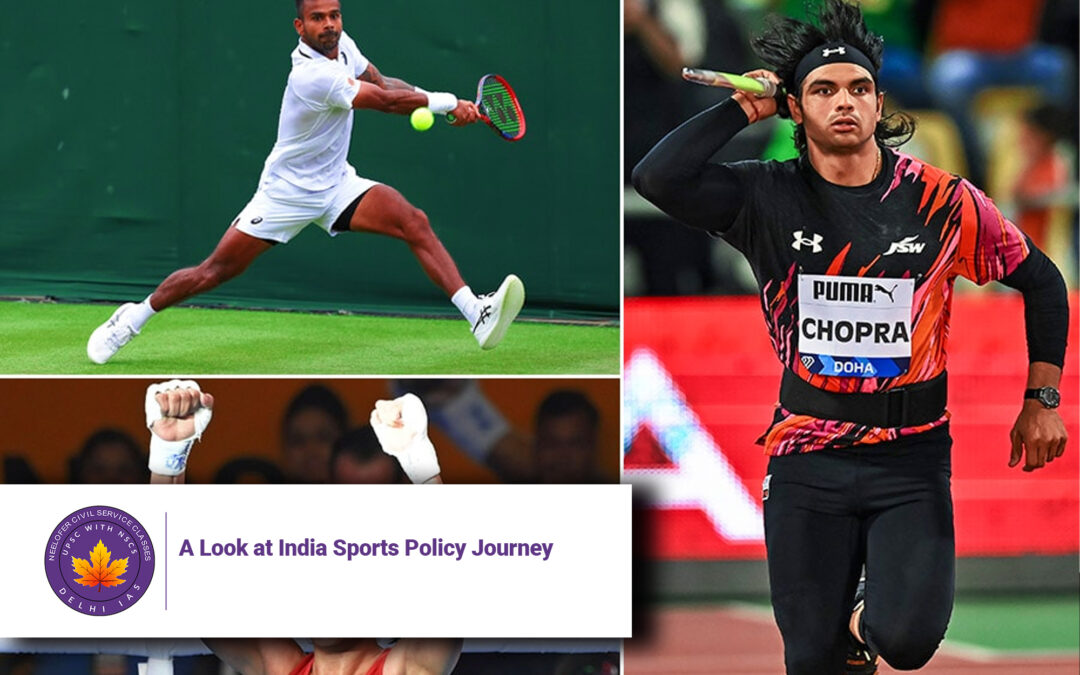
A Look at India Sports Policy Journey
Why in News?
India’s growing ambitions to host the 2036 Olympics and the recent revival of its sports policy framework have reignited interest in the evolution of India’s sports ecosystem—from its roots in post-independence planning to present-day initiatives focused on global excellence and public health. 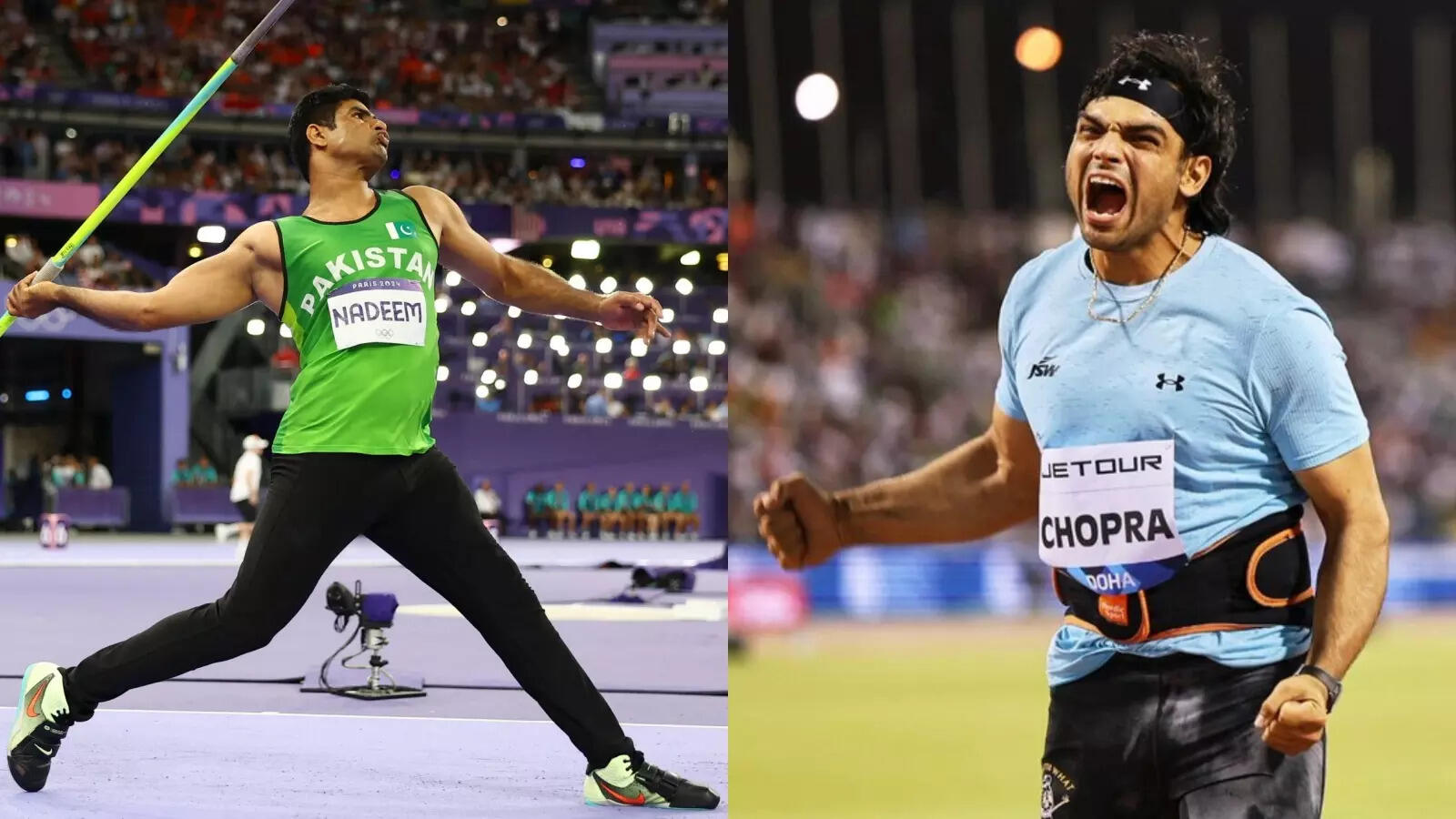
Introduction
Sports in India has a rich cultural legacy dating back to ancient times. However, structured sports policy-making only gained traction post-independence. Over the years, India’s approach to sports has reflected broader socio-economic goals, with policies evolving through phases of limited funding, institutional development, and the pursuit of international success.
Key Issues and Background
-
The Post-1947 Journey of Indian Sports
After independence, India viewed sports through the lens of social aspiration and national pride. Hosting the first Asian Games in 1951, the country emphasized mass participation and soft power. However, elite athlete development suffered due to inconsistent allocations, lack of professional training, and financial shortages. -
Institutional Foundations and Policy Delays
The All-India Council of Sports (AICS) was formed in 1954, but key departments like the Department of Sports were only created in 1982. Later, the National Sports Policy (NSP) came in 1984, aiming to address infrastructure gaps and promote excellence. The formation of the Sports Authority of India (SAI) and SAFES (for education and research) followed. -
Lack of Consistent Implementation
Despite structured goals, implementation lagged due to bureaucracy, shifting political priorities, and irregular funding. The emergence of cable television and private sponsorship in the 1990s gave sports a commercial push, but structural bottlenecks remained. -
Recent Reforms and Focus on Talent
India’s Olympic medal tally improved with athletes like Rathore, Bindra, and Mary Kom. The National Sports Development Code (2011), the Target Olympic Podium Scheme (TOPS) (2014), and Khelo India (2018) began refining athlete training and scouting systems. The Fit India Movement (2019) framed fitness as a public health priority.
Specific Impacts or Effects
-
Rise in elite athlete performance and Olympic medals.
-
Institutional focus on physical activity as national priority.
-
Growth in private sponsorship and grassroots participation.
-
Enhanced talent identification and training through SAI and TOPS.
-
Increased global recognition of India’s sports ambition.
Challenges and the Way Forward
Challenges
-
Policy inconsistency across central and state levels.
-
Delayed legal framework for sports governance.
-
Lack of infrastructure in rural areas.
-
Need for integration between education and sports training.
Steps Forward
-
Pass the National Sports Governance Bill to ensure long-term reforms.
-
Strengthen talent identification through school-level programs.
-
Promote sports education via National Sports Education Board.
-
Encourage states to align with national policy goals.
-
Invest in sports science, coaching, and grassroots development.
Conclusion
With a dedicated Ministry of Youth Affairs and Sports, India’s sports ecosystem has matured significantly. The bid to host the 2036 Olympics has sparked renewed policy attention, pushing the nation toward global competitiveness. However, sustained reforms, strong implementation, and holistic governance are crucial to making India a true sporting power.
5 Questions and Answers
Q1: When did India create a dedicated Department of Sports?
A: In 1982, under the Ministry of Human Resource Development.
Q2: What was the purpose of the 1984 National Sports Policy?
A: To improve infrastructure, promote mass participation, and enhance excellence in sports.
Q3: What recent schemes have improved India’s elite sports performance?
A: Target Olympic Podium Scheme (2014), Fit India Movement (2019), and Khelo India (2018).
Q4: What are the key challenges in India’s sports governance?
A: Inconsistent implementation, funding gaps, and lack of a comprehensive sports law.
Q5: What is the significance of India’s interest in hosting the 2036 Olympics?
A: It reflects India’s growing ambition and commitment to becoming a global sports leader.

