
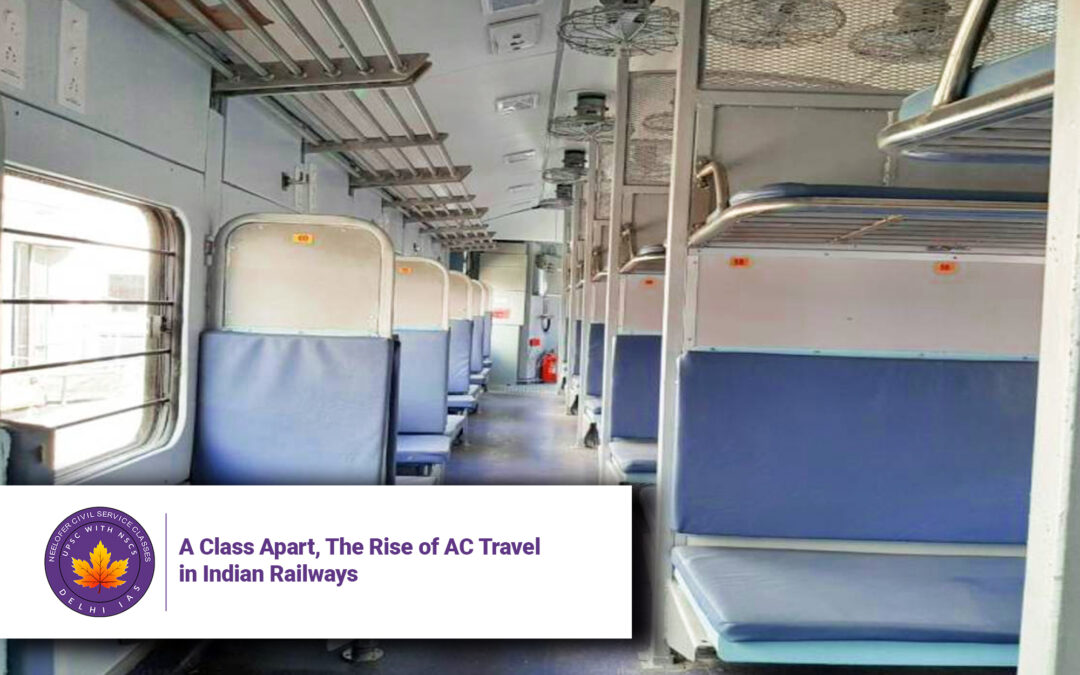
A Class Apart, The Rise of AC Travel in Indian Railways
Why in News?
Recent data from the Indian Railways has revealed a significant transformation in passenger preferences over the last decade, particularly concerning long-distance travel. The share of passengers opting for air-conditioned (AC) coaches has doubled since 2013, illustrating a shift in travel habits and expectations among Indian rail users. This trend not only highlights changing socio-economic dynamics but also raises questions about accessibility and service quality within the railway system.
Introduction
The Indian Railways, one of the largest rail networks in the world, has long been a crucial component of the country’s transportation infrastructure. Traditionally, passengers had a range of travel classes to choose from, but recent trends indicate a marked preference for comfort and convenience. According to the Railway Annual Reports for 2023-2024, the total number of passengers traveling in AC coaches has tripled in the last decade. This shift reflects a growing middle class seeking better travel experiences and the broader implications for railway policy and operations.
Key Issues and Background
1. Changing Passenger Preferences (Normal Bold)
The rise in the number of passengers opting for AC travel can be attributed to several factors:
- Increased Disposable Income: As India’s economy has grown, so too has the disposable income of its citizens. More people can now afford the relatively higher costs associated with AC travel.
- Enhanced Comfort and Amenities: AC coaches offer improved amenities, such as better seating, dining options, and climate control, making long journeys more bearable.
- Safety and Hygiene Concerns: The pandemic has reshaped travel preferences, with passengers prioritizing safety and cleanliness. AC coaches are perceived to offer a more sanitized environment compared to non-AC options.
2. Growth in Passenger Numbers (Normal Bold)
Data indicates a dramatic increase in the number of passengers traveling in AC coaches:
- In 2013, approximately 20% of long-distance train passengers chose AC coaches.
- By 2023, this figure has risen to 40%, suggesting a significant trend toward comfort in travel choices.
3. Implications for Railway Operations (Normal Bold)
This demand surge has implications for Indian Railways:
- Resource Allocation: The increasing preference for AC travel necessitates a reallocation of resources, including more AC coaches in long-distance trains and improved maintenance of existing ones.
- Pricing Strategies: The rise in demand may lead to pricing adjustments, which could impact affordability for some segments of the population.
- Service Quality: Enhancing service quality in AC coaches will be crucial to meet passenger expectations and retain customer loyalty.
Specific Impacts or Effects
The transition towards AC travel has several far-reaching effects, both positive and negative:
Positive Impacts
- Revenue Generation: The increase in AC travel contributes significantly to the revenue of Indian Railways, allowing for reinvestment into services and infrastructure.
- Service Upgrades: The focus on AC travel has led to improvements in service standards across the board, as the Railways strive to meet the expectations of a more affluent passenger base.
Negative Impacts
- Accessibility Issues: The growing preference for AC coaches may marginalize lower-income travelers who may no longer find affordable options in long-distance travel.
- Overcrowding in Non-AC Coaches: As more passengers migrate to AC travel, non-AC coaches may face overcrowding, leading to uncomfortable travel experiences for those unable to afford AC tickets.
Challenges and the Way Forward
1. Challenges (Normal Bold)
- Infrastructure Strain: The increased demand for AC travel may strain existing railway infrastructure, necessitating upgrades and expansions.
- Balancing Act: Indian Railways faces the challenge of balancing profitability with social responsibility, ensuring that affordable travel options remain available for all.
2. Steps Forward (Normal Bold)
- Investment in Infrastructure: Continued investment in railway infrastructure is crucial, including the expansion of AC services and the improvement of non-AC travel options.
- Dynamic Pricing Models: Implementing dynamic pricing models can help manage demand while ensuring affordability for lower-income travelers.
- Enhanced Communication: Increasing awareness about the availability of various travel classes and their respective benefits can help passengers make informed decisions.
Conclusion
The doubling of AC travel in Indian Railways over the last decade is a reflection of the changing socio-economic landscape in India. As more passengers seek comfort and quality in their travel experiences, the Indian Railways must adapt to meet these evolving demands. This transformation presents both opportunities and challenges, necessitating strategic planning and investment to ensure that all segments of society can benefit from the railway system.
5 Questions and Answers
Q1: What has been the trend in AC travel in Indian Railways over the past decade?
A: The share of passengers opting for AC coaches has doubled, with around 40% of long-distance train passengers choosing AC travel in 2023, compared to about 20% in 2013.
Q2: What factors contribute to the increasing preference for AC coaches?
A: Factors include increased disposable income, enhanced comfort and amenities, and heightened safety and hygiene concerns, particularly in the wake of the pandemic.
Q3: What implications does the rise in AC travel have for Indian Railways?
A: The rise necessitates a reallocation of resources, potential pricing adjustments, and a focus on enhancing service quality to meet passenger expectations.
Q4: Are there any negative impacts associated with the rising demand for AC travel?
A: Yes, the growing preference for AC coaches may marginalize lower-income travelers and lead to overcrowding in non-AC coaches.
Q5: What steps can Indian Railways take to address the challenges posed by this trend?
A: Key steps include investing in infrastructure, implementing dynamic pricing models, and enhancing communication about travel options to ensure affordability and accessibility.

