
A Case for the Global South in Securing Peace in Ukraine
Why in News?
As the war in Ukraine drags on and discussions around ceasefires and peacekeeping intensify, the idea of involving the Global South in a peacekeeping initiative is gaining attention. This could mark a strategic shift in global diplomacy, offering a more neutral and balanced approach to resolving the conflict. 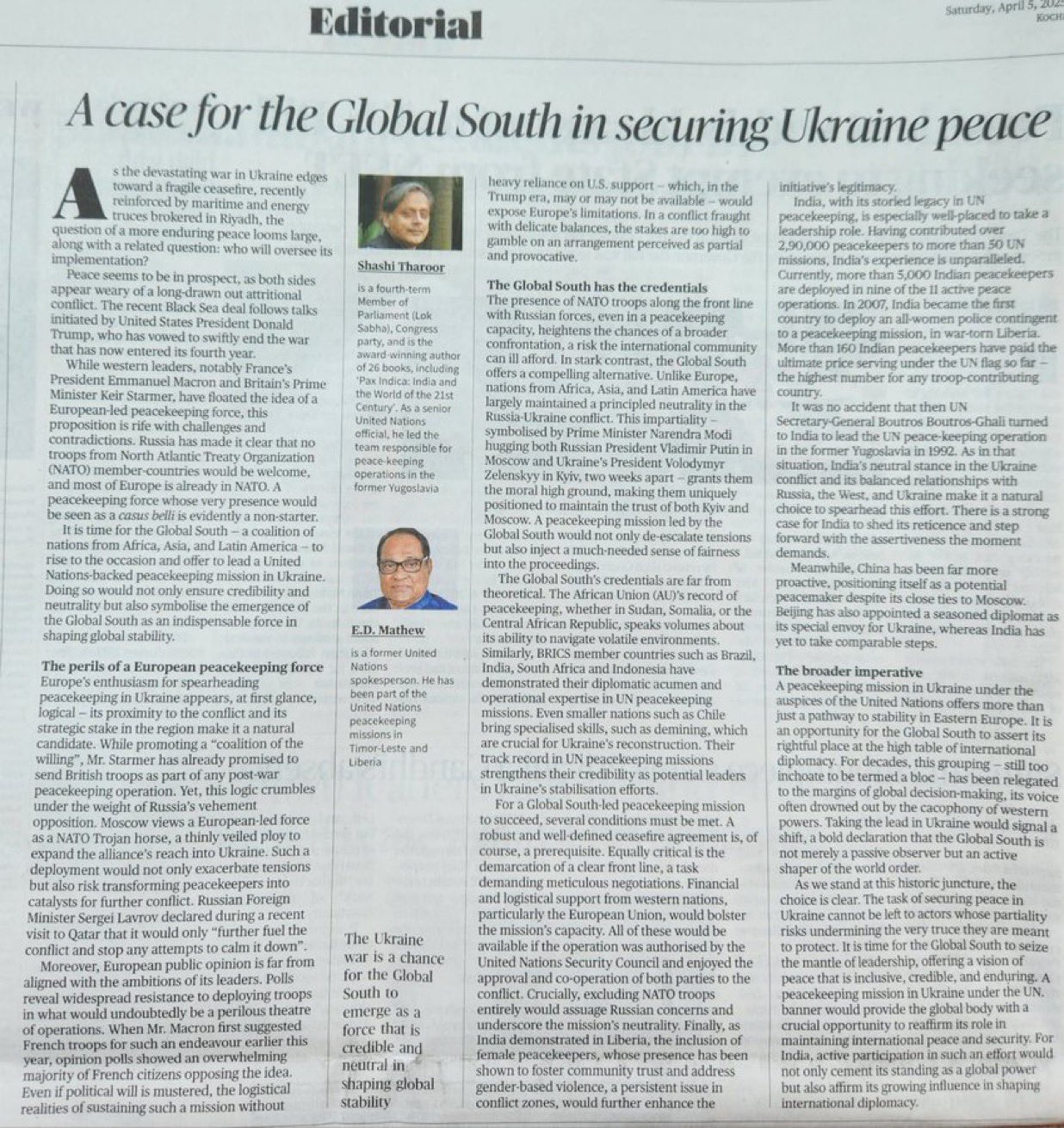
Introduction
The devastating war in Ukraine has entered its fourth year, and while diplomatic efforts continue—most recently in Riyadh—progress remains slow. With limited scope for a NATO-led peacekeeping force due to geopolitical constraints, the idea of a Global South-led United Nations peacekeeping mission is emerging as a credible alternative to restore stability and maintain neutrality.
Key Issues and Background
1. Limitations of Western-Led Initiatives
-
NATO troops are unwelcome in Ukraine by Russia, which sees their involvement as provocation.
-
UK and European leaders, such as British PM Keir Starmer, support sending peacekeepers but face political opposition and practical challenges.
-
US support, especially under Trump, may not be sustainable long-term.
2. Why Global South Is Better Positioned
-
Nations from Africa, Asia, and Latin America have experience in peacekeeping under the UN.
-
They are viewed as more neutral and less provocative than NATO.
-
India has deep experience, with over 2,90,000 Indian troops having served in 50+ UN missions.
3. India’s Strategic Role
-
Led the first UN peacekeeping mission in Korea and later in Yugoslavia.
-
Hosted both Putin and Zelensky in recent diplomatic outreach.
-
India’s balanced relations with both Russia and Ukraine position it well to mediate.
4. The BRICS and Global South Potential
-
Countries like Brazil, South Africa, and Indonesia have a strong record in UN operations.
-
They bring diverse diplomatic tools and capacity to navigate complex global tensions.
The Core of the Concern
Peacekeeping in Ukraine is more than just boots on the ground—it’s about credibility, neutrality, and diplomatic wisdom. The Global South must assert itself in global geopolitics to shift away from a Western-dominated peace process that lacks acceptance by all parties.
Key Observations
-
UN-led peacekeeping by the Global South can reduce tensions and provide legitimacy.
-
India is seen as a potential leader of such a mission.
-
A Global South-led initiative would signal a broader shift in global governance and decision-making.
Conclusion
The Ukraine conflict presents a historic opportunity for the Global South to emerge not just as a voice, but as a decisive force in international diplomacy. Leading a peacekeeping mission could help end the war, reshape the global order, and establish long-term peace with fairness and balance.
Q&A Section
Q1. Why can’t NATO lead a peacekeeping mission in Ukraine?
Because Russia opposes any NATO troop presence, viewing it as a provocation, which could escalate the conflict further.
Q2. What makes the Global South suitable for leading such a mission?
The Global South, including countries like India, Brazil, and Indonesia, is seen as more neutral and has significant UN peacekeeping experience.
Q3. How has India contributed to UN peacekeeping efforts?
India has sent over 2,90,000 troops to more than 50 missions and was the first to lead a UN mission in Korea and Yugoslavia.
Q4. What role can BRICS countries play in Ukraine peacekeeping?
They can offer diplomatic acumen, logistical expertise, and a neutral stance to manage peace effectively.
Q5. What broader shift does this proposal represent in global politics?
It signals the emergence of the Global South as an active shaper of global order, moving beyond its traditional supporting role.
