Strengthening India-Indonesia Ties Beyond China Factor
by rohit | Jan 27, 2025 | Courses |
About Strengthening India-Indonesia Ties Beyond China Factor
-
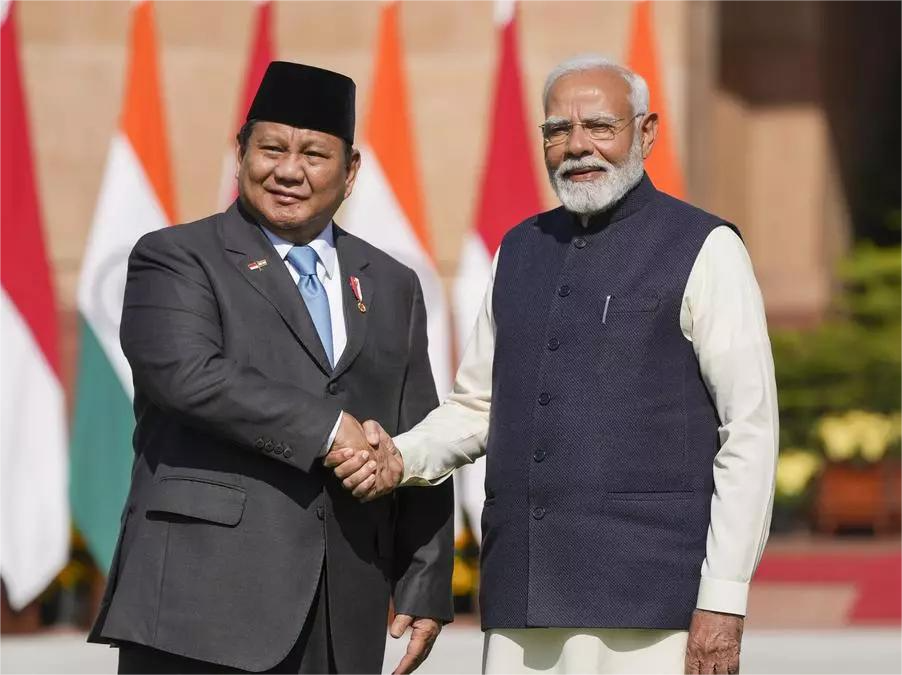
- The Republic Day visit of Indonesian President Prabowo Subianto to India marks a pivotal moment in the bilateral relationship between the two nations.
- The evolving dynamicsreflect aspirations for a broader and deeper strategic partnership, emphasizing mutual goals and regional collaboration.
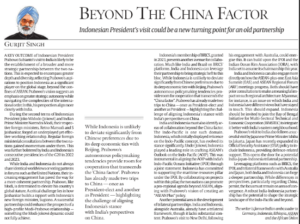
- India and Indonesia must also identify areas of collaboration beyond the China factor – The Indo-Pacific is one such domain.
- Growing Engagement Between India-Indonesia:
- Past diplomatic framework:
- During the 2nd terms of Indonesian President Joko Widodo (Jokowi) and Indian Prime Minister Narendra Modi, foreign ministers Retno Marsudi and S. Jaishankar established a solid diplomatic rapport through regular consultations.
- Strengthened ties were further highlighted during their respective presidencies of the G20 in 2022 and 2023.
- Shared global aspirations: Both Prabowo and Modi seek to elevate their countries’ global stature, showcasing ambitions that align on fostering strategic autonomy.
- Key Opportunities for Collaboration Between India-Indonesia:
- BRICS and beyond:
- Indonesia’s BRICS membership, granted in 2023, offers avenues for cooperation.
- Leveraging the platform, the two nations can bring strategic weight to the bloc, focusing on common interests while navigating Indonesia’s economic ties with China.
- Indo-Pacific focus:
- Indonesia’s evolution in embracing the Indo-Pacific concept, particularly its alignment with India’s Indo-Pacific Oceans Initiative (IPOI), offers potential for maritime collaboration
- Joint efforts under the IPOI’s maritime resources pillar can further regional objectives.
- Integrating IPOI and AOIP:
- Under Jokowi, Indonesia played a leading role in crafting ASEAN’s Outlook on the Indo-Pacific (AOIP).
- Indonesia has committed to supporting the maritime resources pillarunder the IPOI.
- By collaborating on projects within this pillar, the two nations can promote a pro-regional agenda beyond ASEAN, aligning with Prabowo’s vision of creating an “ASEAN Plus” policy.
- Trilateral partnerships:
- Existing frameworks like the India-Indonesia-Australia trilateraloffer opportunities for enhanced cooperation.
- Prabowo’s visit opens the possibility of integrating Japaninto this dynamic, creating a robust trilateral partnership for regional security and development.
- Regional architecture engagement:
- India and Indonesia can collaborate more effectively in ASEAN-led mechanisms like the East Asia Summit (EAS) and ASEAN Regional Forum (ARF).
- Expanding prior consultations can address divergent views, particularly on issues like Myanmar.
- BIMSTEC integration: Inviting Indonesia to join the Bay of Bengal Initiative for Multi-Sectoral Technical and Economic Cooperation (BIMSTEC) can bolster itsintegration with India’s eastern neighborhood, enhancing regional cooperation.
- Challenges and Strategic Considerations:
- Navigating the China factor: While Indonesia’s deep economic ties with China may influence its policies, Prabowo’s independent policy making offers space for cooperation with India beyond Beijing’s influence.
- New foreign minister dynamics: Building a rapport between India’s Jaishankar and Indonesia’s new foreign minister Sugiono is crucial to realizing a strong Modi-Prabowo partnership.
- Conclusion:
- Prabowo Subianto’s visit to India presents an opportunity to redefine and strengthen India-Indonesia relations.
- Leveraging platforms like BRICS, IPOI, and trilateral partnerships, both nations can enhance strategic collaboration.
- Despite challenges, focusing on convergence areas can significantly impact the Indo-Pacific and global order, positioning both nations as key regional players.


