
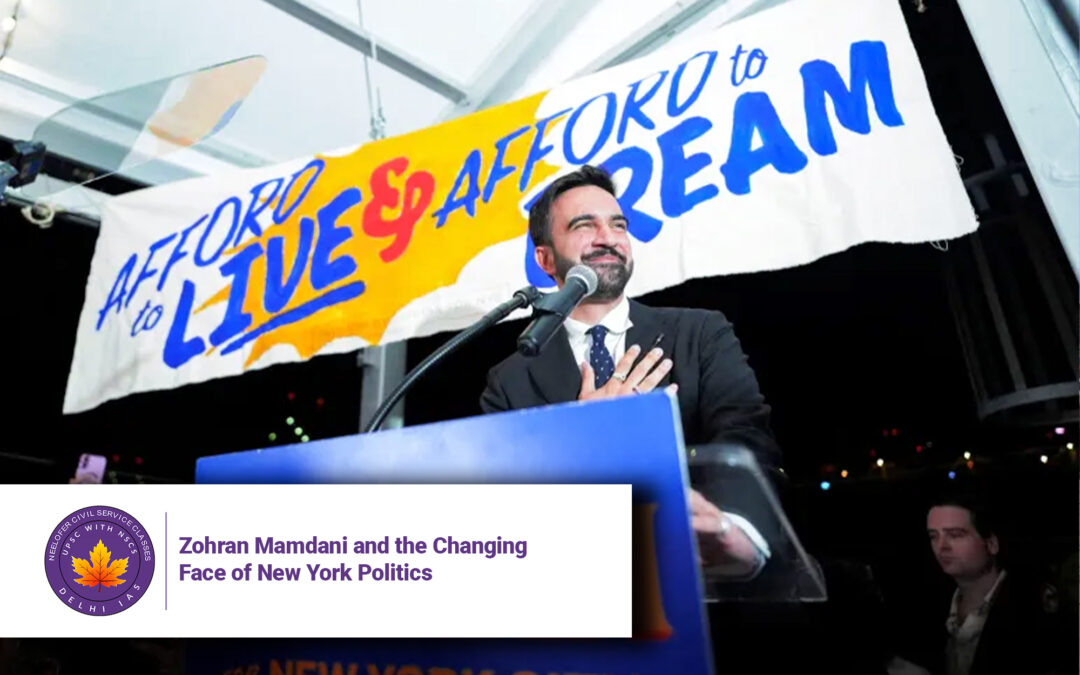
Zohran Mamdani and the Changing Face of New York Politics
Why in News?
Zohran Mamdani, a Muslim South Asian-American and a Democratic Socialist, is emerging as a possible candidate for the next mayor of New York City. His rise represents a major shift in the city’s political landscape shaped by immigration, race, and class dynamics. 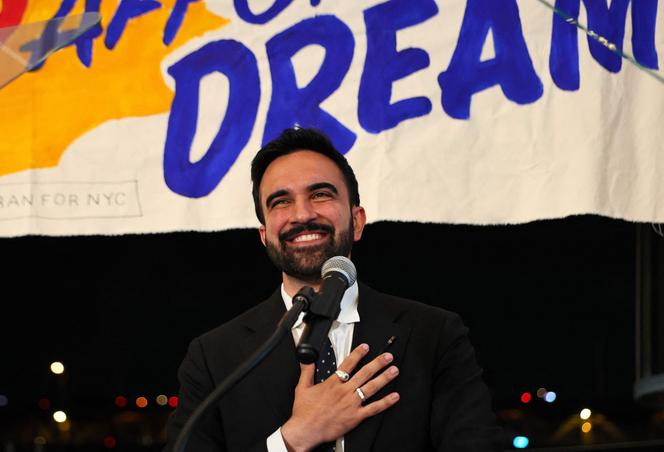
Introduction
The idea that a South Asian Muslim immigrant, born in Kampala and raised in New York, could soon run the biggest American city, is no longer far-fetched. Mamdani’s ascent reflects the growing political power of immigrant communities and working-class neighborhoods in the United States — especially in a city that has always been a crucible of diversity.
Key Highlights
-
Immigrant Identity Meets Class Politics:
Unlike traditional American politicians, Mamdani brings a unique identity — a child of Indian-born author Mahmood Mamdani and Ugandan-Indian filmmaker Mira Nair. He blends immigrant concerns with progressive economic ideals. -
His Rise in Local Politics:
Mamdani, now a New York Assembly member, rose to political relevance by defeating an establishment-backed candidate in Astoria, Queens, in 2020. He successfully mobilized youth, immigrants, and working-class voters through community engagement and aggressive activism. -
Digital Organizing and Messaging:
With creative, bold messaging (e.g., “Millionaires Are Failing Us”) and strategic use of WhatsApp groups, Mamdani has made waves by uniting disconnected voter bases and framing issues around class exploitation rather than only racial justice. -
Challenging the Elite’s Hold:
In a city where many wealthy “New Yorkers” no longer reside full-time, Mamdani has exposed the disconnect between real New Yorkers (renters, immigrants, workers) and the elite donors shaping city policy from afar. -
Opposition to Israel and its Political Impacts:
Mamdani is openly critical of Israel, which has led to fierce backlash in U.S. politics. But his stance resonates with younger voters and progressive allies — though it risks alienating centrist Democrats and mainstream Jewish communities.
Challenges and Political Significance
-
Controversy over Anti-Zionism:
Mamdani’s pro-Palestinian views are likely to spark heated debates and accusations of anti-Semitism — a challenge many Left-leaning politicians like Ilhan Omar and Rashida Tlaib have faced. -
A City Reeling from Inequality:
Mamdani’s message on housing rights, tenant protections, and class inequity taps into real frustrations in New York City, which is witnessing a crisis of affordability and evictions. -
Diversity in Leadership:
His potential candidacy symbolizes America’s changing demographics — with Muslim, South Asian, and African identities becoming central to mainstream U.S. political leadership.
Conclusion
Zohran Mamdani’s rise is about more than immigrant success — it’s a reflection of how race, class, and cultural identity are redefining urban politics in the U.S. His journey from grassroots organizing in Astoria to potentially running New York City shows how progressive, inclusive leadership can challenge entrenched power structures in America’s biggest cities.
5 Questions and Answers
1. Who is Zohran Mamdani and why is he in the news?
Zohran Mamdani is a Democratic Socialist and New York Assembly member, seen as a potential mayoral candidate for New York City. His rise signals a political shift driven by immigrant and working-class voices.
2. What sets Mamdani apart from traditional politicians?
He combines immigrant identity, progressive ideology, digital activism, and strong criticism of capitalist structures to appeal to younger, underrepresented voters.
3. Why is his position on Israel controversial?
Mamdani’s vocal criticism of Israel has invited backlash from pro-Israel groups and centrist Democrats, reflecting the deep political divisions in U.S. foreign policy debates.
4. How is Mamdani reshaping NYC’s political discourse?
By highlighting class struggle, housing inequality, and elite detachment from the city, Mamdani is turning the focus from identity politics alone to broader issues of privilege and power.
5. What does Mamdani’s emergence mean for American politics?
It reflects the growing political influence of immigrant communities and signals a shift toward leftist, grassroots politics in major urban centers.

