
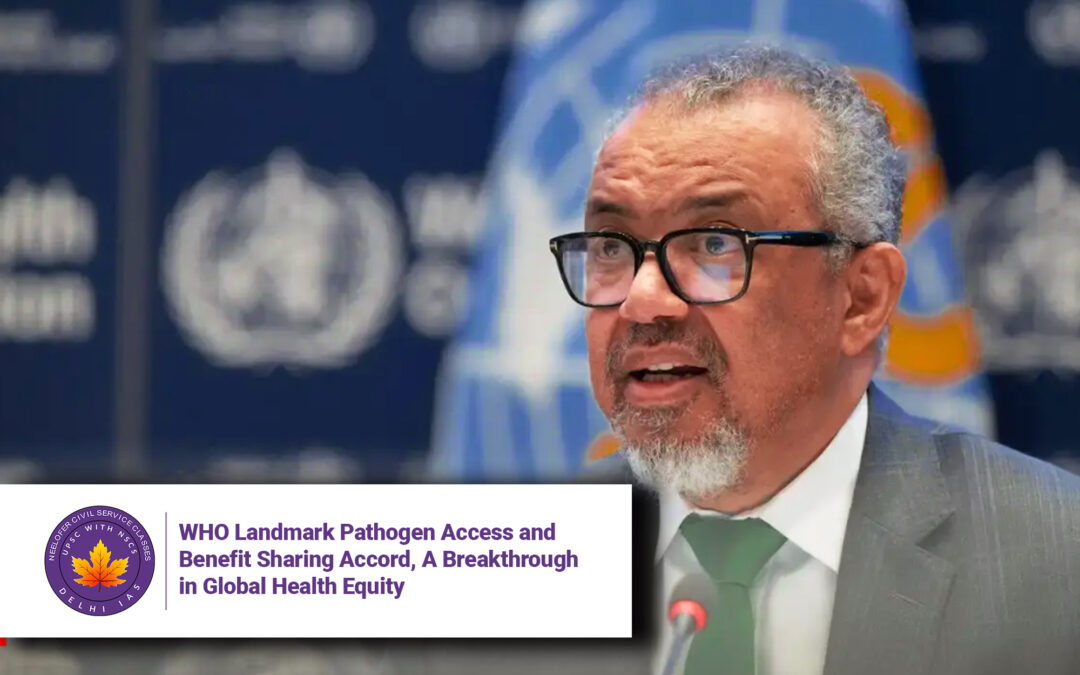
WHO Landmark Pathogen Access and Benefit Sharing Accord, A Breakthrough in Global Health Equity
Why in News?
After three and a half years and 13 rounds of negotiations, the World Health Organization (WHO) member states have agreed upon a historic proposal on pathogen access and benefit sharing, forming part of the broader WHO Pandemic Agreement. This comes in response to inequities exposed during the COVID-19 pandemic. 
Introduction
The newly drafted agreement by the WHO’s Intergovernmental Negotiating Body (as of April 16) marks a crucial milestone in global health governance. While narrower in scope than earlier proposals, the accord attempts to bridge disparities between developed and developing nations in accessing and sharing benefits of pathogen research.
Key Features
-
Core Commitment to Healthcare Workers: All countries agreed on the need to protect health workers, recognizing their frontline role during pandemics.
-
Pathogen Access & Benefit Sharing System (PABS): The biggest achievement is a globally agreed mechanism for sharing pathogens and genome sequences, ensuring all nations get timely access to samples for developing vaccines, diagnostics, and treatments.
-
Equitable Sharing Mechanism:
-
Developing nations must share pathogen samples.
-
In return, they will gain guaranteed access to diagnostics, vaccines, or treatments developed using those samples.
-
Specific Impacts or Effects
-
Commitment from Pharma:
Pharmaceutical companies have agreed to:-
Donate 10% of pandemic-related products (like vaccines) to the WHO.
-
Sell an additional 10% at affordable prices.
-
-
Addressing Past Inequities:
The deal seeks to correct imbalances seen during COVID-19, where wealthy nations hoarded vaccines while low-income countries waited months or years.
Challenges and the Way Forward
Challenges:
-
Voluntary vs Mandatory Terms:
Debate remains over whether companies must share on “mutually agreed terms” or via enforceable mandates. -
Lack of Consensus on Fair Use:
Issues persist around intellectual property rights, and how benefits are to be distributed.
Steps Forward:
-
Finalization of the WHO Pandemic Agreement.
-
Further clarity on governance mechanisms for enforcement.
-
Ensuring inclusive participation of all member states, especially developing countries.
Conclusion
This path-breaking accord marks a major step toward global health equity. While implementation challenges remain, it provides a framework for solidarity and fairness in future pandemics. For real success, this must be backed by strong political will, industry cooperation, and global trust.
Q&A Section
Q1. What is the main goal of the new WHO pathogen accord?
Ans: To ensure equitable access to pathogens and the benefits of medical advancements like vaccines and treatments, especially for developing countries.
Q2. How does the agreement address past pandemic inequities?
Ans: It guarantees access to diagnostic and vaccine tools for nations sharing pathogen samples, correcting the imbalances seen during COVID-19.
Q3. What commitments did pharmaceutical companies make under the agreement?
Ans: Pharma companies will donate 10% of pandemic products to WHO and offer another 10% at affordable prices.
Q4. What are the unresolved debates in the agreement?
Ans: Key debates focus on whether sharing terms should be voluntary or based on mandatory global commitments.
Q5. Why is this accord considered “path-breaking”?
Ans: It is the first global mechanism ensuring both access to pathogens and benefit sharing, representing a balanced approach between science, equity, and international cooperation.
