
When Journos Speak, Goa’s Unique Oral History Project
Why in News?
A unique and organic oral history initiative, spearheaded quietly by journalists in Goa, has started gaining attention for its compelling format and educational value. The “Behind The By-Line” series, conducted monthly at the Shram Shakti Bhavan in Panaji, is not just an event but a developing archive of lived experiences from senior journalists. This program, backed by the Goa Union of Journalists (GUJ), offers rare insights into journalism, politics, history, and Goan society through the voices of those who witnessed and shaped these changes firsthand. In July, the columnist Frederick Noronha also shared his reflections at this platform, bringing added attention to the program. 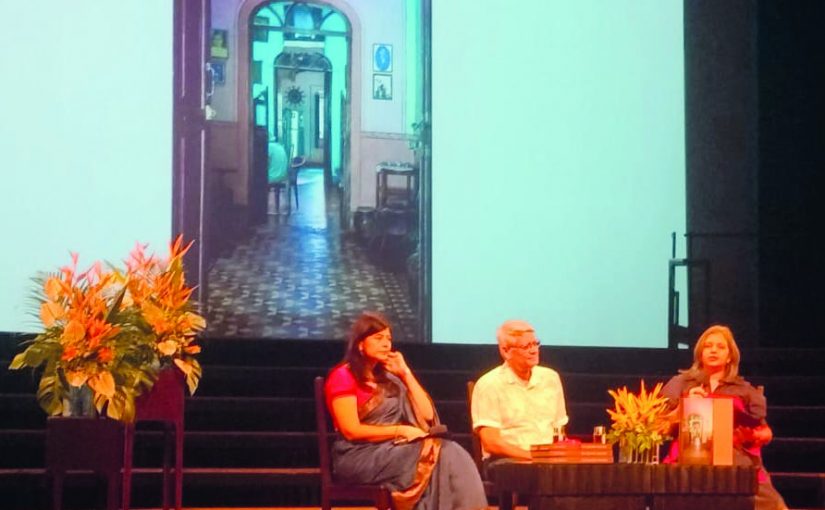
Introduction
In an age where digital content floods our screens and news is consumed in snippets, long-form, reflective storytelling may seem like a forgotten art. But in the heart of Goa, a modest yet significant movement is blossoming—”Behind The By-Line.” This is not merely a discussion forum; it is a living, breathing archive of Goa’s media history, told by the very individuals who lived through its evolutions. Unlike conventional oral history projects initiated by academic institutions, this one is remarkably journalist-driven, informal in structure, and yet deeply rich in content.
Frederick Noronha, a veteran journalist and publisher, in a recent column for The Navhind Times, beautifully captures the essence of the initiative. He describes the experience of participating in and learning from these monthly sessions, where seasoned journalists recount their personal journeys, the transformation of media in Goa, and the political undercurrents of their times.
Key Issues
-
Journalists as Accidental Historians
The Behind The By-Line initiative didn’t arise from a formal academic or government-backed project. It evolved from a simple need: to tell stories, preserve memories, and reflect on journalism’s role in shaping modern Goa. Interestingly, journalists have turned into oral historians, collecting and archiving the socio-political shifts in Goa through their first-hand accounts. These stories not only enrich our understanding of journalism but also of the broader Goan landscape—its politics, its people, and its changing ethos.
-
The Importance of Oral Histories
Oral histories, especially when narrated by those who were eyewitnesses to significant events, bring a texture that textbooks and reports often lack. These programs give voice to the people behind the headlines—those who crafted the stories, challenged power, and upheld journalistic integrity during difficult times. The talks also explore how journalism has evolved, including issues such as gender balance, political pressure, and the rise of sensationalism.
-
The Venue and Its Symbolism
These monthly sessions take place at Shram Shakti Bhavan in Panaji, also home to the Labour Commissioner’s offices and RTI chambers. The location carries symbolic value. It’s a place connected to workers, rights, and information—a fitting backdrop for a gathering that celebrates transparency and truth-telling through journalism.
-
The Format: Intimate, Yet Impactful
Frederick Noronha mentions that on some evenings, the program may draw a small crowd, while on others, it fills up with unexpected visitors. But each session, whether attended by many or few, is characterized by open sharing. No recording fees, no rigid formats—just storytelling in its purest form. In many ways, it reflects the ethos of Goan journalism itself: humble, rooted in community, and driven by truth.
-
Understanding Goa Through Journalism
These narratives act as a portal into Goa’s past. Listening to journalists recount their early days—whether about old newspaper clippings, political scoops, censorship issues, or even memorable typos—gives context to how far journalism has come and what it cost. Goa’s political shifts, elections, and local resistance movements often surface in these stories, making them invaluable for political analysts and students alike.
Alternative Approaches and Their Relevance
While other states in India rely on institutional research to document their media history, Goa’s initiative stands out for its informality and accessibility. The recordings are shared online (facebook.com/watch/goauj), making them widely available. This decentralised approach allows more freedom of expression and encourages spontaneous storytelling—qualities often lost in structured oral history projects.
Academic bodies could learn from this model by:
-
Creating platforms that allow for free dialogue without over-academic framing.
-
Recording narratives in local languages to preserve cultural essence.
-
Collaborating with journalist associations to document lived realities.
-
Offering public access through social media, ensuring inclusivity and reach.
Challenges and the Way Forward
-
Need for Documentation and Archiving
One of the pressing needs is systematic documentation. While Facebook videos are helpful for immediate access, long-term preservation requires proper digital archiving and perhaps transcription into text for future generations. There is also a risk that such invaluable content may be lost due to poor data management or platform changes.
-
Ensuring Diverse Representation
As Noronha rightly points out, journalism has historically been male-dominated. While this is changing, there is a need to ensure more female voices and perspectives are included in these narratives. The series should strive to be inclusive of regional, gender, and linguistic diversity within Goa.
-
Sustainability of the Project
Currently, the program runs out of passion and personal commitment. For it to continue and grow, institutional support—without diluting its spirit—could be explored. Partnerships with local universities, media houses, and cultural archives may help in providing logistical and financial stability.
-
Balancing Praise and Critique
Frederick Noronha’s column touches on an essential point: the need for balanced storytelling. Too much praise can romanticize journalism, while honest critique helps paint a fuller picture. The aim should be to inform, reflect, and educate—not merely to celebrate.
-
Tackling Misinformation
In today’s media environment, plagued by fake news and manipulated narratives, initiatives like these become even more critical. They offer younger journalists and media consumers a clearer sense of ethics, responsibility, and the cost of speaking truth to power.
Conclusion
“When Journos Speak” is more than a catchy headline. It is a celebration of memory, ethics, and community journalism. Goa’s Behind The By-Line initiative is helping to build a cultural and historical bridge between generations of journalists and the public. In a world racing toward brevity, where headlines flash for seconds before disappearing, this project offers depth, humanity, and insight.
The simplicity of this oral history model makes it replicable across India. Whether it’s in Bengaluru, Kolkata, or Lucknow, media unions and local journalist associations can initiate similar efforts to chronicle their unique histories. What Goa has shown is that one does not need institutional authority to document truth—just a voice, a memory, and a platform.
This program also reminds us that journalism is not just about writing for the moment—it’s about preserving the moment for future understanding. If properly nurtured, the Behind The By-Line series could become one of India’s most valuable oral archives of media history.
Five Questions and Answers
1. What is the ‘Behind The By-Line’ program and who organizes it?
It is a monthly oral history initiative organized by the Goa Union of Journalists (GUJ), where senior journalists share their experiences and reflect on their careers, the evolution of journalism, and Goa’s political history.
2. Why is this initiative considered important?
Because it provides personal, first-hand insights into the working of journalism in Goa, acting as a living archive of media and political history, which is especially useful for students, researchers, and future journalists.
3. What challenges does the program face?
Challenges include the need for systematic archiving, inclusivity in representation, financial sustainability, and maintaining a balance between praise and honest critique.
4. How is this different from academic oral history projects?
This initiative is informal, journalist-driven, and spontaneous. It is more accessible to the public and less rigid in structure, making it more engaging and authentic.
5. How can such programs be improved or expanded in the future?
By involving more diverse voices, digitizing and archiving all sessions properly, collaborating with educational institutions, and encouraging similar models in other regions of India.

