
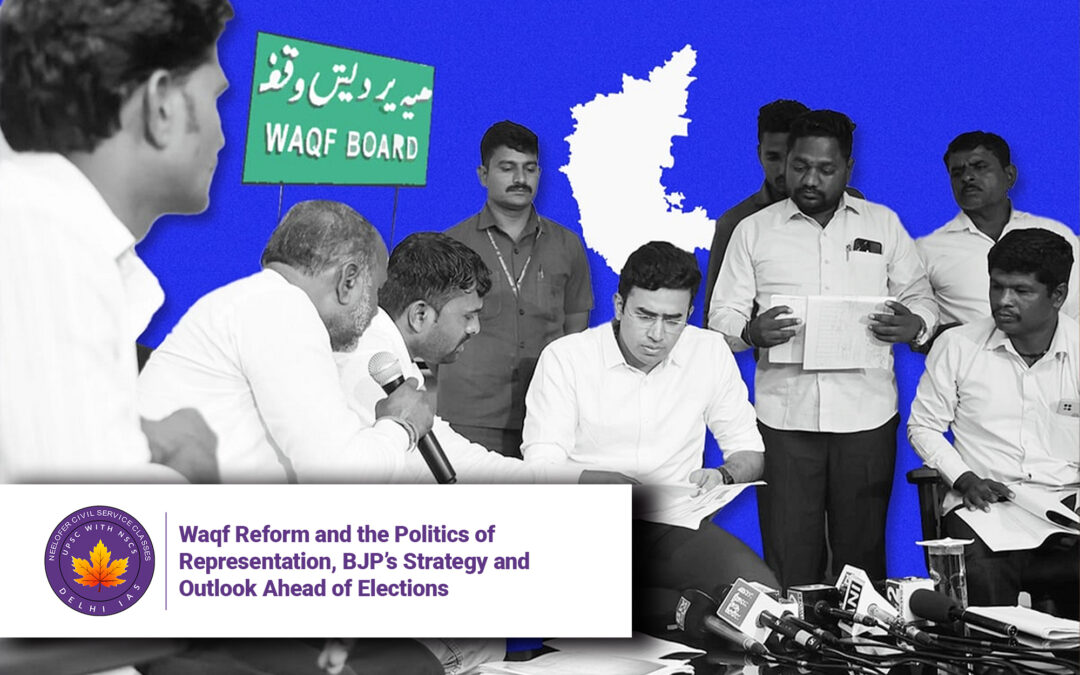
Waqf Reform and the Politics of Representation, BJP’s Strategy and Outlook Ahead of Elections
Why in News?
BJP National Vice President Baijayant Panda has spoken out on various contentious topics including Waqf Board reforms, the Uniform Civil Code (UCC), Muslim representation in the BJP, and shifting political landscapes ahead of the general elections. His remarks provide insight into BJP’s stand on religious rights, group rights vs. individual rights, and their strategy to win Delhi from AAP. 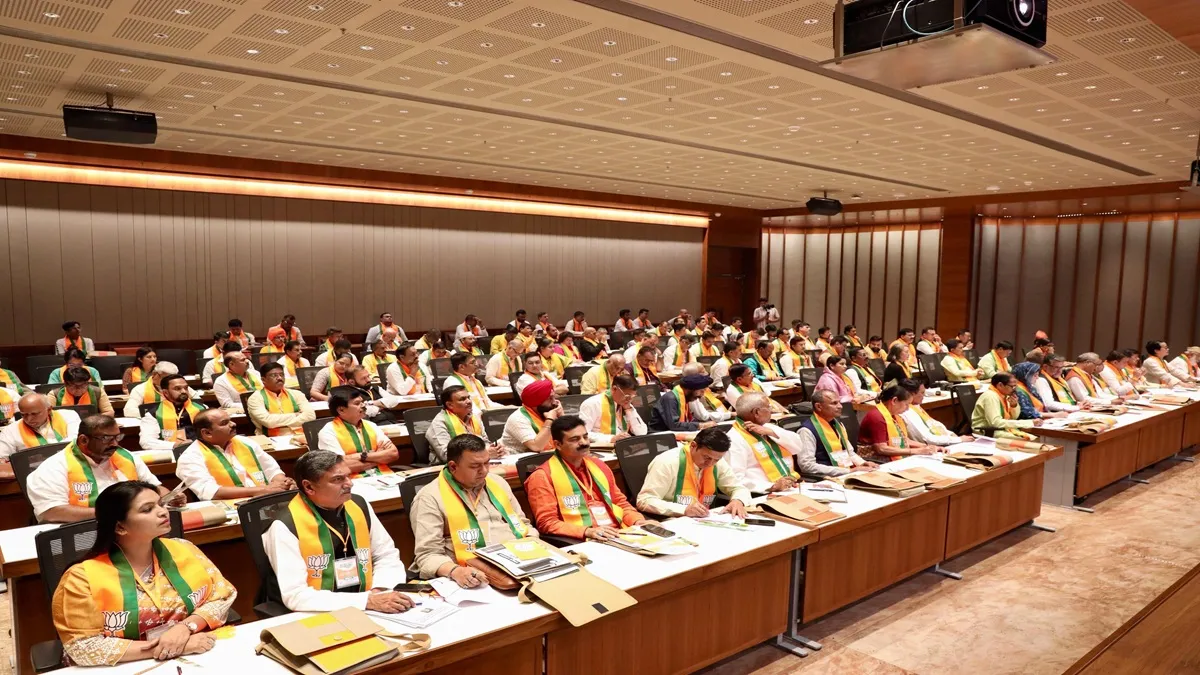
Introduction
Baijayant Panda, a prominent BJP leader, shared perspectives on religious reform, especially regarding the Waqf Board, communal representation, and India’s press freedom. His statements underscore BJP’s evolving strategy, its focus on individual rights, and its response to criticism surrounding religious sensitivities and governance.
Key Issues
-
Waqf Board Reforms and Muslim Representation:
Panda emphasized the need for reform in the Waqf Board and criticized the manner in which the Board owns vast swathes of land without transparency. While protests have occurred, he believes a much wider segment of the Muslim community supports the reforms. He also highlighted BJP’s stance on individual rights over group rights and confirmed that BJP doesn’t believe in tokenism or creating a “Muslim-only” outreach but in inclusive governance. -
Delhi Politics and the AAP Government:
BJP aims to wrest Delhi from AAP, accusing the current Chief Minister of ignoring urgent matters like infrastructure and health, particularly the delay in AIIMS in Majnuka Tila. Panda mentioned that over ₹13,000 crore would have been granted had Delhi shown cooperation. -
Uniform Civil Code (UCC):
Supporting the UCC, Panda stated that no individual should receive special rights based on religion, and everyone should be treated equally. He clarified that many democratic nations, including Muslim-majority countries, have moved away from religion-specific legal systems. -
Press Freedom and Fake Narratives:
Panda criticized India’s low ranking in the global press freedom index and said the portrayal was misleading. He pointed out that fake news and selective narratives have contributed to India’s poor image globally. -
Security and Religious Places:
He clarified that no one supports the desecration of religious sites. However, places with communal sensitivities should be carefully evaluated in the public interest.
Challenges and the Way Forward
-
Balancing Reform and Religious Sentiment:
While reforms like Waqf are needed, the government must ensure community dialogue to avoid alienation. -
Improving Civic Governance in Delhi:
BJP must present a credible alternative governance model to AAP’s perceived populism in Delhi. -
Communicating Inclusivity Effectively:
The party’s individual rights-based approach should be clearly explained to minority communities to bridge the trust gap.
Conclusion
Baijayant Panda’s remarks show BJP’s determination to continue structural reforms while focusing on individual rights over group appeasement. As general elections near, the party is banking on civic performance, inclusive nationalism, and legal reforms to build momentum across diverse voter segments.
5 Q&A Based on the Article
Q1. What is Baijayant Panda’s view on the Waqf Board reform?
A: He supports it strongly, stating that while some protests exist, a wider section of society, including Muslims, backs the transparency and accountability it seeks to bring.
Q2. How does the BJP approach Muslim representation in the party?
A: The BJP does not believe in tokenism. Instead of selecting leaders purely for identity, the party focuses on inclusive politics and individual merit.
Q3. What did Panda say about the Delhi government under AAP?
A: He criticized the AAP for ignoring major infrastructure projects like AIIMS and not cooperating with the Centre, leading to a funding loss of ₹13,000 crore.
Q4. What is BJP’s position on the Uniform Civil Code (UCC)?
A: The party supports UCC, asserting that every individual should be treated equally, regardless of religion, and special religious privileges undermine equality.
Q5. What was Baijayant Panda’s comment on India’s press freedom ranking?
A: He called the low ranking misleading, blaming fake narratives and misinformation for India’s poor image in the global press freedom index.
