
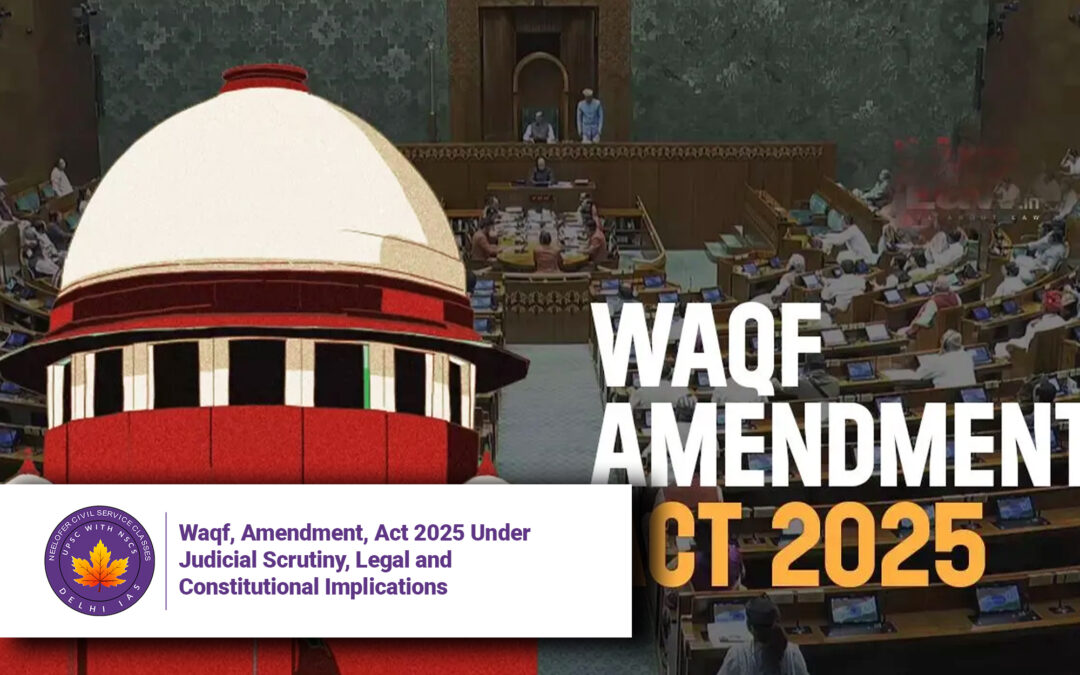
Waqf, Amendment, Act 2025 Under Judicial Scrutiny, Legal and Constitutional Implications
Why in News?
The Supreme Court of India has taken up over 100 petitions challenging the Waqf (Amendment) Act, 2025, passed recently by Parliament. The law has stirred debate by expanding government control over waqf properties, sparking concerns about religious freedom, community autonomy, and constitutional rights. 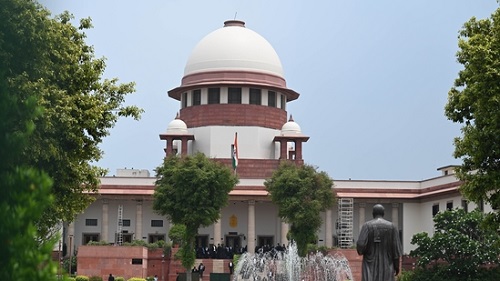
Introduction
The Waqf (Amendment) Act, 2025 introduces significant changes to the administration and governance of waqf properties in India. It removes the category of “waqf by user,” allows non-Muslims to be appointed to waqf boards, and empowers the state to unilaterally take over waqf properties in cases of disputes.
Key Issues and Background
1. Removal of “Waqf by User”
This provision excludes properties that were traditionally recognized as waqf based on long usage without formal documentation. It threatens the legal status of many old waqf properties, especially those created before formal land registration systems were in place.
2. Non-Muslim Inclusion in Waqf Boards
The law now allows non-Muslims to be appointed to the Central Waqf Council and State Waqf Boards, sparking concerns about violation of Article 26 of the Constitution, which guarantees religious communities the right to manage their own affairs in religious matters.
3. State Power Over Property Disputes
The Act empowers the state to take control of waqf properties in case of disputes—even before final judicial resolution, which many view as excessive and unconstitutional.
The Core of the Concern
-
The Supreme Court has paused implementation of appointments under the new law until May 5, the date of the next hearing.
-
Petitioners argue that the requirement of being a practising Muslim for at least 5 years to create a waqf violates freedom of religion.
-
The law may impact almost half of all waqf properties, many of which lack formal documentation due to their age.
Key Observations
-
Article 26 guarantees religious groups the right to manage their own religious and charitable affairs.
-
The law may promote inclusivity and transparency, but it also risks distorting the religious nature of waqfs if not handled carefully.
-
Legal experts have raised serious constitutional and social concerns about the hurried passage of the law without adequate consultation with the affected Muslim community.
Conclusion
The Waqf (Amendment) Act, 2025 raises important questions about religious autonomy, state overreach, and constitutional rights. The Supreme Court’s verdict will be crucial in determining how secularism and pluralism are preserved in India while ensuring transparency in religious property management.
Q&A Section
Q1. What is the main controversy surrounding the Waqf (Amendment) Act, 2025?
Ans: The Act expands state control over waqf properties, eliminates the “waqf by user” category, and allows non-Muslims in waqf boards—raising concerns over religious freedom and community autonomy.
Q2. What does the removal of “waqf by user” mean?
Ans: It means properties long used for religious purposes but lacking formal registration may no longer be protected as waqf, affecting a large number of Muslim community assets.
Q3. Why is Article 26 being cited in the legal challenge?
Ans: Article 26 ensures the right of religious groups to manage their own institutions and affairs. Petitioners claim the Act violates this right by imposing state control and altering governance structures.
Q4. What action has the Supreme Court taken so far?
Ans: The Court recorded the Centre’s assurance that no appointments or de-notifications will happen under the new Act until May 5, and has begun hearing over 100 petitions challenging the law.
Q5. What could be the wider impact of this legal challenge?
Ans: The case could shape the future of religious freedom, property rights, and the secular nature of India, making it a landmark issue for constitutional law.
