
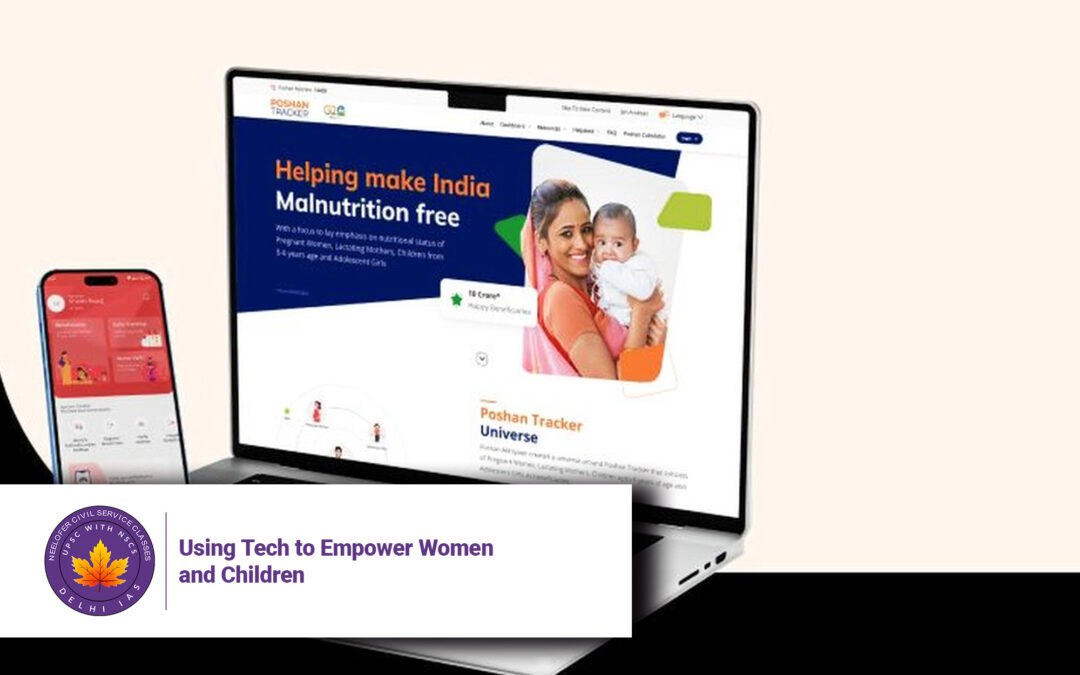
Using Tech to Empower Women and Children
Why in News?
India’s Ministry of Women and Child Development has increasingly adopted digital technology to improve service delivery, transparency, and outreach. Over the past decade, multiple tech-driven platforms have been launched to bridge gaps in nutrition, education, and protection for women and children. 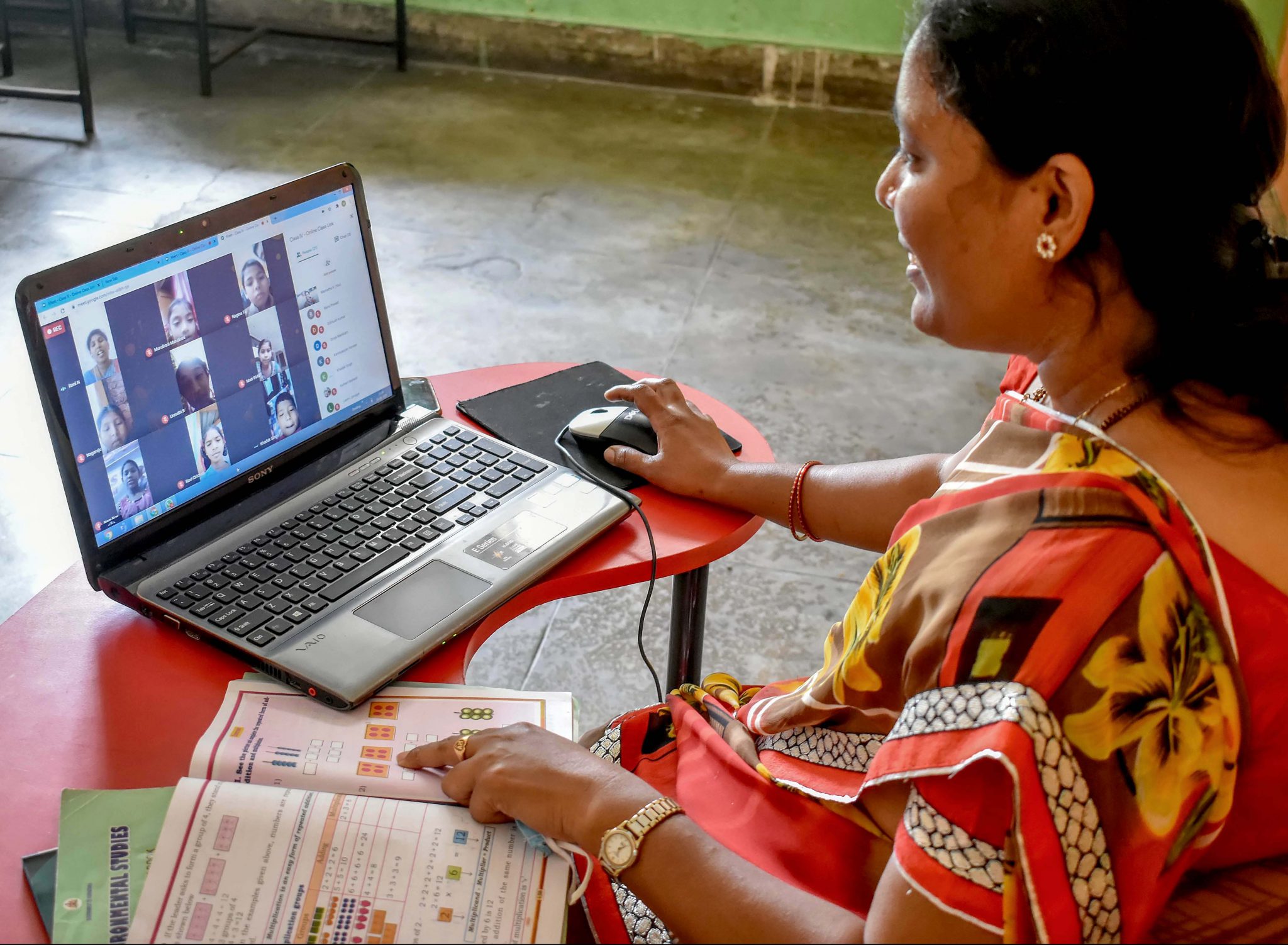
Introduction
Empowerment begins with access—to rights, services, and opportunity. In line with Prime Minister Narendra Modi’s vision of Viksit Bharat@2047, the Ministry of Women and Child Development (MoWCD) has led a transformation by leveraging digital tools. These initiatives ensure last-mile delivery of benefits and promote inclusive development for women and children.
Key Issues and Background
-
Digital Tools for Grassroots Service Delivery
Initiatives like Poshan Tracker equip Anganwadi workers with smartphones and training, improving service delivery in nutrition. Over 14 lakh Anganwadi centers now use it for real-time data tracking. Other innovations include Swasth Bharat, Suposhit Bharat, and Poshan Vatikas. -
Bridging the Urban-Rural Digital Divide
The Ministry has launched various tools—like the Poshan Bhi, Padhai Bhi model—to integrate nutrition with early education. The digital reach empowers rural women and frontline workers, reducing information gaps and improving services. -
Safety and Legal Access via Tech
The SHE-Box portal for sexual harassment complaints, and the TrackChild and CARINGS portals for child protection and adoption, have improved accessibility and efficiency. These tools ensure transparency and faster grievance redressal. -
Support for Pregnant and Lactating Women
Through the Pradhan Mantri Matru Vandana Yojana (PMMVY), over 4 crore women have benefited. It uses Aadhaar-enabled mobile systems and a DBT approach for seamless delivery of maternity benefits.
Specific Impacts or Effects
-
Better nutritional monitoring for over 10 crore children.
-
Improved access to education and healthcare for rural women.
-
Decline in infant and maternal mortality rates (IMR down to 28, MMR down to 97).
-
Over 1,000 child labor cases tackled through digital case management.
-
Enhanced transparency and accountability in public schemes.
Challenges and the Way Forward
Challenges
-
Ensuring digital literacy in remote areas.
-
Limited internet access in disaster-prone zones.
-
Resistance to tech adoption by older institutions.
-
Privacy and data security in digital platforms.
Steps Forward
-
Expand internet infrastructure in underdeveloped regions.
-
Train Anganwadi and ASHA workers in using apps efficiently.
-
Strengthen real-time dashboards with AI-based alerts.
-
Monitor scheme impact through integrated analytics.
-
Collaborate with private tech firms for innovative solutions.
Conclusion
India’s digital revolution is not just about convenience—it is about inclusion, justice, and dignity. By empowering women and children through platforms like Poshan Tracker, PMMVY, and CARINGS, the Ministry is setting a benchmark for tech-enabled social welfare. As more services go digital, the focus must remain on accessibility, accountability, and adaptability to truly fulfill the promise of Amrit Kaal.
5 Questions and Answers
Q1: What is the primary goal of the Ministry’s digital initiatives?
A: To ensure inclusive, efficient, and transparent delivery of services to women and children.
Q2: What is the Poshan Tracker and what does it do?
A: It is a digital tool that equips Anganwadi workers with real-time monitoring of nutrition data, improving service delivery.
Q3: How has PMMVY benefited women?
A: It has provided direct benefit transfers to over 4 crore pregnant and lactating women using Aadhaar-based systems.
Q4: What platforms are used for child safety and adoption?
A: TrackChild for missing children and CARINGS for adoption services ensure transparency and faster response.
Q5: What are the major outcomes of these digital interventions?
A: Improved nutrition and health services, lower mortality rates, enhanced grievance redressal, and empowered women at grassroots levels.

