
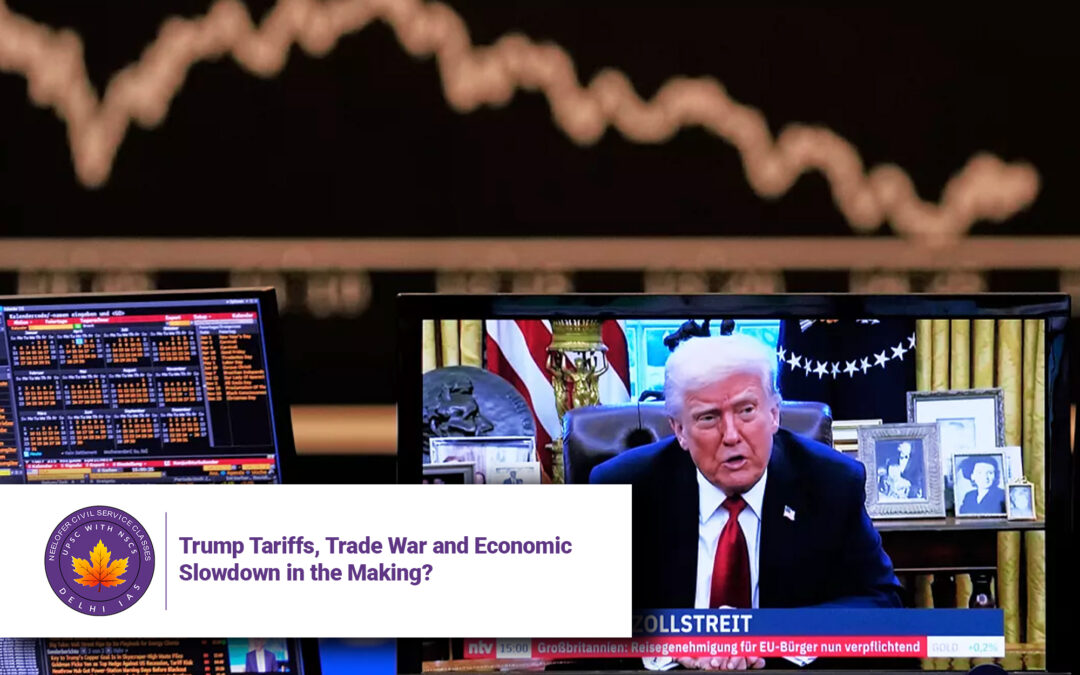
Trump Tariffs, Trade War and Economic Slowdown in the Making?
Why in News?
On April 2, U.S. President Donald Trump announced a sweeping 10% tariff on all U.S. imports, triggering global alarm and fears of a recession. The declaration, seen as a reversal of decades of free trade policy, has escalated trade tensions, particularly with China. 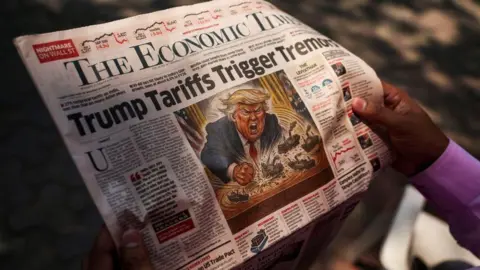
Introduction
The U.S., historically a champion of globalization and free trade, has made a drastic shift under Trump’s presidency. With the aim of boosting American manufacturing and protecting domestic jobs, Trump’s tariff-driven policies are raising concerns of a looming economic downturn and a bitter trade war.
Key Issues
1. A Turn from Globalization
Trump’s administration is reversing the post-WWII global trade order. His “Make America Great Again” agenda centers on reducing trade deficits and reviving domestic industries by taxing imports.
2. Tariff Impact on U.S. Economy
While tariffs are intended to boost local manufacturing, they risk driving up costs for U.S. consumers. For instance, a $100 commodity imported from China could cost $110 with a 10% tariff, reducing consumption and increasing inflation.
3. Trade War with China
China, the largest U.S. trading partner, has vowed to “fight till the end.” Having already faced a trade war since 2018, China has been diversifying its economy and reducing reliance on U.S. exports.
4. India’s Position
India finds itself vulnerable due to its high export-to-GDP ratio and dependence on sectors like textiles, pharmaceuticals, and IT. With many of these sectors serving U.S. markets, the ripple effects of tariffs can be far-reaching for India.
5. Global Economic Risks
There’s a real danger of recession if the U.S. and other major economies continue down a protectionist path. Global supply chains, investment, and consumer confidence could all be negatively impacted.
Challenges and the Way Forward
-
Negotiated Trade Settlements: Rather than blanket tariffs, the U.S. should engage in multilateral trade agreements.
-
Rebalancing Global Trade: Both developed and developing nations need to reconsider global production and sourcing strategies.
-
India’s Export Strategy: India must diversify export markets and enhance domestic competitiveness.
-
Consumer Protection: Governments must ensure that tariff policies do not unduly burden consumers with rising prices.
-
Global Cooperation: International trade bodies like the WTO must mediate and avoid prolonged economic hostilities.
Conclusion
Trump’s tariff move marks a significant turn in global trade policy. While intended to protect American industries, it risks backfiring by disrupting international trade, damaging relationships, and inviting retaliation. The world stands at a crossroads — will it embrace protectionism, or return to cooperation?
5 Q&A on Trump’s Tariff Policy
Q1: What did President Trump announce regarding tariffs?
On April 2, Trump declared a 10% tariff on all U.S. imports, signaling a drastic change in trade policy aimed at protecting domestic industries.
Q2: How does this affect global trade?
The decision could trigger a global trade war, especially with key partners like China and the EU retaliating. It may also raise product costs and disturb supply chains.
Q3: What is China’s response?
China has vowed to retaliate and is shifting its economy towards internal consumption and technological innovation to reduce dependency on U.S. exports.
Q4: How is India affected?
India’s export-driven economy is vulnerable. Sectors like textiles, IT, and pharmaceuticals, which depend on U.S. markets, may suffer due to rising trade barriers.
Q5: Could this lead to a global recession?
Yes. Experts warn that protectionist policies like these may depress global demand, restrict investment, and trigger a worldwide economic slowdown.
