
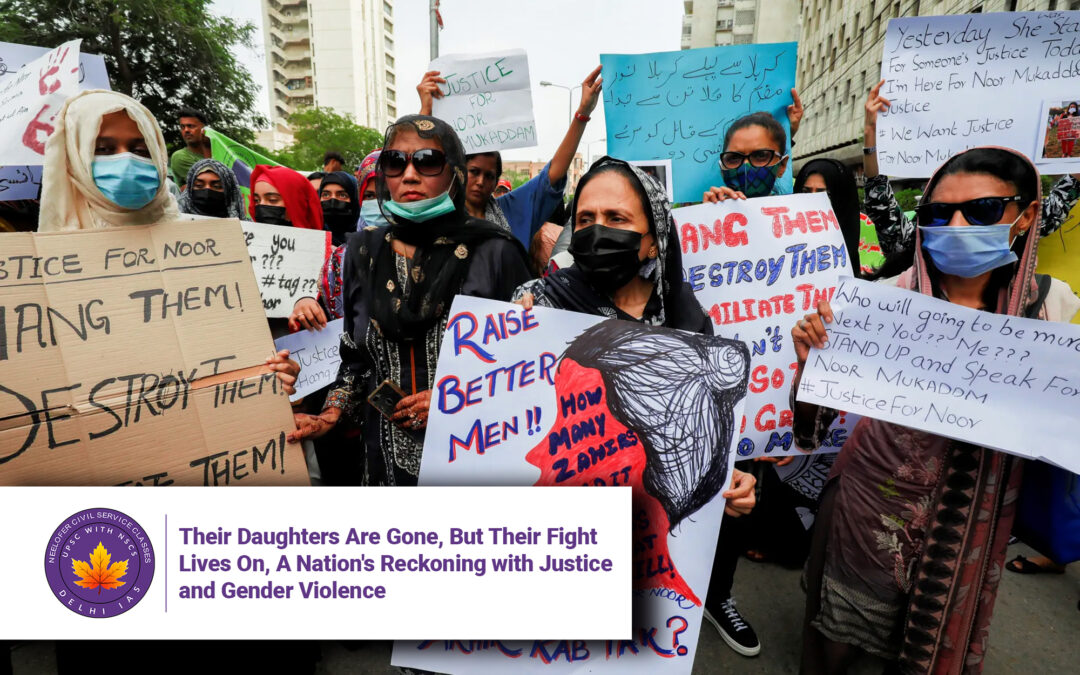
Their Daughters Are Gone, But Their Fight Lives On, A Nation’s Reckoning with Justice and Gender Violence
Introduction
In a powerful moment of solidarity, two mothers—Asha Devi (Nirbhaya’s mother) and Ratna Devnath (mother of another victim of gender violence)—stood together on a public platform, transforming grief into an unyielding demand for justice. Their stories, though separated by years, are tragically linked by India’s enduring crisis of violence against women and the systemic failures that deny victims closure.
This article examines:
-
The emotional yet resolute voices of Asha Devi and Ratna Devnath
-
The legal and societal battles faced by victims’ families
-
Why justice remains elusive for most cases
-
The role of media, judiciary, and public apathy
-
A 5-point action plan for systemic reform
Why in News?
-
Asha Devi and Ratna Devnath shared a stage, uniting two families scarred by gender violence.
-
Nirbhaya’s case (2012): Symbolized India’s #MeToo moment, yet justice took 7 years.
-
Devnath’s case: Highlights how most families still fight in silence.
-
Key demand: Systemic reforms to prevent future tragedies.
Key Issues and Analysis
1. The Unfinished Battle: From Nirbhaya to Today
A. Asha Devi’s 12-Year Fight
-
December 2012: Nirbhaya’s gang rape shocked the nation.
-
2013: Fast-track court convicted four offenders (one juvenile released).
-
2020: After appeals, all four hanged—but justice came too late for Nirbhaya.
-
Asha’s lament: “Many girls didn’t get the justice Nirbhaya got.”
B. Ratna Devnath’s Struggle
-
Her daughter’s case: Similar brutality, but lacked media attention.
-
Delays: Police inertia, witness intimidation, legal loopholes.
-
Her plea: “Justice not just for my daughter—but for every daughter.”
Common Thread: Families forced to become activists to seek justice.
2. Why Justice Fails Most Victims
| Hurdle | Impact |
|---|---|
| Police Apathy | Slow FIRs, evidence mishandling (e.g., Unnao rape case). |
| Legal Delays | Avg. rape trial takes 5-10 years (NCRB). |
| Witness Intimidation | Survivors/families pressured to withdraw cases. |
| Political Interference | High-profile accused often shielded (e.g., Brij Bhushan Sharan Singh). |
| Social Stigma | Victims blamed; families ostracized. |
Data Point: Only 27% of rape cases end in conviction (NCRB 2023).
3. The Role of Media & Public Memory
-
Nirbhaya became a symbol—but most cases fade from headlines.
-
Selective outrage: Urban, upper-class victims get attention; rural, marginalized cases ignored.
-
Example: Kathua rape-murder (2018) sparked protests, but similar cases in Bihar/MP didn’t.
Asha Devi’s Warning:
“People forget. The fight cannot stop when the media does.”
4. Legal Reforms: Promises vs. Reality
A. Post-Nirbhaya Changes
-
Criminal Law Amendment (2013): Stricter punishments, faster trials.
-
Death penalty for child rape (2018).
B. Ground Realities
-
Fast-track courts are backlogged (Delhi: 650 pending rape cases).
-
No witness protection law—families face threats.
Advocate Seema Kushwaha’s Take:
“Laws exist, but implementation is broken.”
5-Point Action Plan for Systemic Reform
1. Police Accountability
-
Mandatory bodycams during investigations.
-
Penalties for delayed FIRs.
2. Judicial Overhaul
-
Double fast-track courts; prioritize gender violence cases.
-
Strict timelines: Max 1 year for trial completion.
3. Witness Protection
-
National Witness Protection Program (modeled on UK/US).
4. Political Will
-
No tickets for accused politicians (e.g., Brij Bhushan, Kuldeep Sengar).
5. Societal Change
-
Gender sensitivity training in schools.
-
Public shaming of victim-blaming.
Conclusion: A Fight for Every Daughter
Asha Devi and Ratna Devnath’s shared stage was not just a panel—it was a reckoning. Their pain is a mirror to India’s failures, but their resolve is a blueprint for change.
The Way Forward:
✔ Justice delayed must no longer be justice denied.
✔ Media must spotlight all cases, not just “high-profile” ones.
✔ Public solidarity must outlast hashtags.
As Ratna said through tears:
“This fight isn’t just mine—it’s yours too.”
5 Key Questions & Answers
Q1: How long did Nirbhaya’s case take to resolve?
A1: 7 years (2012–2020)—despite national outrage.
Q2: Why do most rape cases not get justice?
A2: Police apathy, witness threats, legal delays (only 27% convictions).
Q3: What legal reforms came after Nirbhaya?
A3: Stricter punishments, fast-track courts—but backlogs persist.
Q4: How can the public help?
A4: Demand accountability, support victims’ families, reject victim-blaming.
Q5: What’s the #1 reform needed?
A5: Witness protection laws to stop intimidation.

