
The Sorry State of South Asian Economic Integration
Why in News?
Recent incidents, including India’s economic retaliation via increased tariffs on goods from the Maldives and Bangladesh, have reignited concerns over South Asia’s weak economic integration. Analysts and international institutions are highlighting that while regional economies share proximity and complementarities, their economic links remain alarmingly low. 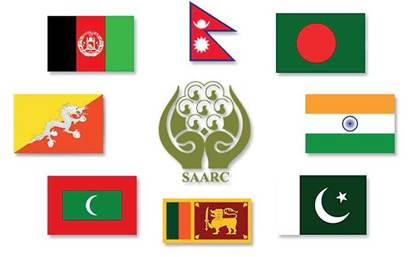
Introduction
South Asia continues to be one of the least economically integrated regions in the world. Despite the existence of regional trade agreements such as SAFTA (South Asian Free Trade Area), economic relations in the region are marred by mistrust, political tensions, and a lack of institutional frameworks to drive integration forward.
Key Challenges
-
Low Intra-Regional Trade: South Asia’s intra-regional trade stands at a dismal 5% to 7% of total international trade, far below East Asia (35%) and the EU (60%). This points to a chronic underutilization of trade potential.
-
Tariff and Non-Tariff Barriers: Countries frequently impose retaliatory tariffs on each other, such as the case with India and Maldives, where economic decisions were heavily influenced by political disagreements.
-
Trust Deficits and Political Tensions: Bilateral conflicts and cross-border mistrust continue to hinder full implementation of trade agreements like SAFTA, reducing predictability and confidence among traders.
-
High Trading Costs: Intra-regional trade costs are 20% higher compared to trading with distant partners like the EU. For instance, it’s cheaper for India to trade with Brazil than with Pakistan.
Missed Potential
According to ESCAP’s Asia Gravity Model, full trade integration under SAFTA could have raised total intra-regional trade to over $67 billion by 2025. Current figures are far from this, highlighting untapped potential. Bangladesh, for example, faces severe barriers while trading with India despite being its closest neighbor.
UNESCAP estimates suggest South Asia could boost regional GDP by over $44 billion if integration is prioritized. Yet, the trade-to-GDP ratio in countries like Pakistan and Nepal remains very low.
Lack of Strategic Policy Vision
Even after decades of regional summits and agreements under SAARC and BIMSTEC, trade integration lags due to:
-
Absence of a robust enforcement mechanism,
-
Weak dispute resolution systems,
-
Politicization of economic decisions.
South Asia lacks the structural and diplomatic coordination seen in ASEAN or the EU.
The Way Forward
-
De-Politicize Trade: Bilateral tensions must be kept separate from economic decisions.
-
Harmonize Standards: Customs, transport, and product standards must be aligned.
-
Build Regional Institutions: Strong institutions can facilitate trust and economic cooperation.
-
Encourage Private Sector Dialogue: Business-to-business partnerships can sustain momentum despite political instability.
-
Promote Digital Connectivity: Reducing transaction costs and improving supply chains can help smaller players participate in regional trade.
Conclusion
South Asia remains economically disjointed despite cultural proximity and shared history. Political disagreements continue to override economic logic. Unless member states make regional trade a strategic priority and insulate it from political fluctuations, the promise of economic growth through integration will remain a missed opportunity.
Source: Based on an article by Shashank Patel, South Asian University (SAU), New Delhi. Published in The Hindu, June 2025.

