
The Road to Safety, India’s Mission to Reduce Road Fatalities
Why in News?
India is undergoing a major mobility transformation, but it faces a persistent and deadly challenge—road safety. With one of the largest road networks in the world, India also reports among the highest road accident fatality rates globally. In 2022, India recorded 1.68 lakh road accident deaths—about 12.2 deaths per 1 lakh population, nearly five times that of countries like Japan and the U.K. This has triggered a nationwide call for urgent safety reforms. 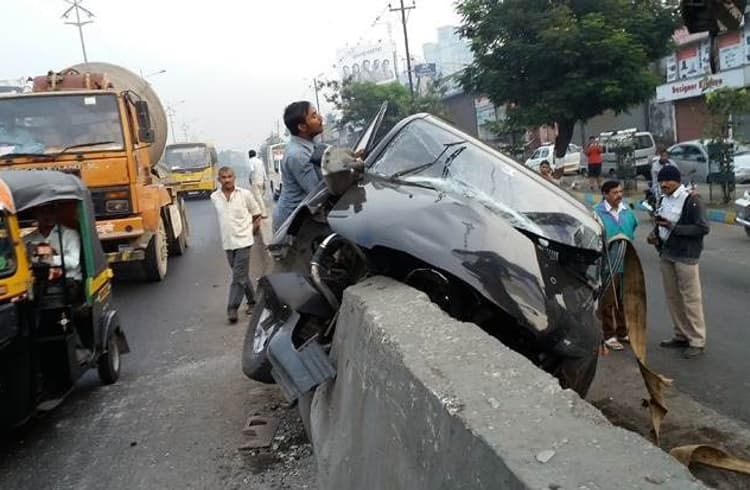
Introduction
India’s rapid urbanisation and motorisation offer opportunities for economic growth but also present serious challenges to road safety. Poorly designed roads, unskilled driving, lack of enforcement, and limited public awareness contribute to a road safety crisis. At the heart of the solution is a rights-based, inclusive approach that prioritises human life and systemic reform.
Key Issues and Background
-
Right to Life and Road Safety
-
Road safety is not just a technical issue—it is a constitutional right under Article 21.
-
Every person—pedestrian, cyclist, or driver—has the right to move safely in public spaces.
-
The State has a legal and moral duty to ensure road safety as a shared public good.
-
-
Urban Mobility and the Safe System Approach
-
By 2047, India’s urban population is projected to be 50% of the total. This demands a reimagining of urban mobility.
-
The Safe System Approach shifts the focus from blaming individuals to creating a safe, forgiving infrastructure.
-
Measures include: wide footpaths, protected cycle tracks, safe pedestrian crossings, speed limits, and raised intersections.
-
-
Government Initiatives and Investment
-
The Ministry of Road Transport and Highways (MoRTH) has launched various targeted interventions:
-
Rectification of 5,000+ black spots.
-
Road safety audits and stricter vehicle safety norms.
-
Electronic enforcement, use of speed cameras, and CCTV.
-
-
Driving training centres and vehicle fitness programs launched in each district.
-
-
Corporate and Policy Support
-
The government is exploring innovative funding, including Social Responsibility models for long-term safety efforts.
-
Union Minister Nitin Gadkari has called for corporate support in areas like road user awareness, public trauma care, and skill development.
-
-
Global Support and Framework
-
The World Bank’s Road Safety Framework 2020 calls for a $109 billion investment over 10 years to cut road deaths by 50%.
-
International reports (like IRAP and Global Road Safety Facility) emphasise returns in lives saved and healthcare savings through better road safety.
-
Five Key Takeaways
-
Road safety is a constitutional right, not a privilege—every life on the road matters.
-
Systemic infrastructure reforms are essential to prevent accidents rather than just reacting to them.
-
Government is actively investing in black spot removal, vehicle training, and CCTV-based enforcement.
-
Corporate and global partnerships are key to long-term, large-scale road safety improvements.
-
A shift from speed to safety and inclusivity in mobility planning is needed to make roads safer for all.
Challenges and the Way Forward
Challenges:
-
Lack of awareness about safe driving practices.
-
Poor infrastructure design and unsafe urban planning.
-
Resistance to new traffic enforcement mechanisms.
-
Inadequate trauma response and medical facilities.
-
Insufficient collaboration across sectors.
Way Forward:
-
Invest heavily in road safety audits, public education, and trauma response.
-
Redesign urban streets for vulnerable users like pedestrians, elderly, and cyclists.
-
Encourage auto-makers and corporates to invest in long-term safety initiatives.
-
Use data-driven policies and electronic monitoring to enforce laws effectively.
-
Shift national perception of road safety from a luxury to a necessity.
Conclusion
India’s road safety journey is at a defining moment. The government, private sector, and civil society must work together with a visionary, inclusive approach. As India approaches 2047, its centenary of independence, the paved path must prioritise safety, dignity, and sustainability. Roads should reflect civic values, not just traffic flow.
Q&A Section
1. Why is road safety a constitutional issue in India?
Because it relates to the right to life under Article 21 of the Constitution. Citizens have the right to move safely in public spaces without the risk of death or injury.
2. What is the Safe System Approach?
It’s a global philosophy that says people will make mistakes, but the system must be designed so that those mistakes do not result in death or serious injury.
3. What are some recent government measures to improve road safety?
-
Rectifying 5,000+ accident black spots.
-
Setting up driving training centres.
-
CCTV and electronic enforcement.
-
Stricter road safety norms and audits.
4. What role does the private sector play in road safety?
Corporates are encouraged to fund initiatives under Social Responsibility frameworks, such as public awareness campaigns and driving training.
5. How much investment is needed to significantly reduce road deaths?
The World Bank estimates $109 billion is required over the next decade to cut fatalities by 50% in India.

