
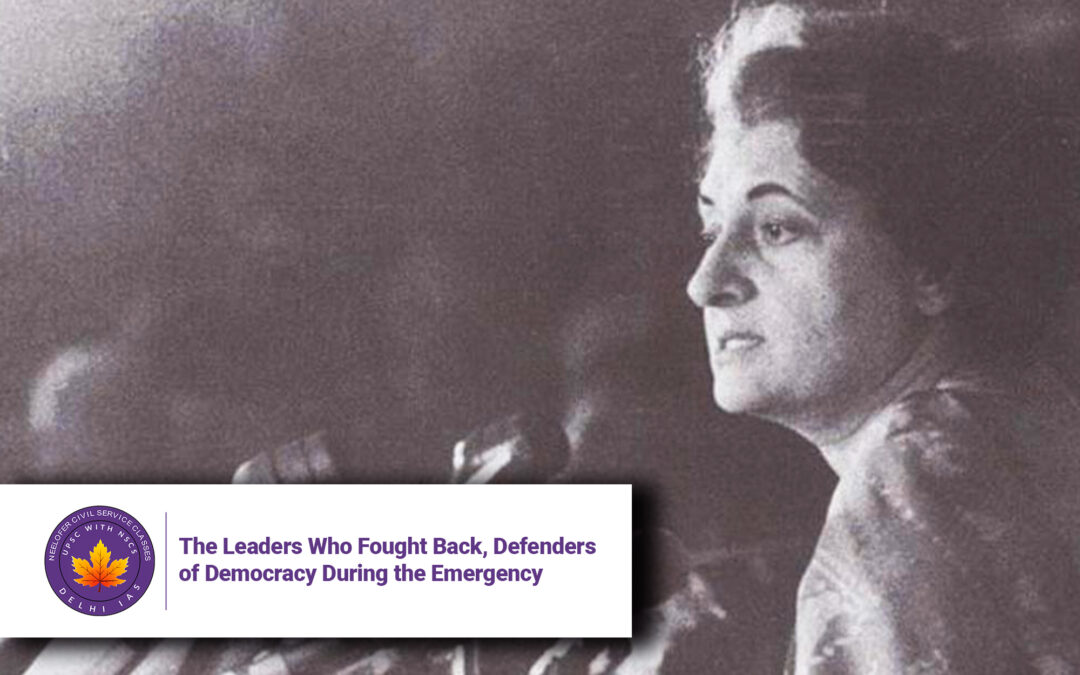
The Leaders Who Fought Back, Defenders of Democracy During the Emergency
Why in News?
On the 50th anniversary of the declaration of Emergency in India (June 25, 1975), Maharashtra Chief Minister Devendra Fadnavis commemorates the resistance by political leaders and citizens who stood against the authoritarian move. His article underlines the importance of remembering those who protected democracy at its most vulnerable moment. 
Introduction
June 25, 1975, is marked as one of the darkest days in Indian democracy. The then Prime Minister Indira Gandhi imposed a state of Emergency, suspending civil liberties, arresting opposition leaders, censoring the press, and clamping down on public dissent. It was a period of fear, repression, and unchecked state power.
But amid this storm, leaders from various political and ideological backgrounds stood united to defend democratic values. Their courage and commitment are the reason Indian democracy survived.
Key Events and Historical Significance
1. Emergency and Political Repression
Indira Gandhi’s Emergency declaration followed her election being declared invalid by the Allahabad High Court. Instead of resigning, she clamped down on democratic processes, leading to the arrest of thousands of opposition leaders.
2. Resistance from Leaders Across India
Leaders like Jayaprakash Narayan (JP), Atal Bihari Vajpayee, Lal Krishna Advani, Morarji Desai, George Fernandes, and others were jailed but did not bend. Their moral strength inspired a movement that ultimately led to the fall of the Indira regime.
3. Maharashtra’s Role in the Fightback
Maharashtra was a key battleground for resistance. Leaders like Ramdas Nayak, Suryabhan Vahadane, and Ram Jethmalani fought the Emergency from the grassroots. Shiv Sena and RSS volunteers played critical roles in organizing protests and mobilizing public opinion.
4. Revolutionary Underground Movements
During this time, underground newspapers and secret meetings kept the spirit of resistance alive. Courageous women like Usha Mehta, Pushpa Bhave, and others were central to these efforts.
5. Democratic Values and Today’s Lessons
The article emphasizes that democracy did not come easily. It was protected and nurtured by sacrifices. The legacy of those who fought during the Emergency should be passed down to future generations, reminding them never to take democracy for granted.
Challenges and the Way Forward
-
Historical Memory: The younger generation must be taught about the Emergency not just as history, but as a warning.
-
Vigilance Against Authoritarianism: Even today, democracy can be weakened by unchecked power. Active citizen participation and a free press are vital.
-
Celebrating Democratic Heroes: The bravery of those who resisted authoritarianism must be honored and remembered officially.
Conclusion
The democracy we enjoy today was made possible by the relentless efforts of leaders and citizens who stood up during the Emergency. As we remember June 25, 1975, we must reflect not just on the darkness of that era, but also on the light brought by those who fought back. Their fight is our legacy, and their courage must inspire us to protect democracy at all costs.
Q&A Section
1. What was the reason behind the 1975 Emergency in India?
The Emergency was declared after the Allahabad High Court invalidated Indira Gandhi’s election, citing electoral malpractice. Instead of stepping down, she imposed Emergency to retain power.
2. Who were some key leaders who resisted the Emergency?
Jayaprakash Narayan, Atal Bihari Vajpayee, L.K. Advani, Morarji Desai, George Fernandes, and Ram Jethmalani were among the prominent figures jailed during the Emergency.
3. How did Maharashtra contribute to the resistance?
Leaders like Ramdas Nayak, Suryabhan Vahadane, and thousands of party workers from Maharashtra actively resisted the Emergency, often going underground.
4. What role did women play during the Emergency?
Women like Usha Mehta and Pushpa Bhave played significant roles in organizing underground resistance and printing clandestine newspapers.
5. What lesson does the Emergency hold for today’s youth?
It teaches the value of democracy and the importance of resisting authoritarian tendencies. Freedom must be actively defended, not passively assumed.

