
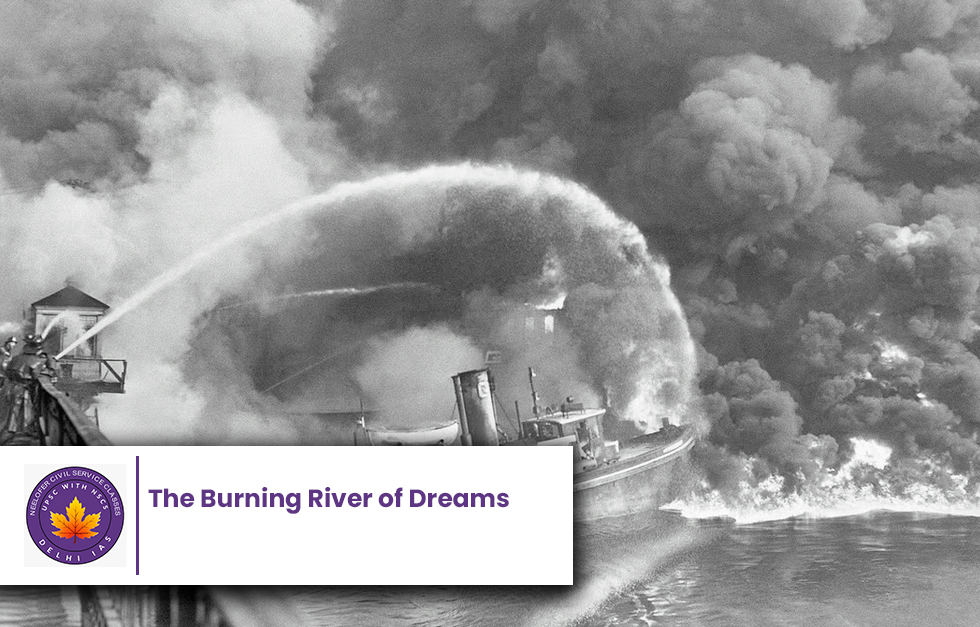
The Burning River of Dreams
The Amazon rainforest — the world’s largest — faces increasing threats from climate change and fossil fuel exploration, putting its ecology and indigenous communities at risk. 
Why in News?
The August 2023 Amazon Cooperation Treaty Organization (ACTO) summit in Belém, Brazil, brought together eight member countries to discuss ways to protect the Amazon basin. The region’s growing fossil fuel exploration and frequent oil spills have raised alarms about irreversible damage to one of Earth’s most vital ecological regions.
Introduction
Holding nearly a fifth of all known global oil reserves, the Amazon has become a hotspot for oil majors and new ventures. However, this resource rush has come at an enormous cost: frequent oil spills, deforestation, mismanagement, and ecological disasters that threaten biodiversity and local communities.
Key Issues and Background
Frenzied Oil Rush
-
The Amazon’s vast oil wealth has invited reckless exploration, especially by state-run and private oil giants.
-
Major oil projects stretch from Ecuador’s Oriente basin to Peru’s Maranon River and Brazil’s dense forests.
-
Frequent spills, sabotage, poor logistics, and mismanagement plague these ventures.
Environmental Crisis
-
Frequent oil spills in tributaries like the Orinoco, Maranon, and Branco rivers contaminate vast rainforest areas.
-
The fragile Amazon basin hosts immense biodiversity and plays a crucial role in regulating the global climate.
-
Brazil’s state-run Petrobras and Venezuela’s PDVSA are often criticised for mishandling exploration, leading to repeated pollution incidents.
Community Impact
-
Indigenous communities suffer habitat loss, river pollution, and health hazards.
-
Governments face legal and political pressure to balance economic gains with conservation.
-
New exploration projects in protected reserves, like Ecuador’s Yasuni National Park, fuel local and global outrage.
Specific Impacts or Effects
-
Rampant pollution destroys fish stocks, drinking water sources, and forests.
-
Sabotage, conflict, and political instability worsen the damage.
-
Rivers like the Amazon, Orinoco, and tributaries such as Rio Putumayo and Rio Branco are turning into oil pipelines, threatening species and cultures.
Challenges and the Way Forward
Challenges
-
Poor infrastructure and outdated pipelines.
-
Weak governance and corruption.
-
Competing national interests between ACTO member states.
Steps Forward
-
Stronger Regional Cooperation:
The BRICS summit called for a unified framework to balance oil wealth with environmental responsibility. -
Modernising Pipelines and Practices:
Replace ageing oil pipelines with safer, advanced infrastructure to prevent leaks and spills. -
Local Community Rights:
Protect indigenous people’s rights and involve them in decisions about land and water use. -
International Support:
Leverage global financing to fund renewable energy alternatives and conservation efforts. -
Enforcing Accountability:
Pass and implement strong liability laws for oil companies to pay for cleanup and prevent future disasters.
Conclusion
The Amazon rainforest, often called the ‘lungs of the Earth,’ is under siege by uncontrolled oil exploration. Without urgent reforms, the short-term rush for oil revenues may destroy the long-term promise of clean water, biodiversity, and climate security. Sustainable solutions that respect both economic and ecological goals are the only way forward.
5 Questions and Answers
Q1: What is the Amazon Cooperation Treaty Organization (ACTO)?
A: A group of eight countries working together to protect the Amazon basin.
Q2: Why is oil exploration in the Amazon risky?
A: Poor infrastructure, sabotage, and spills threaten delicate ecosystems and indigenous communities.
Q3: Which major rivers are most affected?
A: Orinoco in Venezuela, Maranon in Peru, Putumayo in Colombia, and Rio Branco in Guyana.
Q4: What was discussed at the BRICS summit?
A: The need for a framework to balance oil exploration with protection of nature.
Q5: What actions are urgently needed?
A: Stronger governance, modern pipelines, community rights protection, and international conservation funding.

