
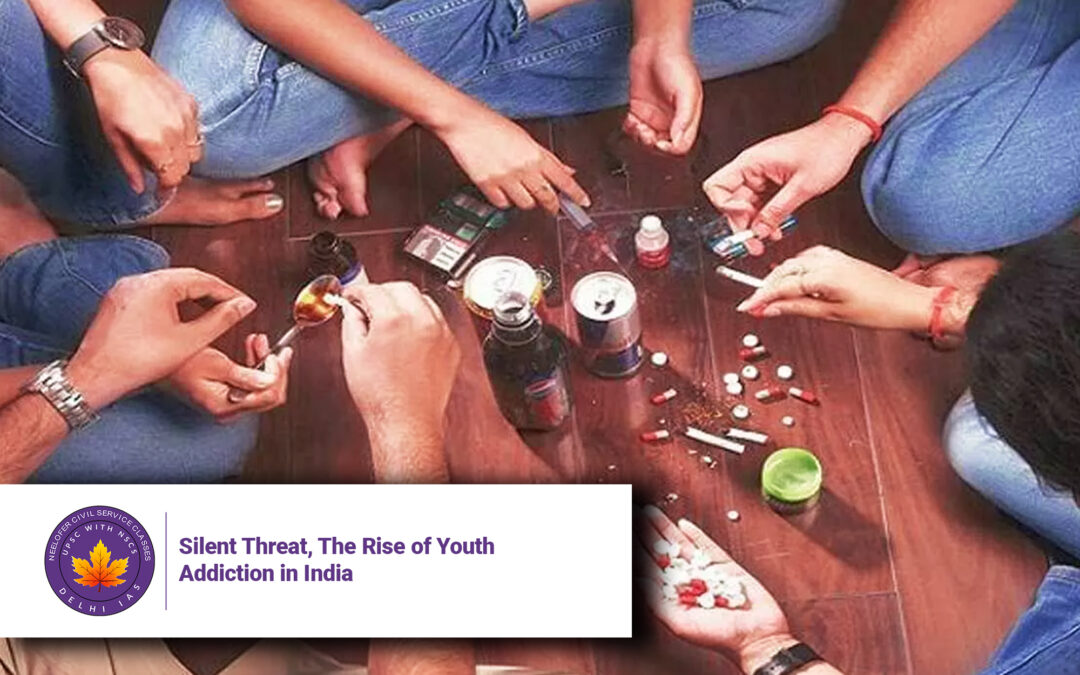
Silent Threat, The Rise of Youth Addiction in India
Why in News?
A growing concern is emerging in India regarding youth addiction to vaping, e-cigarettes, and other substances disguised as lifestyle products. Social influencers, peer pressure, and aggressive marketing are pushing young minds into unhealthy habits. Mallika Nadda calls for urgent policy, parental, and societal action to address this escalating crisis. 
Introduction
In today’s rapidly changing world, the challenges of motherhood and parenting go beyond just raising high-performing children. Parents now struggle with protecting their children from harmful influences, including the silent but aggressive rise of substance addiction among youth.
Key Issues
1. The Modern Parenting Dilemma
Balancing a demanding career while ensuring the emotional, social, and mental development of children has become one of the most difficult challenges for parents, especially mothers. Children face pressure from both academic expectations and peer influence.
2. Alarming Rise in Youth Addiction
The youth today are embracing habits like vaping and drug use, often believing them to be safe, sleek, and fashionable. These habits are not just dangerous but are disguised under the guise of modern gadgets and “cool” trends.
3. The Influence of Social Media and Marketing
Devices such as vapes and e-cigarettes are marketed in child-friendly flavours and endorsed by influencers. Packaging includes ultra-slim, colourful pens, and tech-inspired looks, luring teenagers under the false pretense of safety and social acceptance.
4. Dangerous Global Trends Entering India
Globally concerning trends like “zombie cigarettes” (spiked with cannabis) are making their way into Indian markets. With minimal regulation and lack of awareness, India’s youth is especially vulnerable to these imported dangers.
5. Need for Urgent Action
There is an urgent call for a multi-stakeholder approach — parents, schools, governments, and policy-makers must unite. India cannot afford to mortgage its future to addiction industries that prey on the vulnerability of its younger generation.
Challenges and the Way Forward
-
Lack of awareness among parents, teachers, and even young users.
-
Inadequate regulations on marketing, packaging, and influencer advertising of addictive products.
-
Peer pressure and social trends further push youth into risky behaviours.
-
Need for policy intervention to strictly ban misleading e-products and increase enforcement.
-
Role of sports and education in offering positive alternatives to youth and empowering families.
Conclusion
India must act before this silent epidemic engulfs the nation’s youth. As Mallika Nadda emphasizes, we must protect our future generations by being proactive, informed, and united. The cost of silence is too high — it’s time we break it.
Q&A Section
Q1: What is the central issue highlighted in the article by Mallika Nadda?
A: The rise in addiction among youth, especially to e-cigarettes, vapes, and other disguised harmful substances.
Q2: Why are these harmful products so attractive to young people?
A: They are marketed as sleek, safe, and fashionable — often in child-friendly flavours and endorsed by influencers.
Q3: What are some global trends influencing this addiction crisis in India?
A: “Zombie cigarettes” and cannabis-laced products are now entering Indian markets, mimicking global consumption trends.
Q4: What role does social media play in this issue?
A: Social media influencers promote these products, creating peer pressure and glamorizing substance use among teens.
Q5: What actions are suggested to tackle this issue?
A: Stronger regulations, banning deceptive advertising, awareness campaigns, parental guidance, and promoting healthier alternatives like sports.
