
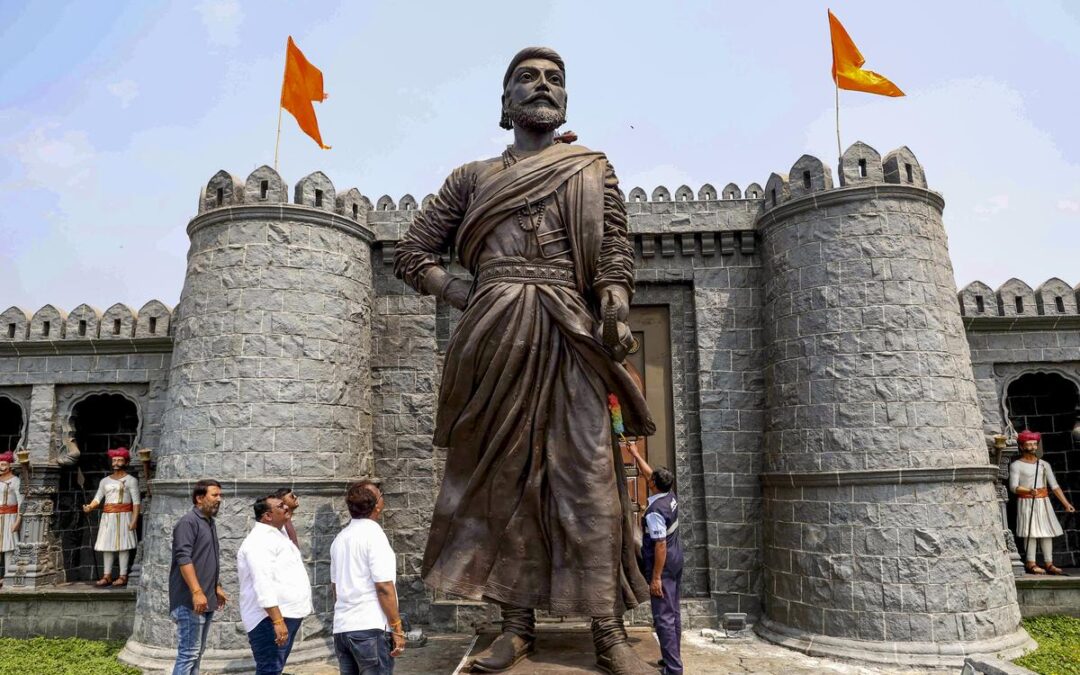
Shivaji Maharaj Enduring Legacy, A Transformative Force in Indian History
Why in News?
On April 3, the death anniversary of Chhatrapati Shivaji Maharaj, historians, scholars, and citizens commemorate the legacy of one of India’s most influential rulers. His progressive governance, military strategy, and socio-economic reforms made him a transformative force in feudal India, challenging the Mughal hegemony and existing social structures.
Shivaji’s Military Brilliance and Governance Model
-
Guerilla Warfare Pioneer: Shivaji revolutionized warfare through swift cavalry raids, hit-and-run tactics, and intelligence-based strategies, which helped his smaller forces defeat the mighty Mughal empire.
-
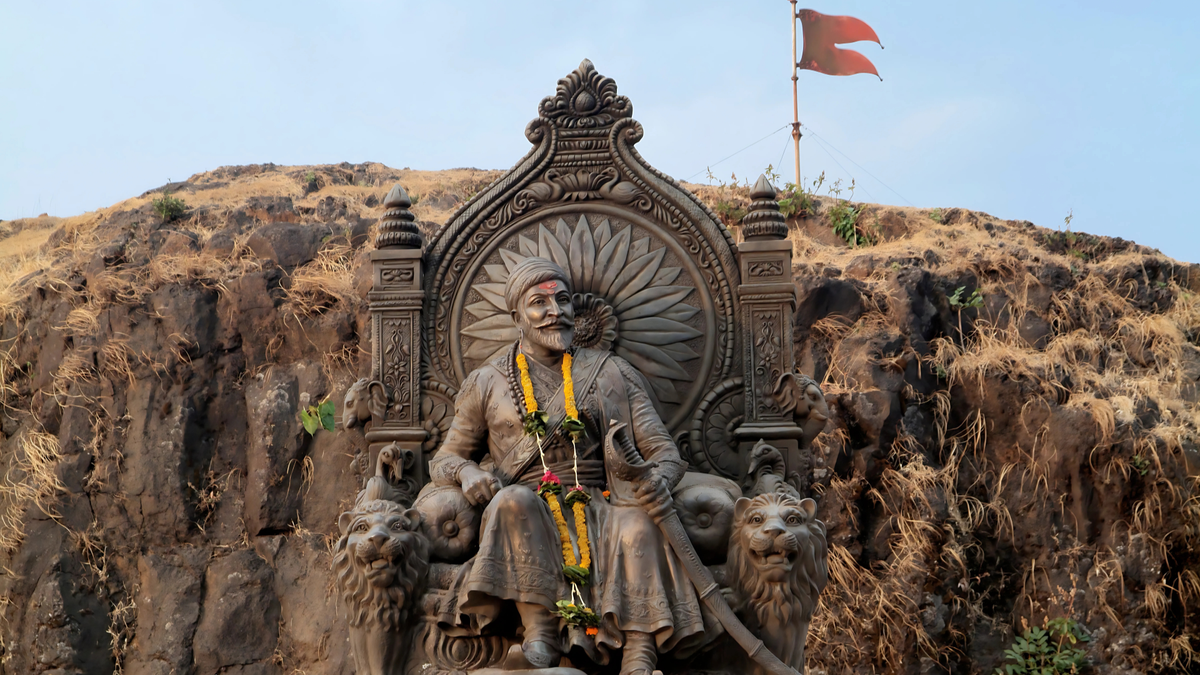
People’s Leader: Unlike other rulers of his time, Shivaji often led from the front, earning the loyalty and respect of his soldiers.
-
Inclusive Leadership: His army and administration included various social groups—Brahmins, Marathas, Muslims, and Dalits—contradicting later identity-based claims.
-
Administrative Innovations:
-
Abolition of slavery: Shivaji issued a charter banning the trade of enslaved people, a radical move for the time.
-
Land Revenue Reforms: He replaced the exploitative feudal land system (Vatan) with the Ryotwari system, ensuring more rights for cultivators.
-
Promotion of Indigenous Language: He encouraged Marathi over Persian, making governance more accessible to the common people.
-
Impact on Modern India
Shivaji’s policies and reforms remain highly relevant in today’s socio-political landscape:
-
His emphasis on inclusive governance and economic empowerment is echoed in modern developmental policies.
-
His focus on national identity and self-rule (Hindavi Swarajya) continues to inspire movements for regional and cultural pride.
-
His military tactics and administrative strategies are studied in Indian defense and governance models.
Conclusion
Shivaji Maharaj was not just a warrior; he was a visionary ruler, a social reformer, and a pioneer of modern governance. His policies challenged feudal norms, promoted economic self-sufficiency, and emphasized the welfare of all communities. As India grapples with contemporary challenges, his principles of governance, inclusion, and justice continue to serve as a guiding light.
