
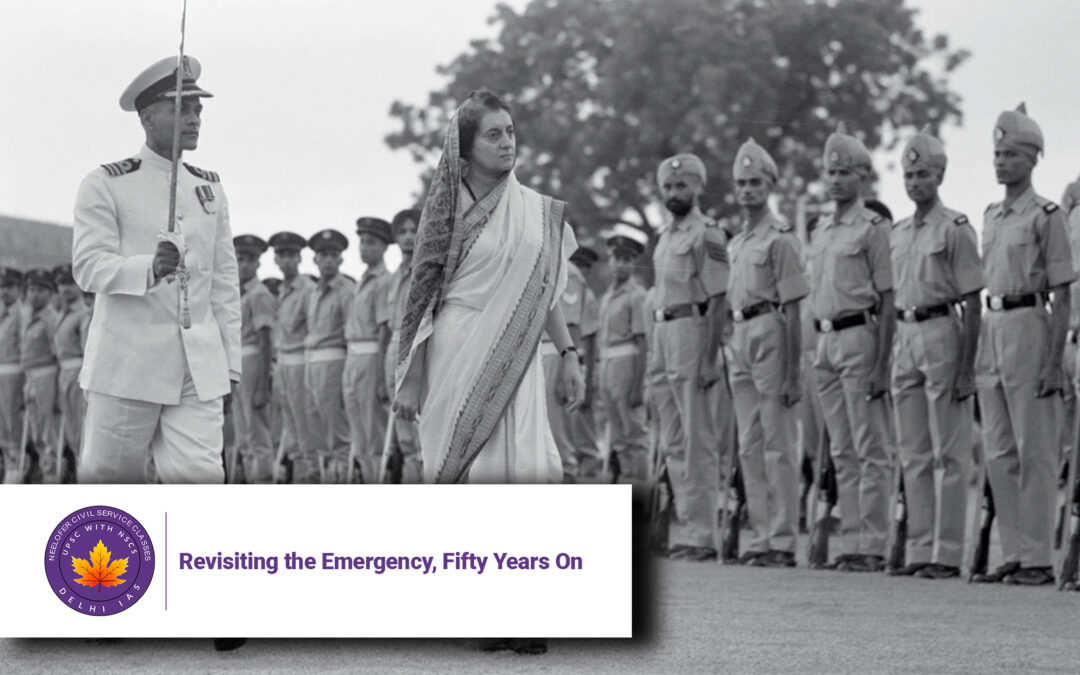
Revisiting the Emergency, Fifty Years On
Why in News?
India marks fifty years since the imposition of the Emergency (1975-1977)—a controversial period in Indian history that witnessed the suspension of civil liberties, suppression of workers’ rights, and the concentration of power in the hands of the executive. As voices across the political spectrum revisit this period, concerns are once again raised over authoritarianism, the curtailment of democracy, and its impact on labour and the working class. 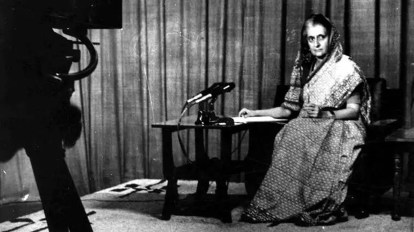
Introduction
The Emergency, declared by then Prime Minister Indira Gandhi on June 25, 1975, represents India’s most severe departure from democratic norms. Over 1,00,000 people were arrested, media censorship was enforced, and the judiciary and legislature were subdued. While often remembered in terms of political repression, the Emergency also had deep economic implications—particularly for workers and labour unions.
Key Issues
-
Class War Under the Guise of National Emergency
The Emergency was not only a political crackdown but a strategic suppression of working-class resistance. It served the interests of the ruling elite and capitalists by dismantling regulations and workers’ rights. -
Targeting Workers and Labour Movements
Major labour movements, such as the railway strike of 1974 led by George Fernandes, were violently suppressed. Strikes, protests, and union meetings were banned. Industrialists like J.R.D. Tata openly supported the clampdown on protests, revealing elite consensus. -
Police Brutality and Mass Displacement
Working-class areas in Delhi were demolished under the name of “beautification,” displacing thousands. Slums were razed and labourers forcefully relocated under severe police control. -
Silencing of Dissent and Censorship
Trade unions, especially those affiliated with leftist ideologies (like the CPI(M)), were targeted. Labour leaders were jailed, and even routine industrial negotiations were criminalised. -
Long-Term Impact on Democracy and Labour Rights
The Emergency normalized the idea of state repression in the name of national interest. The working class became an easy scapegoat, with structural shifts favouring capital and bureaucracy over labour rights.
Five Key Takeaways
-
The Emergency suppressed not just political dissent but systematically dismantled workers’ rights.
-
Industrialists openly welcomed the Emergency, viewing it as a means to curb strikes and protests.
-
Slum demolitions and forced displacements during the Emergency reflected class bias in urban planning.
-
The consolidation of power in the executive threatened constitutional safeguards and democratic checks.
-
The legacy of the Emergency continues to inform debates on state authoritarianism and labour policy today.
Challenges and the Way Forward
-
Reinforcing Constitutional Protections:
Safeguards for civil liberties, labour rights, and press freedom must be continuously strengthened to prevent any drift toward authoritarianism. -
Reviving Independent Trade Unions:
Trade unions must be empowered to represent workers’ interests without fear of state reprisal or corporate pressure. -
Historical Reckoning:
India must acknowledge the socio-economic injustices inflicted during the Emergency and document them with honesty to avoid historical erasure. -
Labour Reforms with a Rights-Based Approach:
Any industrial reform must balance productivity with humane working conditions and the right to organize.
Conclusion
The 50th anniversary of the Emergency is not just a moment for remembrance—it is a call to defend democracy, labour rights, and the constitutional values that define the Republic. Brinda Karat’s reflection on the era reveals the deeply entrenched class interests that shaped its brutal policies and reminds us that true democracy is measured not only by elections but by how it treats its workers.
Q&A Section
1. What was the Emergency and why was it imposed?
The Emergency (1975–77) was a 21-month period when Prime Minister Indira Gandhi suspended constitutional rights, citing internal unrest, but widely seen as a move to suppress political and social dissent.
2. How did the Emergency impact India’s working class?
It dismantled labour protections, banned strikes and protests, demolished working-class neighborhoods, and jailed thousands of trade unionists and workers.
3. Why did Indian industrialists support the Emergency?
Business leaders like J.R.D. Tata supported it because it ended strikes and protests, thus benefiting capital and industrial productivity.
4. What role did the Emergency play in shaping modern India’s labour policies?
It laid the foundation for a more capital-friendly regulatory environment by weakening trade unions and consolidating executive power.
5. What can we learn from the Emergency today?
We must remain vigilant against authoritarianism, ensure labour rights are protected, and preserve the spirit of democracy, especially in the face of growing centralisation of power.

