
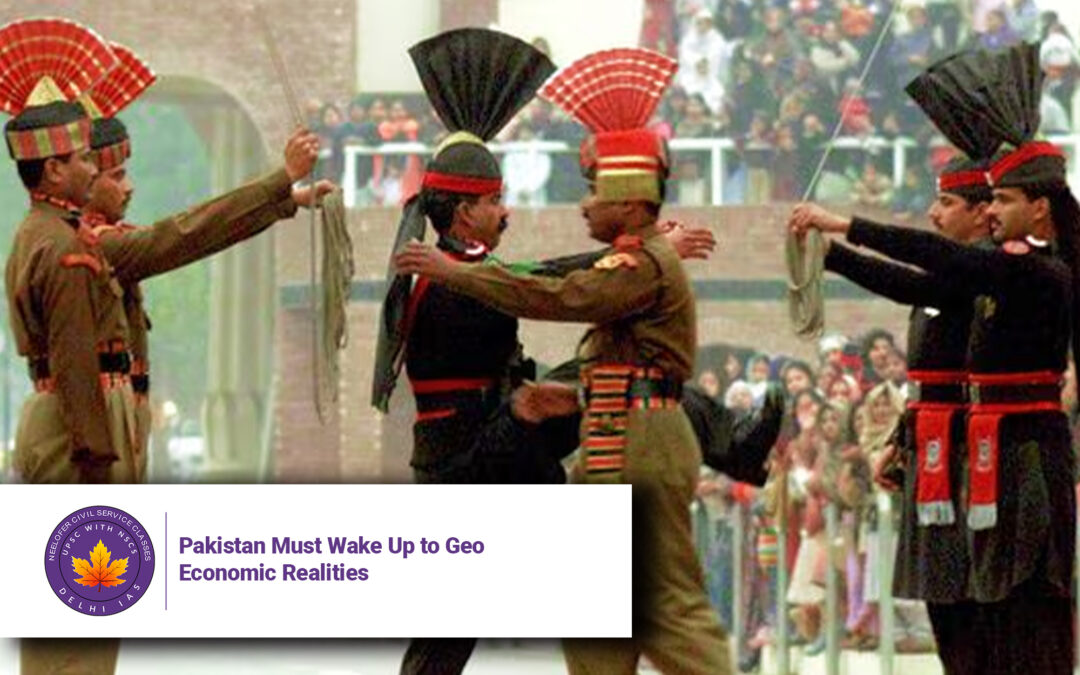
Pakistan Must Wake Up to Geo Economic Realities
Why in News?
As global economic trends increasingly shape military strength and geopolitical influence, Pakistan’s inability to align with geo-economic priorities is making it vulnerable. Despite its strategic location and potential, Pakistan remains stuck in outdated power equations, while India advances with strategic investments and global economic partnerships. 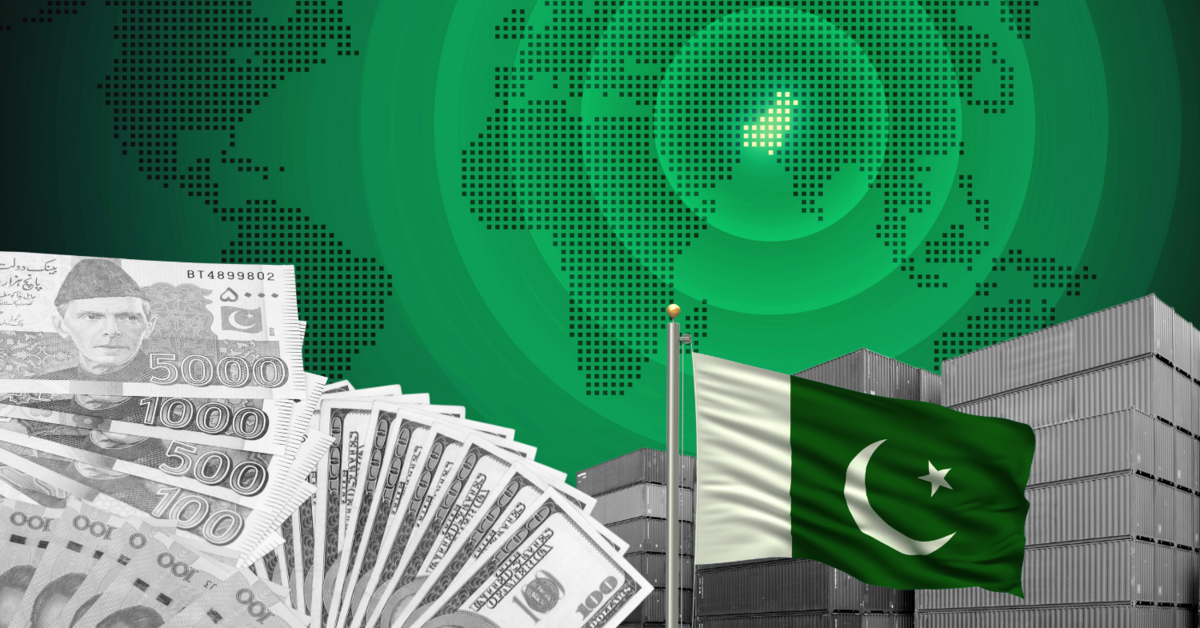
Introduction
In today’s world, economic power dictates military influence and diplomatic clout. Countries like India have strategically pivoted toward growth, technology, and international partnerships. However, Pakistan seems to lag behind, caught between financial crises and an outdated obsession with conventional security competition with India.
Key Issues and Background
-
Pakistan’s Weakening Economic Fundamentals
-
Pakistan’s economic downturn, with only $20.4 billion in forex reserves, compared to India’s nearly $586 billion, is limiting its ability to maintain its military ambitions.
-
Defense spending remains unsustainable. In 2024, Pakistan’s defense budget is 2.3% of GDP, lower than India’s in absolute terms.
-
-
India’s Strategic Shift
-
India has moved beyond reactionary military posturing and is investing heavily in infrastructure, energy, and global diplomacy.
-
India’s hydropower projects in Jammu and Kashmir, including dams and flow control mechanisms, are a direct assertion of its Indus Treaty rights.
-
-
Geopolitical Isolation of Pakistan
-
As India forms closer partnerships with Western powers, including the U.S., Pakistan finds itself increasingly isolated.
-
While India supports Ukraine’s sovereignty, Pakistan is seen as leaning toward outdated alignments and often trying to walk both sides.
-
-
Indus Waters Treaty and Strategic Water Management
-
Pakistan has accused India of weaponizing water via the Indus Waters Treaty, but India’s projects like Pakal Dul and others are within its rights under the treaty.
-
India is likely to continue asserting water diplomacy with legal and developmental justification.
-
-
China-Pakistan Economic Dependency
-
Despite investments like CPEC, Pakistan has not seen meaningful growth.
-
Comparatively, India is attracting global investments in manufacturing, clean energy, and technology.
-
5 Key Takeaways
-
Geo-economics is the new battlefield, and economic power now dictates influence, not just military might.
-
Pakistan is falling behind as India strengthens infrastructure, foreign investment, and energy independence.
-
India’s water diplomacy is strategic, with legal backing under the Indus Waters Treaty.
-
Global partnerships matter, and Pakistan’s limited global alignment leaves it geopolitically cornered.
-
Economic reform and global integration are Pakistan’s only way out of its growing isolation.
Challenges and the Way Forward
Challenges:
-
Rising debt, dependency on China, and declining international support.
-
Resistance to economic reforms due to internal political instability.
-
Continued military-first mindset in foreign policy decisions.
Way Forward:
-
Shift focus from militarism to economic modernization.
-
Embrace geo-economic diplomacy, including regional trade and infrastructure cooperation.
-
Address internal inefficiencies and partner with the IMF, World Bank, and neighbors for financial restructuring.
-
Rethink policies toward India and international norms, adopting a pragmatic approach over confrontation.
Conclusion
The world has changed. Military aggression without economic strength is no longer effective. Pakistan’s security cannot be separated from its economic health. For lasting peace and power projection, Islamabad must recognize the shifting foundations of global influence. Geo-economics, not geostrategy, is the future—and Pakistan must act before it’s too late.
Q&A Section
1. What is meant by ‘geo-economics’?
Geo-economics refers to the use of economic tools, like trade, investment, and infrastructure, to achieve geopolitical and strategic objectives.
2. Why is Pakistan being urged to shift its focus?
Pakistan continues to prioritize military buildup over economic development, while global power increasingly depends on economic strength.
3. How has India changed its strategy?
India has focused on energy independence, foreign investment, and infrastructure development, while asserting its rights diplomatically and legally.
4. What is happening with the Indus Waters Treaty?
India is legally utilizing its rights under the treaty to build hydropower projects in Jammu and Kashmir, which Pakistan views with suspicion, though they are within treaty parameters.
5. What should Pakistan do going forward?
Pakistan must embrace economic reforms, regional cooperation, and strategic diplomacy to remain relevant in global affairs.

