
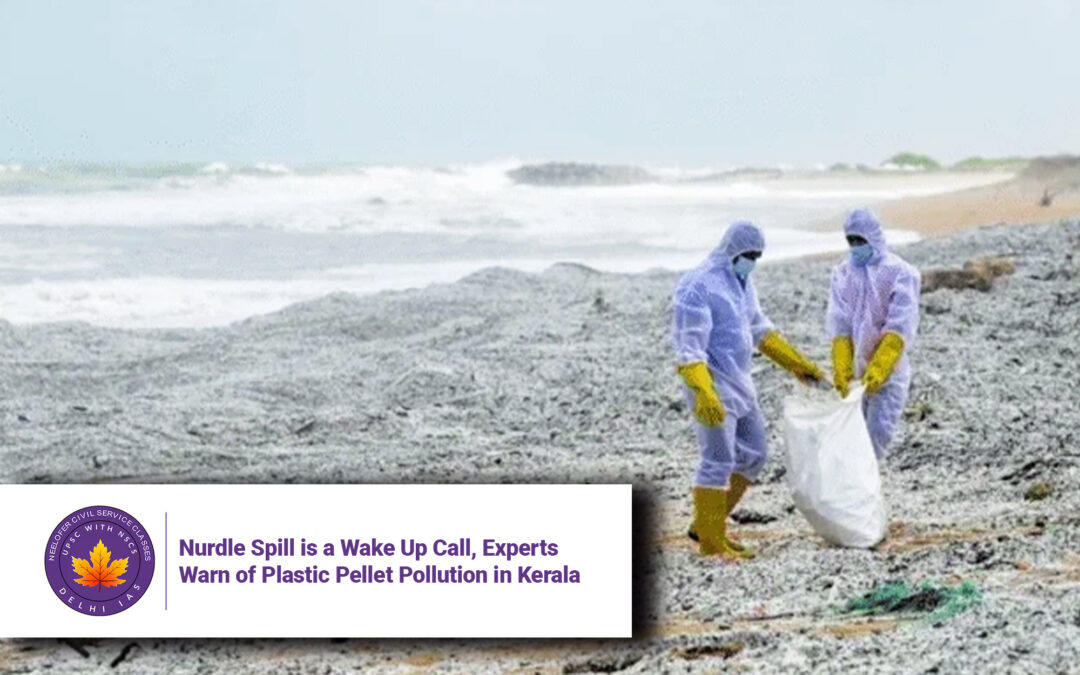
Nurdle Spill is a Wake Up Call, Experts Warn of Plastic Pellet Pollution in Kerala
Why in News?
A massive spill of tiny plastic pellets (nurdles) on the beaches of Thiruvananthapuram, Kerala has raised environmental concerns following the sinking of the vessel MSC ELSA. Experts say the incident poses significant risks to marine ecosystems and human health. 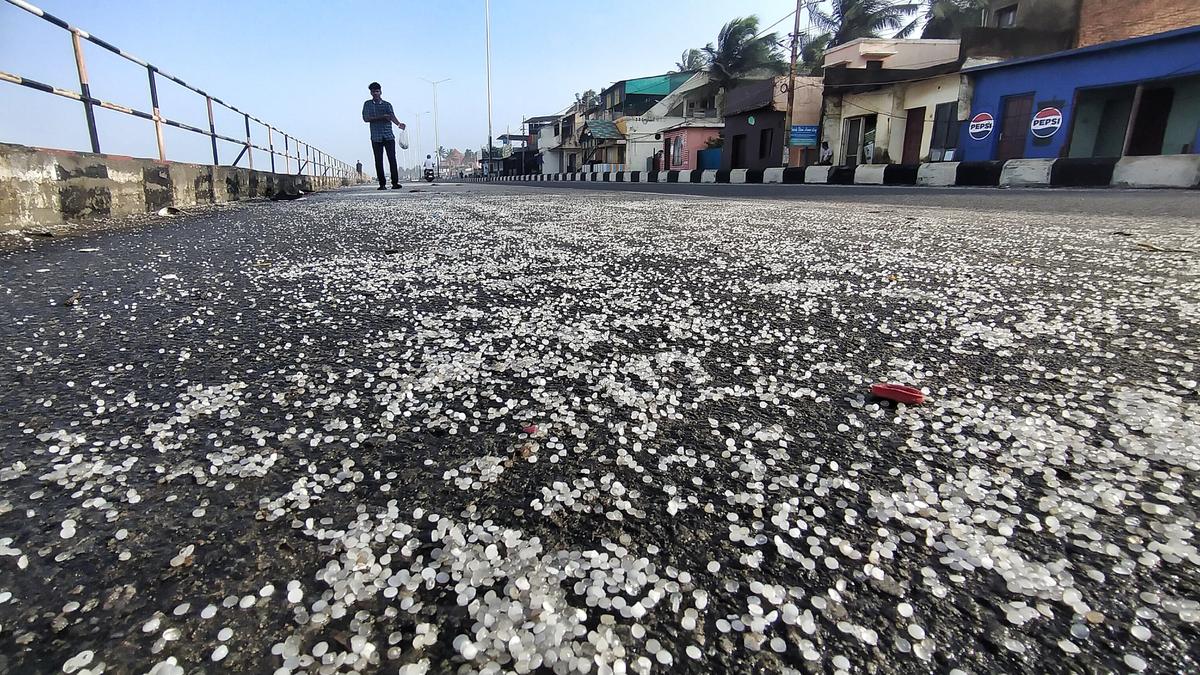
Introduction
Plastic pollution continues to be a global environmental issue. In India, the recent nurdle spill in Kerala has exposed the dangers of these small plastic pellets, commonly used in manufacturing plastic products. Though not inherently toxic, their ability to infiltrate ecosystems and food chains is alarming.
Key Issues and Background
1. What Are Nurdles?
-
Nurdles are small plastic pellets, often less than 5 mm in diameter, classified as primary microplastics.
-
Used in the production of plastic items, they are typically made from low-density polyethylene (LDPE) and high-density polyethylene (HDPE).
2. The Kerala Spill Incident
-
The nurdles washed ashore in Thiruvananthapuram after the MSC ELSA cargo vessel sank off the Kerala coast.
-
The incident is one of India’s first major plastic pellet spills caused by a marine accident.
3. Expert Warnings
-
Dr. Biju Kumar, Senior Professor at the Department of Aquatic Biology and Fisheries, University of Kerala, warned that:
-
These pellets contaminate habitats, break down into micro- and nano-plastics, and enter the food chain.
-
Even if they appear safe, they pose long-term ecological risks.
-
The Core of the Concern
-
Nurdles are easily mistaken for food by marine animals, impacting biodiversity.
-
Once they enter the ecosystem, they are hard to clean up and can persist for decades.
-
Their breakdown contributes to the rise of microplastics in seafood consumed by humans.
Key Observations
-
Despite no immediate loss of life or ship damage, the spill has drawn urgent attention.
-
The Kerala State Pollution Control Board and CMO’s Rapid Response Team are monitoring the situation.
-
Volunteers have been mobilized to clean beaches, while police ensure the pellets are not misused.
Challenges and the Way Forward
Challenges:
-
Difficult to retrieve once dispersed in the environment.
-
Long-term effects on marine food chains and human health.
-
Low recycling rate of LDPE plastics.
Steps Forward:
-
Tighten regulations on maritime transport of plastics.
-
Implement emergency response protocols for spills.
-
Increase public awareness and clean-up efforts.
Conclusion
The nurdle spill in Kerala is a stark reminder of the silent threat posed by plastic pollution. It calls for urgent policy reforms, better shipping safety standards, and a national strategy for microplastic mitigation.
Q&A Section
-
What are nurdles?
Small plastic pellets used in manufacturing plastic products. -
Where did the nurdle spill happen?
On the beaches of Thiruvananthapuram, Kerala. -
Which vessel was involved in the incident?
MSC ELSA, which sank off the Kerala coast. -
Why are nurdles dangerous despite being non-toxic?
They break down into microplastics, enter the food chain, and contaminate habitats. -
What actions are being taken by authorities?
The Pollution Control Board, police, and CMO’s response team are monitoring, and volunteers are cleaning up affected beaches.

