
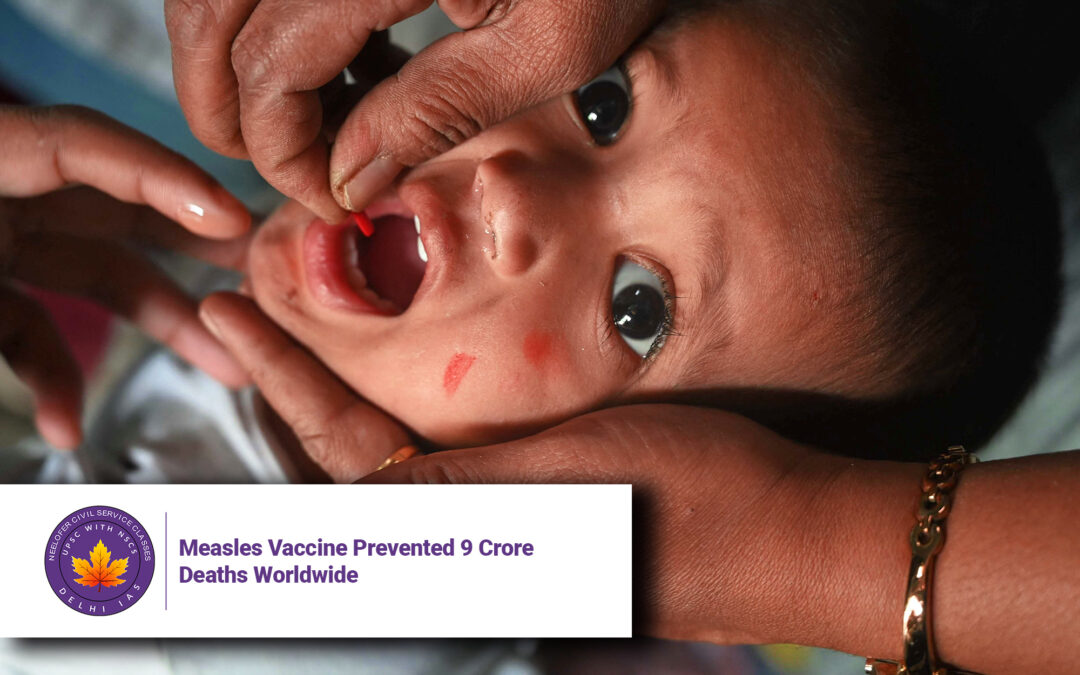
Measles Vaccine Prevented 9 Crore Deaths Worldwide
Why in News?
According to recent data from “Our World in Data” and the Global Change Data Lab, over 9 crore (90 million) lives have been saved worldwide due to measles vaccination since 1974. This life-saving achievement highlights the extraordinary impact of global immunisation campaigns, especially in low- and middle-income countries. 
Introduction
Measles, once a widespread and deadly disease, used to infect over 90% of children globally. It caused severe symptoms and complications, with a quarter of those infected often requiring hospitalisation. The scenario changed drastically after the introduction of vaccines, particularly since the 1980s, leading to a significant decline in measles-related deaths.
Key Issues and Background
1. Disease Burden Before Vaccination
-
Measles was extremely infectious and deadly, particularly in poorer regions.
-
In high-income countries like the U.S., mortality began declining even before vaccines, likely due to better nutrition and healthcare.
-
However, in Africa and parts of Asia, measles continued to claim thousands of lives annually.
2. Life-Saving Impact of the Vaccine
-
Since 1974, measles vaccination alone has saved more lives than any other vaccine-preventable disease.
-
Chart analysis shows measles far ahead of diseases like tetanus, tuberculosis, and whooping cough in terms of lives saved.
3. Regional Trends and Improvements
-
The most dramatic reduction in deaths occurred between 1980 and 2005 in Africa and Southeast Asia.
-
Immunisation coverage increased significantly in these regions due to international health efforts.
4. Global Vaccination Campaigns
-
The World Health Assembly has aimed for 95% vaccination coverage to eliminate measles transmission.
-
Today, about 83% of one-year-old children globally receive the first dose of the measles vaccine.
Specific Impacts or Effects
-
Over 90 million lives saved worldwide since 1974.
-
Massive drop in child mortality due to widespread immunisation.
-
Reduced long-term immune system suppression caused by the measles virus.
-
Increased vaccine coverage, as shown in chart data, especially post-2000.
Challenges and the Way Forward
Challenges
-
Persistent vaccine hesitancy in some regions.
-
Inequitable access to vaccines in low-income countries.
-
Risk of resurgence if immunisation efforts weaken.
Steps Forward
-
Reinforce routine immunisation in remote and conflict-affected areas.
-
Boost public awareness to counter misinformation about vaccines.
-
Ensure consistent global funding for vaccine distribution and infrastructure.
-
Implement stricter monitoring and quick response mechanisms for outbreaks.
Conclusion
The global measles vaccination campaign stands as a monumental success in public health, saving millions of lives across continents. However, to sustain this progress and move towards measles eradication, ongoing efforts in education, accessibility, and international cooperation are essential. Vaccination is not just a health measure—it is a right every child deserves.
5 Questions and Answers
Q1: How many lives have been saved due to measles vaccination since 1974?
A: Over 9 crore (90 million) lives worldwide.
Q2: Which regions have shown the highest drop in measles deaths?
A: Africa and Southeast Asia, particularly between 1980 and 2005.
Q3: What percentage of one-year-old children receive the first measles vaccine dose today?
A: Around 83% globally.
Q4: Why is measles particularly dangerous beyond the initial infection?
A: Measles weakens the immune system for years, making individuals vulnerable to other deadly infections.
Q5: What are the major challenges to measles elimination?
A: Vaccine hesitancy, unequal access, lack of awareness, and weak immunisation systems in some areas.

