
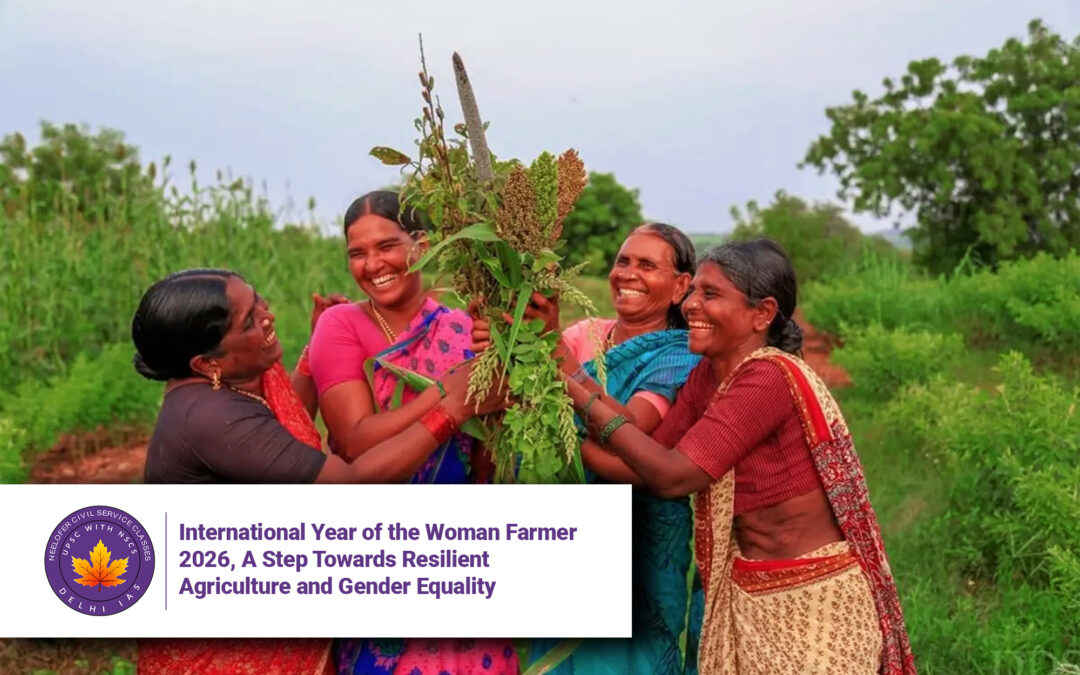
International Year of the Woman Farmer 2026, A Step Towards Resilient Agriculture and Gender Equality
Why in News?
The United Nations General Assembly has officially declared 2026 as the International Year of the Woman Farmer, supported by over 100 co-sponsors. The resolution emphasizes recognizing women’s critical contributions to global agriculture and highlights the gender-specific challenges they face, such as lack of land ownership and limited market access. 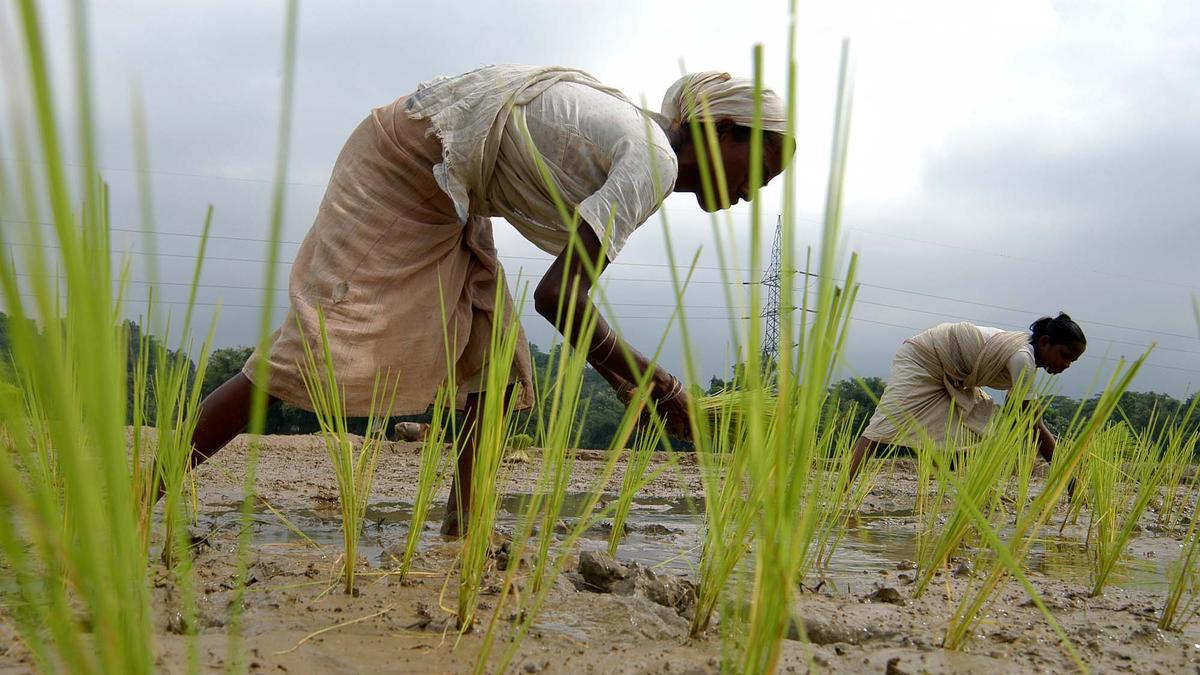
Introduction
Women contribute significantly to global food security, producing 60–80% of food in developing countries. However, systemic barriers such as unequal land ownership, limited access to credit, technology, and agricultural advisory services continue to hinder their full participation. The 2026 UN declaration seeks to draw attention to these disparities and push for inclusive agricultural policies.
This initiative gains momentum from the ongoing efforts of the Royal Norwegian Embassy and the World Food Programme (WFP) in India, who have been engaging stakeholders through a six-month-long symposium series, with 200 participants contributing insights. The collaborative ENACT project in Assam further supports this movement by empowering women farmers through climate-resilient practices and gender-transformative approaches.
Key Issues and Institutional Concerns
1. Land Ownership and Market Access
-
Women account for 39% of agricultural labor in South Asia but own a disproportionately small share of land.
-
In India, only 14% of landowners are women, and only 8.3% of women have sole land ownership (NFHS data).
-
Without land, women struggle to access credit, financial institutions, and government support programs.
-
Limited access to technology and advisory services weakens their capacity for decision-making and modern farming.
2. Government Support Mechanisms
-
Mahila Kisan Sashaktikaran Pariyojana: Upgrades skills and increases women’s access to resources.
-
Sub-Mission on Agricultural Mechanisation: Offers 50% to 80% subsidies for machinery.
-
National Food Security Mission: Allocates 30% of the budget to women farmers in several states and UTs.
Empowerment for Resilience
Climate change hits women farmers harder due to increased domestic burdens and vulnerability to weather-related risks. Projects like ENACT (Enhancing Climate Adaptation of Vulnerable Communities) implemented in Nagaon, Assam, support:
-
Promotion of flood-resistant rice varieties.
-
Weekly climate advisories via mobile phones to 300+ women farmers across 17 villages.
-
Establishment of Climate Adaptation Information Centres for video-based agricultural training.
-
Partnerships with departments like Agriculture, Meteorology, Rural Livelihoods, and technology partners to foster climate-resilient crops.
These measures ensure women farmers are not only resilient to shocks but also able to make informed, sustainable, and community-specific decisions.
Challenges and the Way Forward
Despite support mechanisms, significant structural reforms are needed:
-
Tailored policy design that incorporates gender-specific data.
-
Development of agri-value chains managed and driven by women.
-
Expansion of access to financial services, collective networks, and information platforms.
There is an urgent need to bridge the ownership and access gaps, promote agricultural sustainability, and improve economic prosperity for women farmers.
Conclusion
The declaration of 2026 as the International Year of the Woman Farmer is a historic opportunity. It calls for:
-
Recognizing the role of women in food systems.
-
Supporting gender-responsive policies.
-
Enhancing women’s access to land, finance, and technology.
-
Promoting sustainability and food security.
By doing so, we can ensure that agriculture becomes not only resilient but also inclusive and equitable.
Q&A Section
1. What is the main objective of declaring 2026 as the International Year of the Woman Farmer?
To promote resilient agricultural development and gender equality by recognizing the role of women farmers and addressing the challenges they face.
2. What is the percentage of land owned by women in India according to the National Family Health Survey?
Only 8.3% of women in India have sole land ownership.
3. What does the ENACT project aim to do?
ENACT helps women farmers adapt to climate change by providing flood-resistant crops, mobile-based advisories, and training through Climate Adaptation Information Centres.
4. Which Indian government programs support women farmers?
-
Mahila Kisan Sashaktikaran Pariyojana
-
Sub-Mission on Agricultural Mechanisation
-
National Food Security Mission
5. What are some recommended policy steps to support women in agriculture?
-
Use gender-disaggregated data for tailored solutions.
-
Promote women-led agri-value chains.
-
Improve access to credit, technology, and information.
-
Strengthen self-help groups and collective actions.

