
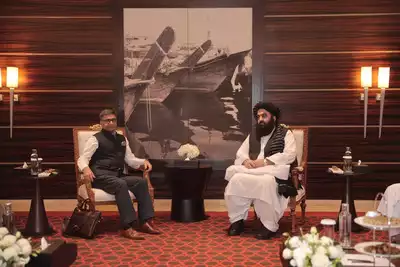
About India’s Engagement with Taliban-Led Afghanistan:
India is engaging with the Taliban but remains cautious. India seeks regional stability, security, and better access to Central Asia.
 Background
-
- India had previously been cautious about engaging with the Taliban after the group took control of Afghanistan in August 2021.
- Before that, India had a strong relationship with Afghanistan, helping with development projects, providing scholarships, and building infrastructure like roads and hospitals.
- The fall of Kabul to the Taliban in 2021 disrupted India’s influence, giving rivals like Pakistan and China a greater foothold in the region.
- However, India’s approach to the Taliban has changed recently, as it navigates the new geopolitical reality.
- India has reportedly been in indirect talks with the Haqqani Network, a powerful faction of the Taliban responsible for attacks on Indian interests. However, India is unlikely to have formal relations with the Haqqani faction due to its links with Pakistan and its role in past attacks against India.
India’s Approach: Pragmatism and Opportunism
-
- India’s new strategy is shaped by two key ideas
- Strategic Pragmatism: India is balancing its interests by engaging with the Taliban while setting aside past ideological differences. It focuses on regional stability and security rather than political disagreements.
- Strategic Opportunism: India is also taking advantage of tensions between the Taliban and Pakistan. By condemning Pakistan’s airstrikes in Afghanistan in December 2024, India showed its disapproval of Pakistan’s actions, positioning itself as a responsible regional power.
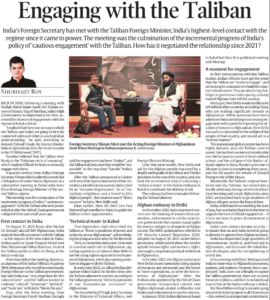
India’s Strategic Interests
- India’s engagement with the Taliban helps it secure several strategic goals:
- Regional Connectivity: India wants to use Afghanistan to improve its access to Central Asia, bypassing Pakistan’s ports.
- Security: India aims to prevent terrorism and maintain regional stability, especially by countering groups like Lashkar-e-Tayyiba (LeT) and Jaish-e-Mohammed (JeM), which are active in Kashmir.
- Humanitarian and Development Aid: India continues to provide aid and build goodwill among the Afghan people, who have historically supported India’s involvement in Afghanistan.
Risks of Engaging with the Taliban
- The biggest risk is the Taliban itself, as it is linked to terrorist organizations and has a history of violence.
- Despite its attempts to appear more moderate, India remains cautious about fully trusting the Taliban.
Why the Taliban is Significant for India?
- Terrorism Threat:India is concerned about Afghanistan becoming a base for groups like Lashkar-e-Tayyaba (LeT), Jaish-e-Mohammad (JeM), and ISKP, which target Indian interests. India aims to prevent Afghanistan from being a hub for anti-India terrorist groups, especially after the Taliban’s return to power.
- Regional Diplomacy:Countries like Russia, China, Iran, and Central Asian nations have normalized ties with the Taliban, pushing India to do the same to secure its influence in Afghanistan and the region.
- Space to Counter Pakistan:Deteriorating Pakistan-Taliban ties give India space to secure its interests in Afghanistan and reduce Pakistan’s influence there.
- Chabahar Port:India’s development of Chabahar port in Iran aims to bypass Pakistan’s Karachi and Gwadar ports, ensuring trade with Afghanistan and Central Asia. Engagement with the Taliban is key to enhancing connectivity.
-
-

