
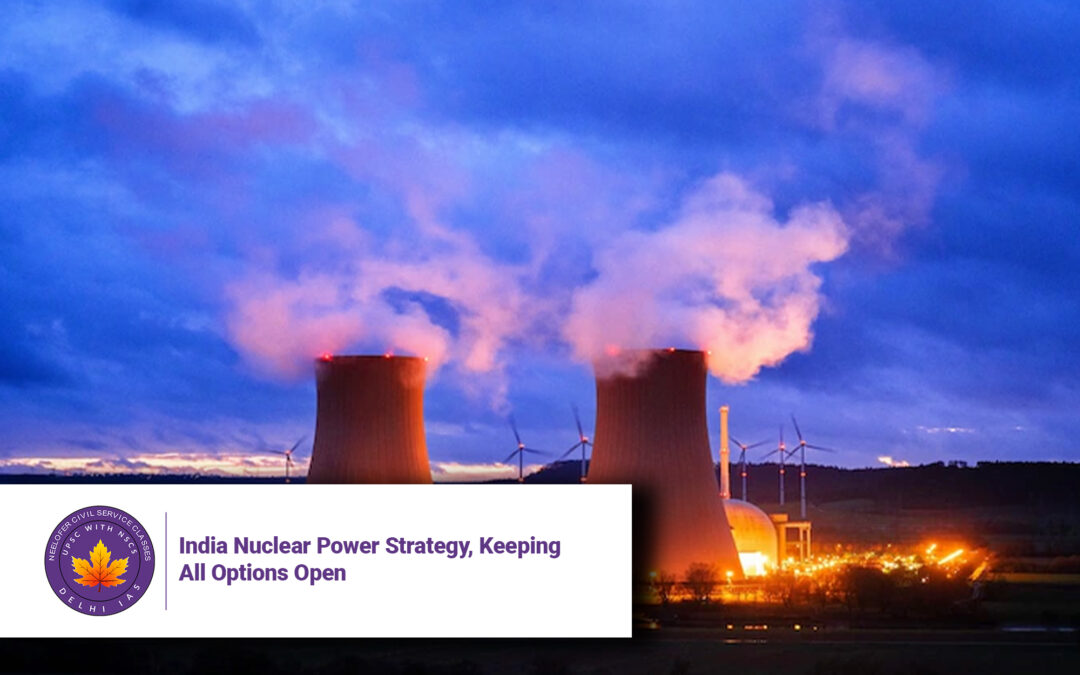
India Nuclear Power Strategy, Keeping All Options Open
Why in News?
India is considering allowing up to 49% Foreign Direct Investment (FDI) in nuclear power plants under government approval. This move, aimed at boosting clean energy and technological growth, highlights the need to diversify India’s nuclear capabilities while safeguarding critical projects like the fast-breeder program. 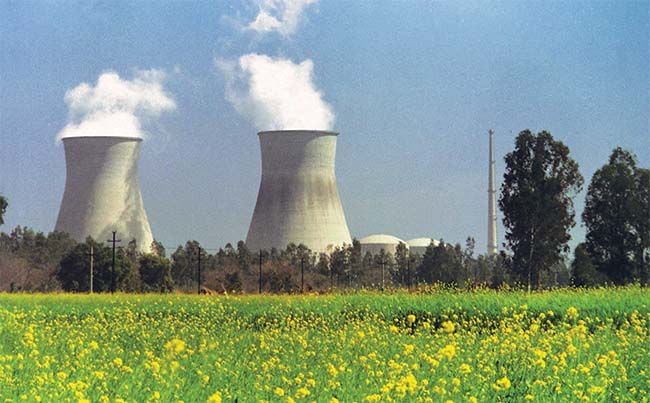
Introduction
In the era of increasing energy demands, especially driven by advancements in artificial intelligence and economic growth, India needs new and reliable sources of clean energy. Nuclear power, despite its challenges, remains a critical option for ensuring energy security, climate goals, and technological advancement.
Key Issues
1. FDI in Nuclear Sector
-
A proposal is under consideration to allow FDI up to 49% in nuclear power plants.
-
This would help access global capital and technology needed for nuclear expansion, but must be carefully regulated.
2. Role of Small Modular Reactors (SMRs)
-
SMRs, which are cheaper and quicker to build, offer promising alternatives to traditional large nuclear reactors.
-
SMRs are especially useful for a growing economy like India that needs rapid and affordable energy expansion.
3. Challenges of Foreign Involvement
-
Even with international investment, risks related to accidents, liability laws, and public opposition remain.
-
Ensuring compliance with the Vienna Convention on nuclear liability is essential for attracting foreign partners.
4. Importance of Fast-Breeder Program
-
India’s fast-breeder reactor technology is crucial for achieving nuclear fuel self-sufficiency.
-
This program must not be sidelined in favor of SMRs or foreign-funded projects.
Alternative Approaches
-
Balanced Development: Promote SMRs while continuing robust investment in fast-breeder technology.
-
Strong Regulations: Maintain tight liability and safety norms to prevent accidents and mishandling.
-
Strategic National Control: Keep critical nuclear infrastructure under majority domestic ownership.
Challenges and the Way Forward
-
Access to Technology and Finance: International partnerships must be carefully crafted.
-
Fuel Security: Securing sufficient nuclear fuel remains crucial, especially for fast-breeders.
-
Public and Environmental Safety: Strict monitoring and transparent governance are necessary to build public trust.
Conclusion
Nuclear energy is a cornerstone for India’s future energy strategy. While FDI and new reactor technologies are important, India must also prioritize indigenous projects like the fast-breeder program to ensure long-term energy and strategic independence. Balancing innovation, investment, and national security is the key.
5 Q&A Based on the Article
Q1. What is the new proposal regarding FDI in India’s nuclear sector?
A: India is considering allowing up to 49% FDI in nuclear power plants with government approval.
Q2. Why are Small Modular Reactors (SMRs) important for India?
A: SMRs are cheaper, quicker to build, and provide flexible, scalable solutions to meet India’s growing energy needs.
Q3. What are the major risks associated with foreign participation in nuclear projects?
A: Risks include liability issues, public opposition, safety concerns, and the need for strict international compliance.
Q4. What is India’s fast-breeder program, and why is it critical?
A: The fast-breeder program is crucial for India’s nuclear fuel self-sufficiency by efficiently utilizing available uranium and thorium resources.
Q5. How should India balance its nuclear energy strategy?
A: India should develop SMRs and invite FDI while also safeguarding and advancing its indigenous fast-breeder reactor program for long-term security.
