
India Green Transformation Through Environmental Governance and Policy Innovation
Why in News?
India’s approach to environmental governance has emerged as a model of balancing economic growth with sustainability. Through progressive policies, regulatory reforms, and technology integration, India is spearheading a green transformation that aligns environmental protection with its development goals. Recent initiatives under the leadership of the Ministry of Environment, Forest and Climate Change have reinforced this shift. 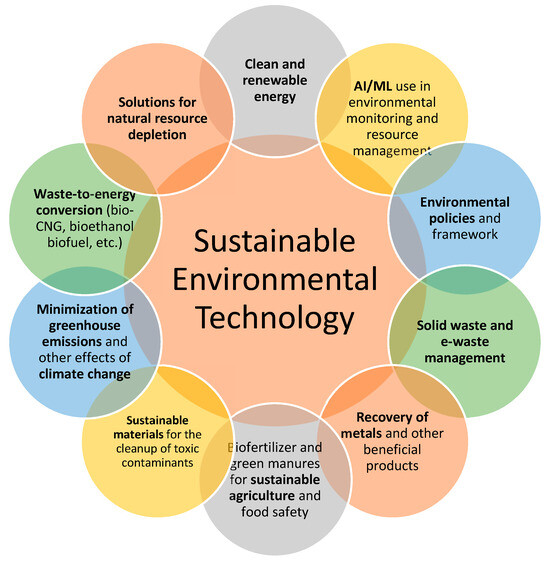
Introduction
Traditional environmental approaches suggested that economic growth must precede environmental cleanup — a theory supported by the Environmental Kuznets Curve. However, India has challenged this view by integrating sustainability into its growth model. Since 2014, several measures have been introduced to promote cleaner air, efficient resource use, plastic waste management, and improved compliance mechanisms.
Key Issues and Background
1. Regulatory Reforms and Policy Shifts
With the adoption of the National Democratic Alliance’s economic agenda in 2014, India prioritized a “Reform, Perform and Transform” strategy without compromising on environmental protection. This included updating key environmental rules like:
-
The Plastic Waste Management Rules
-
The E-Waste and Battery Waste Management Rules
-
The Fly Ash Notification
All of which were redesigned to promote resource efficiency and circular economy principles.
Additionally, real-time air quality monitoring was rolled out across cities, enhancing transparency and public trust. The Perform, Achieve and Trade (PAT) scheme and Energy Efficiency Standards brought energy-intensive industries under efficiency-based, market-linked mechanisms.
2. National Clean Air Programme (NCAP)
Launched in 2019, NCAP targets a 40% reduction in PM10 levels by 2025–26, from a 2017–18 baseline of 60 micrograms/m³. NCAP has brought city-specific action plans to 131 non-attainment cities, leading to a consistent decline in air pollution. The Central Pollution Control Board (CPCB) played a crucial role in its implementation.
In 2021, the PRANA portal was launched to digitally monitor air quality interventions, reducing paperwork and improving data transparency.
3. Plastics and Single-Use Ban
India’s ban on single-use plastic items with thickness below 120 microns came into effect from July 1, 2022, as part of the Swachh Bharat Mission’s long-term strategy. Extended Producer Responsibility (EPR) was enforced for plastic, battery, and e-waste, ensuring producers are accountable for their environmental footprint.
4. Market-Based Mechanisms for Emissions Reduction
The Perform, Achieve, Trade (PAT) scheme was a breakthrough in incentivizing industries to improve energy efficiency. Simultaneously, the Renewable Energy Certificate (REC) and Energy Saving Certificate (ESCert) markets helped build tradable markets for green compliance.
5. International Recognition and Commitments
India’s efforts received global recognition at COP26 (Glasgow) and COP28 (UAE), where it reaffirmed its green commitments. Prime Minister Modi launched LiFE (Lifestyle for Environment) — a global mass movement promoting conscious consumption.
The implementation of Green Credit, a market-based incentive system rewarding pro-environmental actions, and India’s leadership in sustainable finance through green taxonomy and ESG integration are now seen as global benchmarks.
Specific Impacts or Effects
-
India’s ranking in the World Bank’s Ease of Doing Business improved from 142nd in 2014 to 63rd in 2020 due to better regulatory practices and faster environmental clearances.
-
Compounded Annual Growth Rate (CAGR) of green sector financing has risen.
-
More than 4,000 environmental clearances were granted through a streamlined online process.
-
The Bharat Stage VI emission norms came into force in April 2020, skipping an entire intermediate stage to fast-track clean mobility.
-
Circular economy and resource-efficiency are now central to India’s industrial policies.
Challenges and the Way Forward
Challenges
-
Enforcement gaps at state levels
-
Need for greater private sector compliance
-
Behavioural inertia in consumption patterns
-
Urban-rural disparity in green infrastructure
Steps Forward
-
Deepen adoption of LiFE principles across public and private sectors
-
Expand carbon markets and green credit frameworks
-
Strengthen decentralized monitoring tools (like PRANA)
-
Incentivize MSMEs to shift toward resource-efficient processes
-
Expand training and awareness programs on EPR and sustainable production
Conclusion
India has successfully transitioned from policy-based to performance-driven environmental governance. Its strategic shift to market-based compliance, digital transparency, and collaborative environmental stewardship shows that sustainability can go hand-in-hand with growth. As India prepares to host global climate discussions and builds a USD 5 trillion economy, its environmental governance model could inspire other developing nations to chart a similar path.
5 Questions and Answers
Q1: What is NCAP and what does it aim to achieve?
A: The National Clean Air Programme (NCAP) aims for a 40% reduction in PM10 levels by 2025–26 across 131 non-attainment cities.
Q2: What are the key environmental rules updated by India since 2014?
A: Plastic Waste Rules, E-Waste Management Rules, Battery Rules, and Fly Ash Utilization norms were all modernized to support circular economy goals.
Q3: What role has digital technology played in India’s environmental reforms?
A: Real-time air quality monitoring, the PRANA portal, and online clearance systems have made compliance faster and more transparent.
Q4: What is the ‘LiFE’ mission launched by India?
A: ‘LiFE’ (Lifestyle for Environment) promotes sustainable, mindful living and was introduced at COP26 as a global movement.
Q5: How has India integrated environmental goals with economic development?
A: Through green credit systems, performance-based regulations, ESG-focused finance, and prioritizing environmental sustainability in industry and trade reforms.

