

India Collapsing Bridges, A Wake-Up Call for Infrastructure Reform
Why in News?
Recent tragic incidents, including the collapse of the Gambhira Bridge in Gujarat which killed 21 people, have once again highlighted the crumbling state of India’s public infrastructure. This comes after several other alarming failures of overbridges and footbridges across the country—including those certified as “fit”—raising serious questions about the quality of inspections, construction, and accountability. 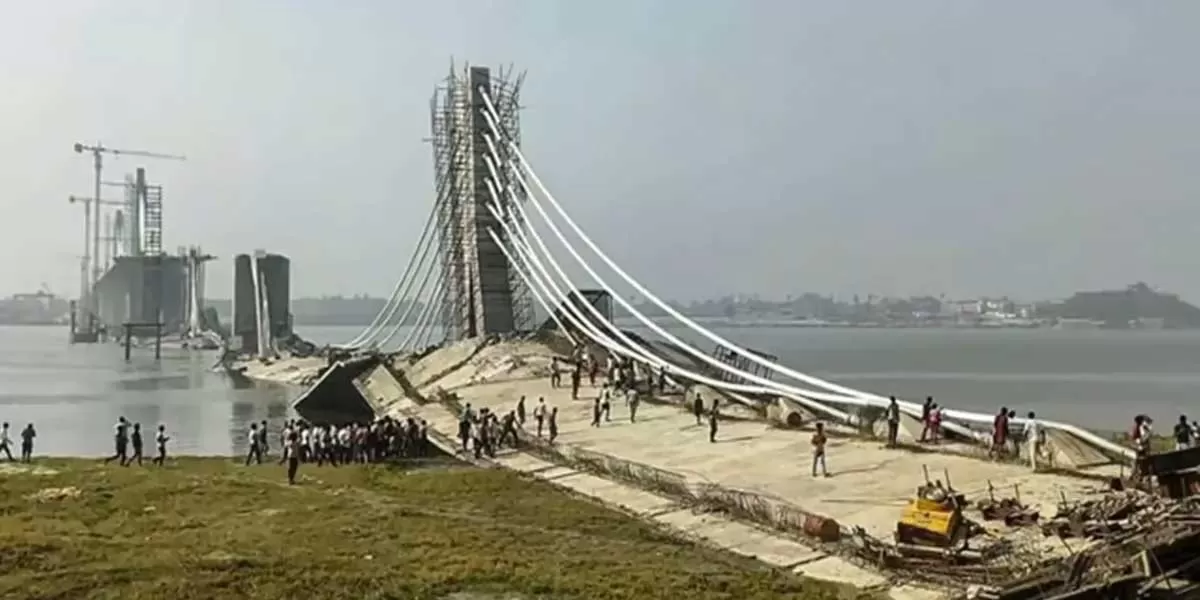
Introduction
India, a country that aspires to be a global economic powerhouse, continues to suffer from the basic failure of public infrastructure. The collapse of bridges, foot overbridges, and other public structures has become far too common in recent years. From urban metros like Mumbai to rural towns in Bihar and Gujarat, the incidents are widespread, shocking, and often fatal.
The recent tragedy of the Gambhira Bridge over the Machhu River in Gujarat, where 21 people lost their lives, is just one in a disturbing series of such events. Despite the involvement of multiple government bodies and safety audits, the outcomes reveal a deeply entrenched system of negligence, corruption, and poor execution.
Key Issues
1. Series of Tragic Bridge Collapses
The article highlights a staggering number of bridge collapses in a short span. The Gambhira Bridge tragedy is just one among many:
-
Twelve bridges collapsed in just seventeen days.
-
Two bridges collapsed in Bhagalpur, Bihar in just one week.
-
A newly constructed bridge in Kishanganj, Bihar, collapsed before it was even inaugurated.
-
A foot overbridge near CSMT in Mumbai, collapsed in 2019, even though it had just been certified as fit by engineers.
-
An old Elphinstone Road foot overbridge collapsed, causing a deadly stampede.
2. Audit Failure and Lapses in Certification
Post the Elphinstone tragedy, the Bombay High Court ordered an audit of all foot overbridges. However, the CSMT foot overbridge, which was among those certified, still collapsed. This event exposed serious flaws in the auditing system:
-
The audit failed to detect structural weaknesses.
-
Even recently certified structures were unsafe.
-
In Gujarat, the High Court appointed independent inspectors to assess the condition of bridges after multiple collapses.
3. Shifting Blame and Lack of Accountability
In Gujarat:
-
After the Gambhira collapse, the police arrested booking clerks, two managers, and three security guards—none of whom had any role in the structural integrity of the bridge.
-
This misplaced blame shows a systemic failure in identifying and holding the right individuals or departments accountable.
4. Incompetence and Corruption in Government Bodies
-
After the Elphinstone Road disaster, the audit failed to detect visible signs of wear.
-
The Railways passed the buck, stating they had outsourced safety to consultants.
-
Municipal authorities ignored warnings from bridge engineers.
-
In several cases, tenders were awarded to inexperienced or poorly qualified contractors.
5. Neglect of Maintenance and Overload
-
Many old bridges, some over a century old like the one at CSMT, are still in use, handling over a crore passengers daily.
-
No timely upgrades or replacements have been undertaken.
-
Funds have been spent on unnecessary structures while critical ones were ignored.
-
In Mumbai, a whopping 40 percent of bridges were deemed unfit, but continued to operate without closures.
6. Disaster-Driven Response, Not Policy
Instead of having a preventive maintenance culture, governments react only after a collapse occurs:
-
New SOPs are declared only after a tragedy.
-
Structural audits are often mere paperwork.
-
Victims are offered compensation, but no long-term solutions are implemented.
7. Political and Bureaucratic Apathy
-
Political leadership often uses such events for scoring points, rather than driving systemic change.
-
Ministers make vague promises without accountability.
-
In many instances, bureaucracy does not act on urgent reports.
-
Vested interests manipulate inspections and delay reforms.
8. Unsafe Construction Materials and Designs
-
Contractors often use sub-standard materials to save costs.
-
Structural designs are compromised to cut corners.
-
Projects lack proper engineering audits.
-
Several collapsed bridges were found to have missing bolts, poor concrete, or weak foundations.
Alternative Approaches
Despite these challenges, there are alternative strategies that can help prevent further tragedies:
1. Independent Structural Audits
-
All bridge audits should be conducted by a third-party government-recognized agency, not by contractors or local departments involved in the construction.
-
Auditors must be liable for false certification.
2. Digital Monitoring and IoT
-
Use of sensors, drones, and AI to constantly monitor structural health.
-
Automated alerts for potential failure points.
-
GPS-based traffic load tracking to prevent overuse.
3. Annual Mandatory Inspections
-
Every bridge must be inspected annually with a publicly available report.
-
A national portal should be created to list condition grades of public infrastructure.
4. Legal Accountability and Blacklisting
-
Blacklist contractors and officials responsible for collapses.
-
Fast-track legal action against guilty officers.
-
Enact legislation that criminalizes structural negligence leading to deaths.
5. Increased Budget for Infrastructure Renewal
-
A dedicated Bridge Rehabilitation Fund should be established.
-
Old colonial-era structures need urgent attention or replacement.
-
Increase budget allocation towards retrofitting aging bridges.
Challenges and the Way Forward
Challenges
-
Systemic corruption continues to plague all stages—from tendering to execution.
-
Lack of coordination between central, state, and municipal bodies.
-
Absence of a unified infrastructure database.
-
Public apathy and weak RTI follow-up make it easy to ignore safety concerns.
-
Political interference in technical matters prevents timely repairs.
Way Forward
-
Constitution of a National Bridge Safety Authority
-
Independent from railways or PWDs.
-
Capable of issuing mandatory shutdown orders for unsafe bridges.
-
-
Public Pressure and Citizen Reporting
-
Citizens should have access to report weak structures via apps or toll-free numbers.
-
Public participation in civic oversight can improve outcomes.
-
-
Capacity Building
-
Train more civil engineers and bridge inspectors.
-
Upgrade the capabilities of municipal engineering departments.
-
-
Standardization of Construction Practices
-
Enforce strict ISO guidelines.
-
No project should begin without environmental and structural clearances.
-
-
Honest Political Will
-
Treat infrastructure safety as a national emergency.
-
Focus on maintenance over headline-grabbing new projects.
-
Conclusion
India’s collapsing bridges are a loud and tragic warning. The recent spate of accidents is not simply about concrete and steel—it reflects the cracking foundations of governance, accountability, and planning. If we cannot even ensure the safety of the very bridges we use daily, our ambitions for smart cities, bullet trains, and global leadership are hollow.
The time has come for real structural reform, not just in the buildings and bridges, but in the systems that build and inspect them. Until accountability becomes the rule and not the exception, India’s public infrastructure will remain a ticking time bomb.
Five Questions & Answers
1. What caused the Gambhira Bridge collapse in Gujarat?
It is suspected that poor construction, lack of maintenance, and overloading led to the bridge collapse, resulting in 21 deaths.
2. What is the issue with foot overbridges like the one near CSMT in Mumbai?
Despite being audited and certified as safe, the CSMT foot overbridge collapsed in 2019, revealing gross failure in the audit process and negligence by officials.
3. Why are multiple bridge collapses happening in Bihar?
Weak construction, incomplete projects, lack of inspection, and neglect by state authorities have led to several bridge collapses in Bihar in recent weeks.
4. What has been the government’s response so far?
In most cases, the response has been reactive. Arrests are made post-tragedy, compensation is announced, but long-term systemic reforms are missing.
5. What needs to be done to prevent such incidents in the future?
A national structural reform including independent audits, digital monitoring, criminal liability for negligence, and increased funding for maintenance is urgently needed.

