
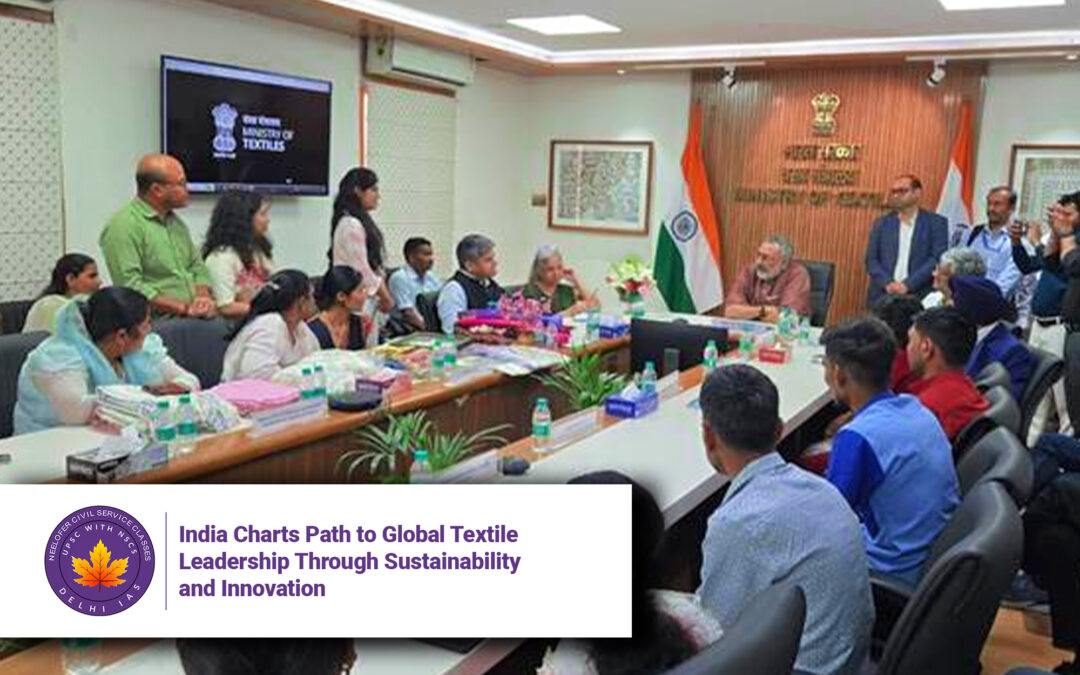
India Charts Path to Global Textile Leadership Through Sustainability and Innovation
Why in News?
As the Indian textile industry grows to an estimated $350 billion by 2030, there is an urgent need to build sustainable, future-ready practices. With changing consumer behaviour, global supply chain challenges, and climate concerns, India is poised to lead the global textile market—by embracing regenerative agriculture, supply chain traceability, and circular design models. 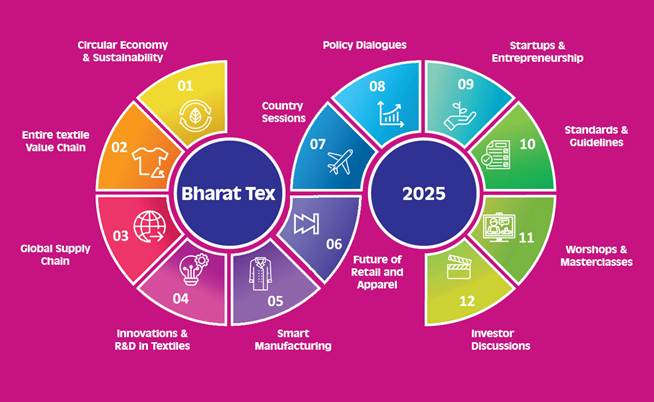
Introduction:
India, one of the world’s largest manufacturing hubs, is now steering its textile sector towards sustainability and resilience. This shift is not just driven by environmental concerns, but also by global demands for transparency, ethical sourcing, and climate adaptability. Stakeholders are rethinking practices from cotton farms to final product delivery.
Key Highlights:
-
Global and Domestic Challenges:
The Indian textile industry faces pressure due to:-
Geopolitical tensions
-
Supply chain fragmentation
-
Price volatility
-
Climate change
These issues demand forward-looking business strategies that focus on environmental, economic, and social sustainability.
-
-
Regenerative Farming – The New Backbone:
-
Regenerative farming (regen farming) restores soil health and boosts biodiversity.
-
In Aurangabad, Maharashtra, over 6,000 farmers have joined the Regenerative Cotton Programme.
-
The programme reduces dependency on chemicals and promotes long-term farm sustainability.
-
-
Technology and Traceability:
-
Traceability platforms ensure responsible sourcing and production.
-
More than 2,000 consumers in the 2023 CCI survey stated sustainability influenced purchasing decisions.
-
Robust traceability aids in building customer trust and accountability.
-
-
Circular Design and Recycling:
-
The industry is moving away from the traditional ‘take-make-dispose’ model to circular production.
-
Factory waste is reused to regenerate soil or create new materials.
-
Product designs now focus on recyclability and modular longevity.
-
-
India’s Global Edge:
-
India is strengthening its leadership by embracing:
-
Circularity in manufacturing
-
Digital integration
-
Eco-friendly materials
-
Community-driven practices
-
These efforts are aimed at setting an example in the global south for a sustainable and fair textile economy.
-
Five Key Takeaways:
-
India is adopting regenerative agriculture to promote eco-friendly cotton production.
-
Supply chain traceability is emerging as a core requirement in global textile exports.
-
Circular design and recycling of materials are helping reduce waste and environmental impact.
-
Strategic investment in innovation and sustainable farming is reshaping rural livelihoods.
-
India is positioning itself as a global leader in ethical and sustainable textile manufacturing.
Challenges and the Way Forward:
-
Challenges:
-
Scaling regenerative practices nationwide.
-
Overcoming stereotypes around sustainable farming.
-
Managing rural infrastructure and access to finance.
-
Building consumer awareness at scale.
-
-
Way Forward:
-
Use of digital platforms for farmer education and transparency.
-
Investment in tech-enabled supply chains and certification systems.
-
Promote circular product innovations and sustainable packaging.
-
Policy incentives and public-private partnerships to scale responsible manufacturing.
-
Conclusion:
India’s textile industry is at a turning point. By embedding sustainability, innovation, and farmer-focused strategies into its core, the country can lead the world in ethical textile production. The seeds of change—regenerative farming, circularity, and traceability—have been sown. Now, the harvest must reflect global leadership in action.
Q&A Section:
1. What is regenerative farming and how is it helping India’s textile industry?
Regenerative farming restores soil health, boosts biodiversity, and reduces chemical dependency—making cotton production more sustainable.
2. Why is traceability important in the textile sector?
Traceability ensures responsible sourcing, increases consumer trust, and meets global sustainability standards.
3. What is the role of circular design in sustainability?
Circular design reduces waste by promoting recyclability, modularity, and reuse in textile production.
4. How is India using technology to improve its textile sector?
India is using digital platforms for supply chain transparency, resource-sharing, and precision agriculture to modernize the industry.
5. What is India’s vision for the textile industry by 2030?
India aims to grow the textile industry to $350 billion by 2030 while positioning itself as a global leader in sustainable and ethical textile manufacturing.
Disclaimer: This article has been written by an AI without any human modification or change.

