
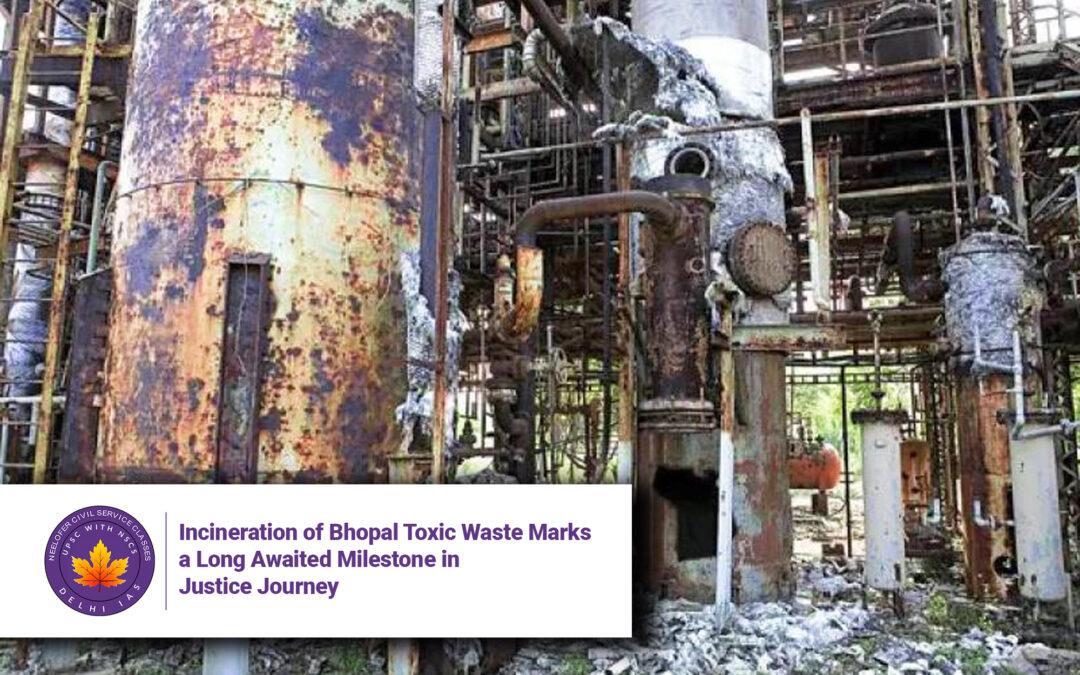
Incineration of Bhopal Toxic Waste Marks a Long Awaited Milestone in Justice Journey
Why in News?
After decades of delays, the Madhya Pradesh Pollution Control Board has confirmed the incineration of 337 tonnes of toxic waste from the defunct Union Carbide facility in Bhopal. This marks a significant step in addressing the lingering environmental and health consequences of the 1984 Bhopal gas tragedy—one of the world’s worst industrial disasters. 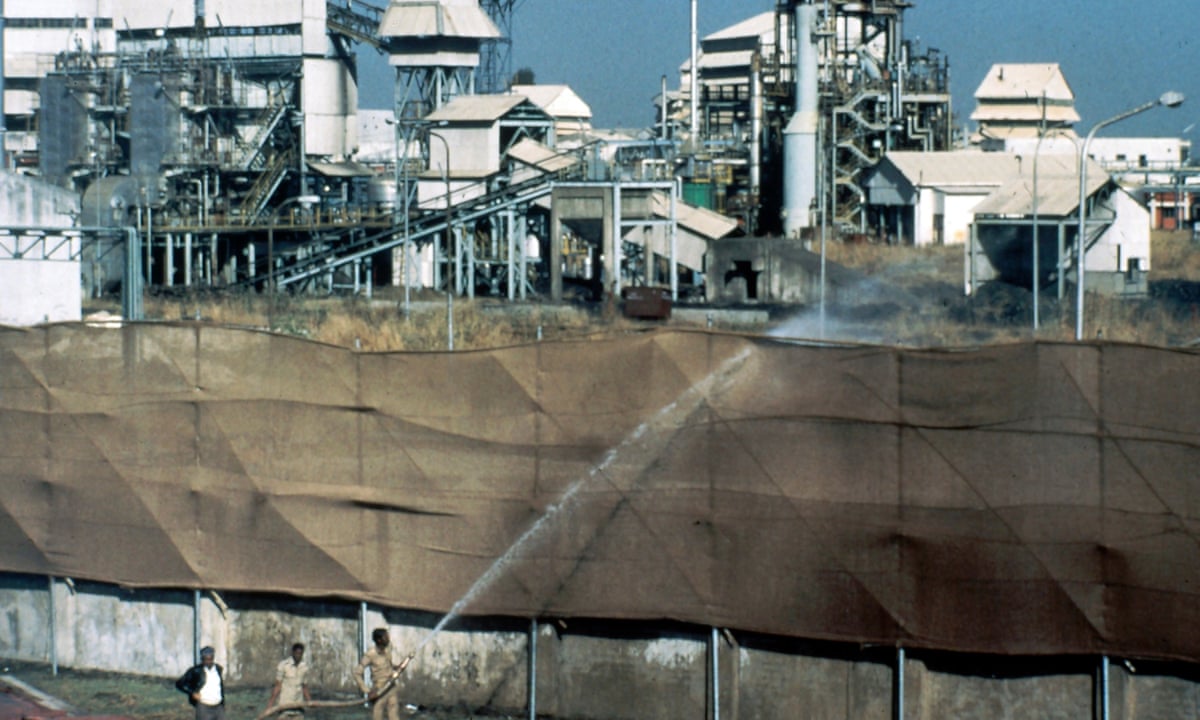
Introduction
The toxic legacy of the 1984 Bhopal disaster has haunted the city for nearly four decades. A new chapter in the long battle for environmental justice was written when toxic waste from the Union Carbide plant was moved to a private waste treatment facility in Pithampur and incinerated. The process, spanning more than ten years and involving multiple government agencies and courts, reflects both the difficulty and necessity of state accountability.
Key Issues and Institutional Concerns
-
Delayed Political Will and Bureaucratic Inertia
Though the technical capability to dispose of the toxic waste existed for years, the absence of political will significantly delayed action. It took interventions from the Madhya Pradesh High Court, the Supreme Court of India, and the Union Environment Ministry for progress to be made. -
Environmental and Health Hazards Remain
Despite the incineration of 337 tonnes of waste, over 800 tonnes of ash and residue remain. The site still holds contaminated soil, artefacts, and subsurface hazardous materials, posing continued environmental risk. -
Survivors’ Demands and Legal Struggles
Victims’ groups and survivors’ families, rather than government institutions, have been at the forefront of pushing for accountability. Their legal petitions continue to demand inflation-adjusted compensation and recognition of underreported health impacts. -
Medical and Rehabilitation Gaps
The Supreme Court–appointed advisory committee has functioned sporadically. A shortage of specialized medical staff in hospitals and lack of structured rehabilitation for victims have further slowed the justice process. -
Need for Unified Statutory Framework
To bring closure and proper redress, there is a growing call for a new statutory body to oversee health relief, compensation, and site remediation, independent of ad-hoc committees and fragmented authorities.
Conclusion
The incineration of toxic waste is a major but incomplete achievement in the ongoing struggle for justice for Bhopal gas tragedy victims. Long-term care, compensation, and environmental safety must follow. The state and Centre must now fulfill their responsibility in full, and ensure that survivors and families can finally move on with dignity.
Q&A Section
1. Q: What recent step has the Madhya Pradesh Pollution Control Board taken regarding the Bhopal gas tragedy?
A: It confirmed the incineration of 337 tonnes of toxic waste at a treatment facility in Pithampur.
2. Q: Why is the incineration significant?
A: It marks progress in disposing of hazardous materials from the 1984 tragedy, but highlights long-standing government delays.
3. Q: What challenges remain after incineration?
A: Over 800 tonnes of ash and additional toxic materials still require scientific disposal; long-term site monitoring is essential.
4. Q: What role have survivor groups played?
A: They have led efforts through legal petitions and activism, demanding accurate death/injury counts and fair compensation.
5. Q: What is needed to complete justice for victims?
A: Creation of a new statutory authority for health, relief, and environmental remediation, and closure of pending claims.

