
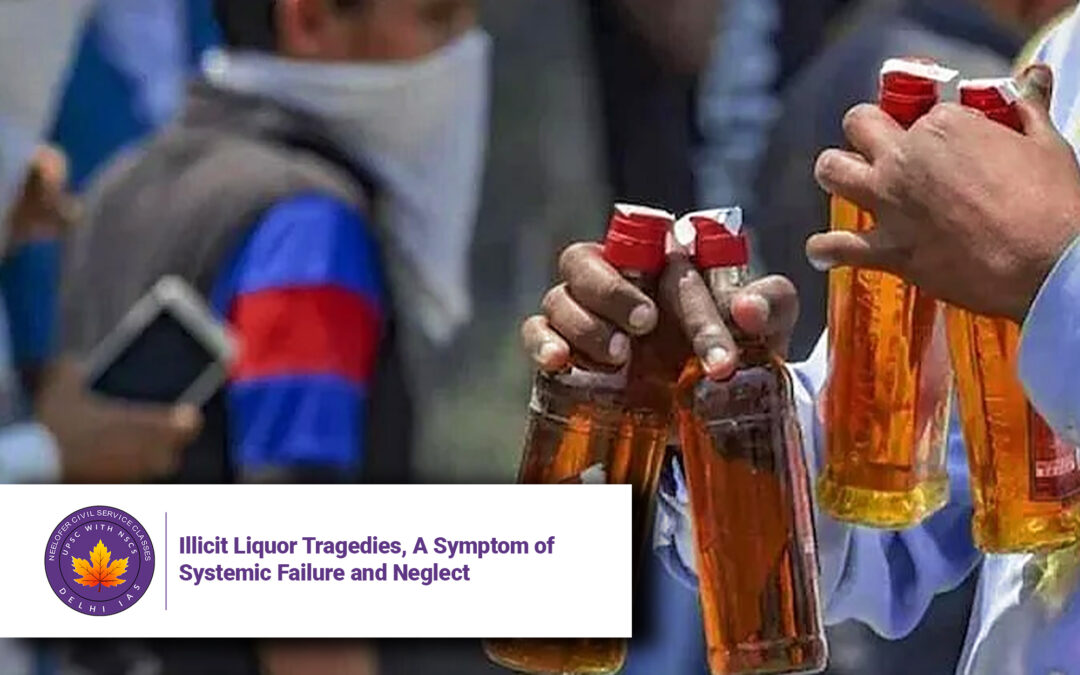
Illicit Liquor Tragedies, A Symptom of Systemic Failure and Neglect
Why in News?
A recent incident in Amritsar, Punjab, claimed the lives of at least 23 people due to illicit liquor poisoning. This tragedy adds to a growing list of hooch-related deaths across India, revealing deep-rooted corruption, regulatory failure, and socio-economic vulnerabilities. 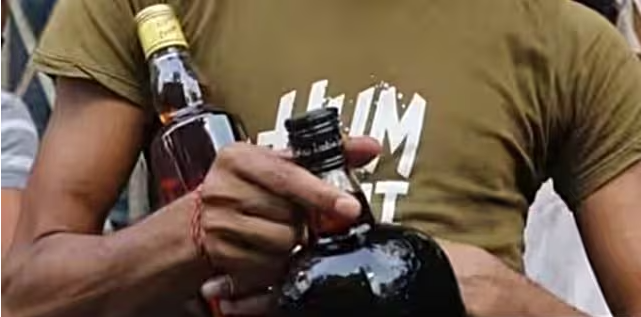
Introduction
Illicit alcohol poisoning cases, often termed “hooch tragedies,” reflect more than just criminal negligence — they reveal a pattern of poverty, exploitation, and institutional failure. Despite periodic outrage, such incidents continue unabated, especially in vulnerable communities.
Key Issues and Background
1. Common Pattern in Hooch Tragedies
-
Victims are usually poor, daily wage earners drawn to the lure of cheap alcohol.
-
These illicit brews often contain toxic substances like methanol, a poisonous industrial chemical.
-
Methanol is easily available and inexpensive, making it a profitable but deadly additive.
2. Regulatory and Enforcement Failures
-
Bootleggers are the last link in a much larger and organized methanol theft and diversion chain.
-
Methanol, widely used in the petrochemical industry, is not banned, but its use in alcohol is illegal.
-
The nexus between bootleggers, methanol suppliers, law enforcement, and politicians often prevents effective crackdowns.
3. Legal Weaknesses
-
Prosecutions often fail. In a notable 2015 case in Malvani, Mumbai, all 14 accused were acquitted after 7 years.
-
Convictions are rare and usually limited to minor charges like prohibition law violations.
The Core of the Concern
Systemic Loopholes and Social Exploitation
-
Methanol theft is a symptom of larger administrative corruption.
-
The social conditions — including poverty, lack of education, and addiction — make people easy targets.
-
Without addressing the economic desperation of victims, the problem will persist.
Key Observations
-
Banning methanol isn’t a viable solution due to its industrial importance.
-
There is a pressing need for a centralised framework for methanol transport and safety.
-
Laws like the Poison Act can strengthen enforcement but won’t be effective without rooting out institutional corruption.
Conclusion
Illicit liquor tragedies will continue unless India addresses the economic, social, and administrative dimensions of this crisis. Beyond stricter laws and policing, the solution lies in breaking the nexus of corruption, empowering vulnerable communities, and investing in education and rehabilitation to reduce demand for such dangerous alternatives.
5 Questions and Answers
Q1. What caused the recent hooch tragedy in Amritsar, Punjab?
A: At least 23 people died due to illicit liquor poisoning involving toxic methanol, highlighting systemic regulatory failure and socio-economic vulnerability.
Q2. Why is methanol used in illicit liquor despite being dangerous?
A: Methanol is cheap and easily available, making it profitable for bootleggers to use as a substitute in illicit alcohol, despite its toxic and often deadly effects.
Q3. Why are such cases rarely prosecuted successfully?
A: Legal loopholes, corruption, and weak enforcement often result in few convictions, even when cases involve serious charges like murder or poisoning.
Q4. What role does corruption play in these tragedies?
A: A strong nexus between bootleggers, methanol dealers, police, and local politicians often protects the supply chain and prevents action against illegal alcohol operations.
Q5. What is the long-term solution to end illicit liquor deaths?
A: Solutions include establishing a central methanol regulation framework, enforcing strict laws, and addressing poverty, addiction, and lack of education through targeted welfare and awareness programs.

