
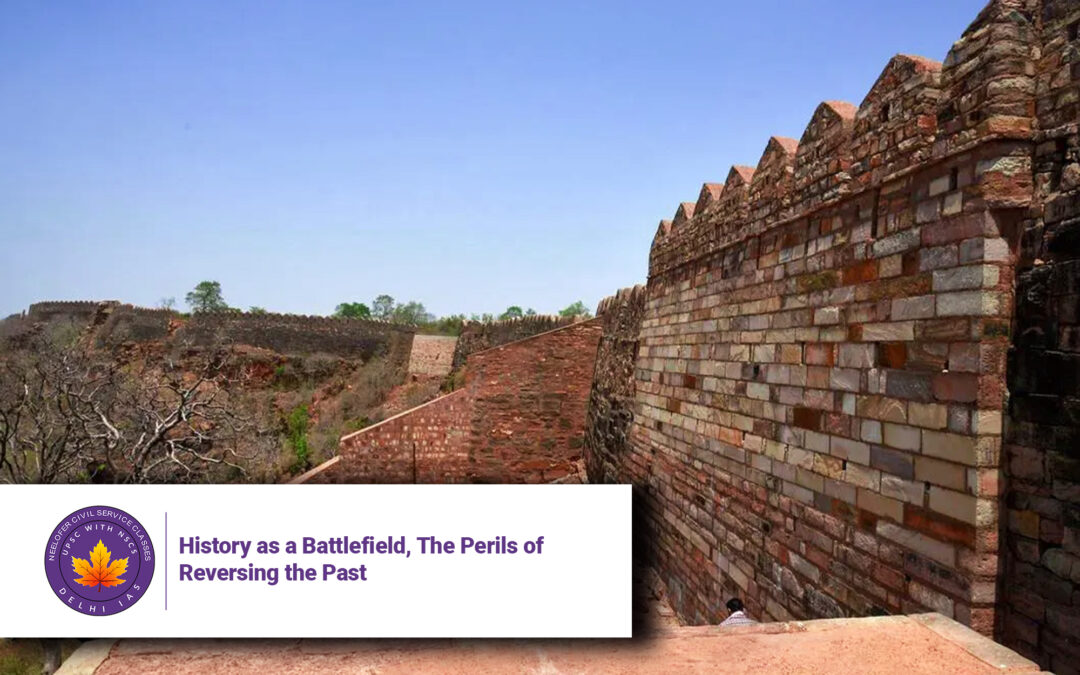
History as a Battlefield, The Perils of Reversing the Past
Why in News?
In March 2025, a wave of textbook revisions and public campaigns aimed at rewriting India’s historical narrative gained national attention. These efforts included omitting or vilifying figures such as Babur and Aurangzeb, glorifying select native rulers, and vandalizing Mughal monuments. The movement reflects a global trend of using history as a tool for political and ideological battles rather than objective understanding. 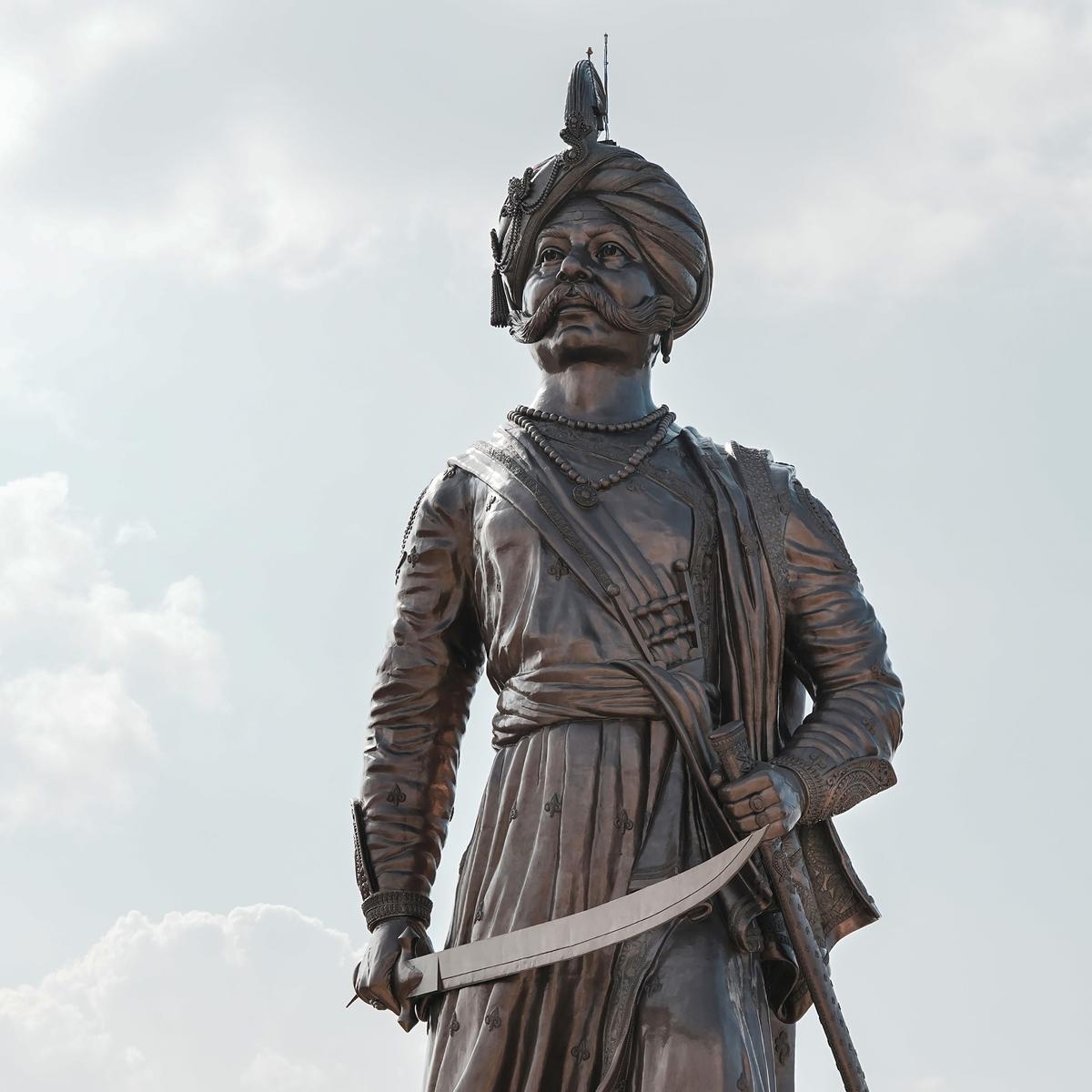
Introduction
History, when used to reflect and learn from the past, enriches society. However, when selectively rewritten or weaponised for ideological gain, it creates deep divides. The recent surge in historical revisionism in India mirrors similar trends worldwide and raises serious concerns about the misuse of history as a political weapon.
Key Issues and Background
The Dangers of Revisionism
Textbook changes, renaming cities, and destroying historical monuments under the guise of correcting colonial narratives have polarized public discourse. These actions risk fracturing national unity by turning history into a battlefield of identity politics and revenge.
Revisionism vs. Reckoning
-
Reckoning involves understanding and acknowledging historical wrongs to ensure they are not repeated.
-
Revisionism, on the other hand, seeks to reinterpret the past to suit current ideologies, often under the banner of nationalism, religion, or territorial claims.
-
When revisionism is used to revive a glorified past or correct perceived injustices through erasure or revenge, it distorts the truth and fuels conflict.
The Core of the Concern
Global Parallels and Historical Evidence
-
Crusades and Religious Wars: The First Crusade and subsequent religious wars in Europe only deepened sectarian conflict instead of resolving it.
-
European Wars of Religion: Protestant Reformation and Thirty Years’ War illustrate how rewriting history to assert religious superiority led to massive violence and political fragmentation.
-
Nazi Germany: Hitler’s narrative of past betrayal (Treaty of Versailles) and dreams of reviving Aryan supremacy led to World War II and the Holocaust.
-
Partition of India (1947): Competing religious historical narratives led to violent displacement of over 10 million people.
-
Israel-Palestine Conflict: Historical claims are used by both sides to justify present-day violence and territorial disputes.
-
Russia-Ukraine War (2022): Russia justified invasion with revisionist claims about the unity of Russia and Ukraine, destabilizing Europe.
Key Observations
-
Historical wrongs must be remembered, but not used to justify revenge or reclaim status.
-
The emotional misuse of history can lead to social intolerance, geopolitical conflict, and long-term instability.
-
Rather than reshaping the past to fit present narratives, societies must move forward with truthful understanding and accountability.
Conclusion: Learning, Not Repeating
History should serve as a teacher, not a template. As philosopher George Santayana noted:
“Those who cannot remember the past are condemned to repeat it.”
But those who remember it only to rewrite it, seeking revenge, are just as dangerous.
To avoid repeating historical tragedies, societies must acknowledge the past, seek reconciliation, and avoid the trap of glorifying or vilifying history based on modern political agendas.
Q&A Section
Q1. What recent event triggered discussions on historical revisionism in India?
A wave of textbook revisions in March 2025 that omitted or vilified figures like Babur and Aurangzeb, and glorified select native rulers.
Q2. What is the key difference between historical revisionism and reckoning?
Revisionism distorts history for current political or ideological gain, while reckoning acknowledges past wrongs to prevent repetition.
Q3. How did Nazi Germany misuse history?
By portraying the Treaty of Versailles as betrayal and glorifying the German Reich, Hitler created a revisionist narrative that led to WWII and the Holocaust.
Q4. How does the article explain the consequences of the Partition of India in 1947?
It describes the Partition as driven by conflicting historical narratives that led to immense violence and displacement of over 10 million people.
Q5. What is the article’s message about how we should treat history?
We should learn from history with humility, not rewrite it for revenge or political benefit.
